200 Miles of Canals and 1,200 Miles of Swales
Port St. Lucie grew from a 1958 land purchase along the North Fork of the St. Lucie River into a city of more than 200,000 people spread across about 120 square miles. Keeping that much ground dry takes a large drainage network. The City's Public Works department lists about 200 miles of canals, 1,200 miles of swales, more than 180 control structures, more than 6,000 culverts, 1,460 acres of lakes and ponds and three pump stations.
Most of the time the system does its job. But the City's own flood guidance is clear that all of St. Lucie County can see flash flooding and areal flooding, especially when rain falls for several days in a row. It also points out that most flooding in Florida happens outside the mapped Special Flood Hazard Area.
Inside the house, plumbing failures are just as common here as anywhere: water heaters, washing machine hoses, toilet supply lines and leaks under kitchen sinks.
Where the City Has Seen Repeat Flood Losses
The City of Port St. Lucie identifies two kinds of repetitive loss areas, meaning places where flood insurance claims have come in more than once:
- Areas bordering the St. Lucie River.
- Areas just west of I-95, from roughly Becker Road to Tradition.
If you live in or near those areas, it is worth checking your property on the City's flood zone interactive map and asking your agent about flood coverage. Public Works also offers flood mitigation assistance to property owners.
The City participates in the NFIP Community Rating System as a Class 5 community. As of April 1, 2023, that brings a 25% flood insurance discount for properties in the Special Flood Hazard Area and 10% for other properties.
Your Swale, Your Culvert, Your Responsibility
Under City Code Section 41.08, property owners maintain the strip of right-of-way between the edge of the pavement and their property line. That includes the swale in front of the house and the culvert under the driveway.
A few habits help keep water out of the street and your garage:
- Do not blow grass clippings, leaves or tree trimmings into the street or swale. The City warns they clog storm drains.
- Keep the ends of your driveway culvert clear.
- Report standing water or drainage problems through the City's 1PSL service request system.
- Never drive through flooded roads. Turn around, don't drown.
When those defenses are not enough and water reaches the house, a restoration company can begin flood cleanup and drying.
Three Direct Hits, Then Milton's Tornadoes
Port St. Lucie took three direct hurricane hits in two seasons: Frances and Jeanne in September 2004 and Wilma in 2005. National Weather Service preliminary figures put St. Lucie County damage from Jeanne alone at about $1.2 billion. In 2017, Hurricane Irma brought roughly 10 to 11.5 inches of rain to Port St. Lucie locations.
In October 2024, Hurricane Milton made landfall on the opposite coast, yet its outer bands produced what the Florida Climate Center calls the strongest tropical tornado outbreak on record in the state. Tornadoes reached I-95 in Port St. Lucie, and a deadly EF-3 moved through Fort Pierce, Spanish Lakes and the Vero Beach area.
For homeowners, that history means planning for wind as well as water. Storm damage cleanup often starts with tarping a roof or boarding windows, then removing water before it spreads into walls and cabinets.
The First Things to Do When Water Gets In
- Make it safe. Keep out of standing water near outlets, cords or appliances. Shut off power only if the panel is dry and easy to reach.
- Close the valve. Turn off the main water supply for any plumbing leak.
- Classify the water. A clean supply line leak is Category 1. Washer or dishwasher overflow may be Category 2. Canal, street or river water and sewage are Category 3 and should be handled as contaminated.
- Document. Photograph and video every room, the source and damaged belongings before cleaning up.
- Protect belongings. Move documents, electronics and rugs to a dry room.
- Call for help. Dial (888) 817-5061 and we connect you with a local restoration professional who can begin water extraction.
How Port St. Lucie Restoration Crews Work
Assessment and moisture mapping
The job starts with finding the source and using moisture meters and thermal imaging to see how far water moved under tile, behind baseboards and into neighboring rooms.
Water removal
Extractors remove standing water. Wet carpet pad, soaked insulation and the lower part of affected drywall are often cut out so the wall cavity can dry.
Drying
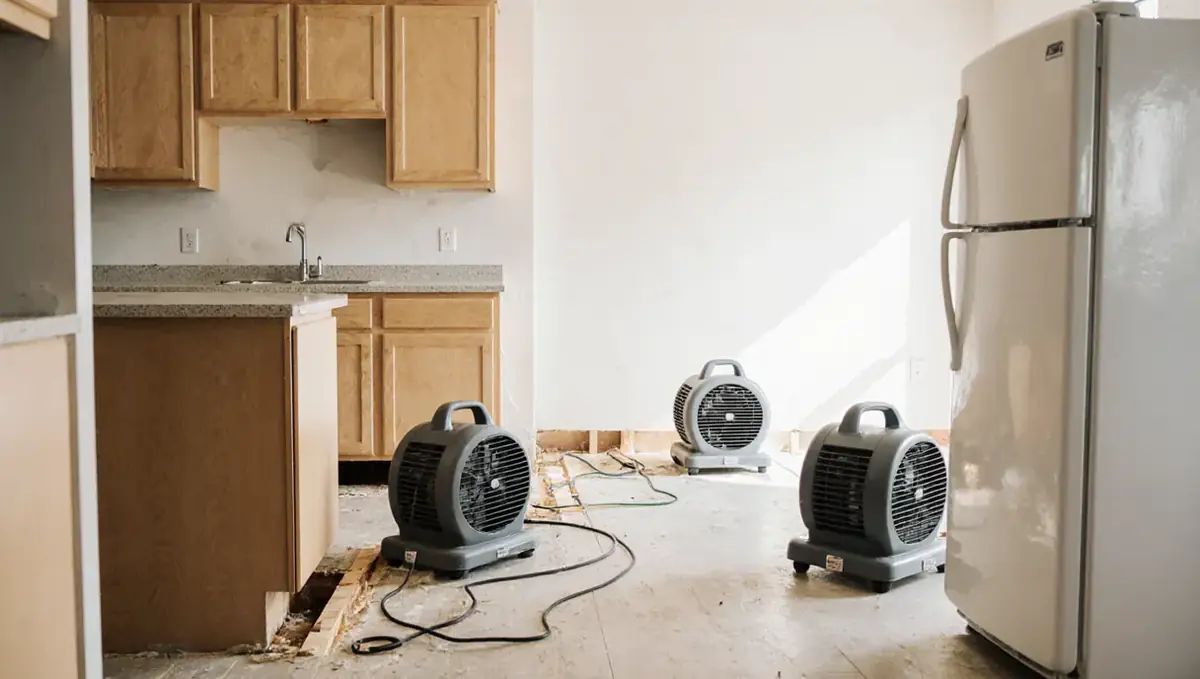
Dehumidifiers and air movers run while readings are taken daily. In the Treasure Coast's heat and humidity, steady structural drying is what keeps a leak from becoming a mold problem.
Restoration
Once materials test dry, water damage repair covers drywall, flooring, cabinets, trim and paint. Before you sign, ask the company to explain its licensing, insurance and staff training, for example IICRC certification.
Mold Removal and Florida's 10-Square-Foot Rule
EPA guidance says mold can start growing on wet materials within 24 to 48 hours. In a closed-up home after a hurricane, with no power to run air conditioning, that window can pass quickly.
Florida's DBPR issues separate licenses to mold assessors and mold remediators. According to the statute's definitions, those licenses apply to work on more than 10 square feet of mold. You can confirm a license by name or number at MyFloridaLicense.com. Learn how containment and cleanup work on our mold removal page.
Insurance Notes for PSL Homes, Rentals and Businesses
- Flood is its own policy. Homeowners insurance does not cover flood. NFIP policies usually have a 30-day waiting period before coverage begins.
- Florida deadlines. Statute 627.70132 allows 1 year from the date of loss to report a new or reopened claim and 18 months for a supplemental claim.
- Citizens. By January 1, 2027, Citizens personal residential policies with wind coverage must also have flood insurance.
- Records. Keep photos, receipts and the drying logs from your restoration company.
Landlords, HOAs and business owners in Tradition, St. Lucie West and across the city can use the same line. Neighbors to the north in Vero Beach can as well. Call (888) 817-5061.
Port St. Lucie Neighborhoods and Treasure Coast Communities
WaterQ's free referral line connects callers throughout Port St. Lucie and St. Lucie County with independent local restoration providers.
Neighborhoods
- Tradition
- St. Lucie West
- River Park
- Spruce Bluff
- Torino
- Sandpiper Bay
- Southbend Lakes
- Floresta Gardens
- Riverland/Kennedy
- Becker Ridge
- Verano
- Lyngate
- Morningside
- St. Lucie North
- Bayshore Heights
- Tulip Park
Nearby communities
- Fort Pierce
- Stuart
- Jensen Beach
- Palm City
- Port Salerno
- Hutchinson Island
- White City
- Lakewood Park
- Okeechobee
Port St. Lucie Water Damage FAQ
Which parts of Port St. Lucie have flooded repeatedly?
The City identifies repetitive loss areas bordering the St. Lucie River and areas just west of I-95 from roughly Becker Road to Tradition. You can check your address on the City's flood zone interactive map.
Do Port St. Lucie residents get a flood insurance discount?
The City is a Class 5 community in the NFIP Community Rating System. As of April 1, 2023, that means a 25% discount for properties in the Special Flood Hazard Area and 10% for other properties.
Who is responsible for the swale in front of my house?
Under City Code Section 41.08, property owners maintain the right-of-way from the edge of the pavement to their property line, including the swale and driveway culvert.
When does Florida require a licensed mold remediator?
Florida's DBPR licensing applies to mold assessment or remediation of more than 10 square feet. Assessors and remediators are licensed separately, and you can look either up on MyFloridaLicense.com.
Does WaterQ come out to my home?
No. WaterQ is a free referral service available 24/7. We connect you with an independent local restoration company, and that company handles the visit and the work.
Local emergency and flood resources
Official sources for alerts, flood maps and preparedness in and around Port St. Lucie: