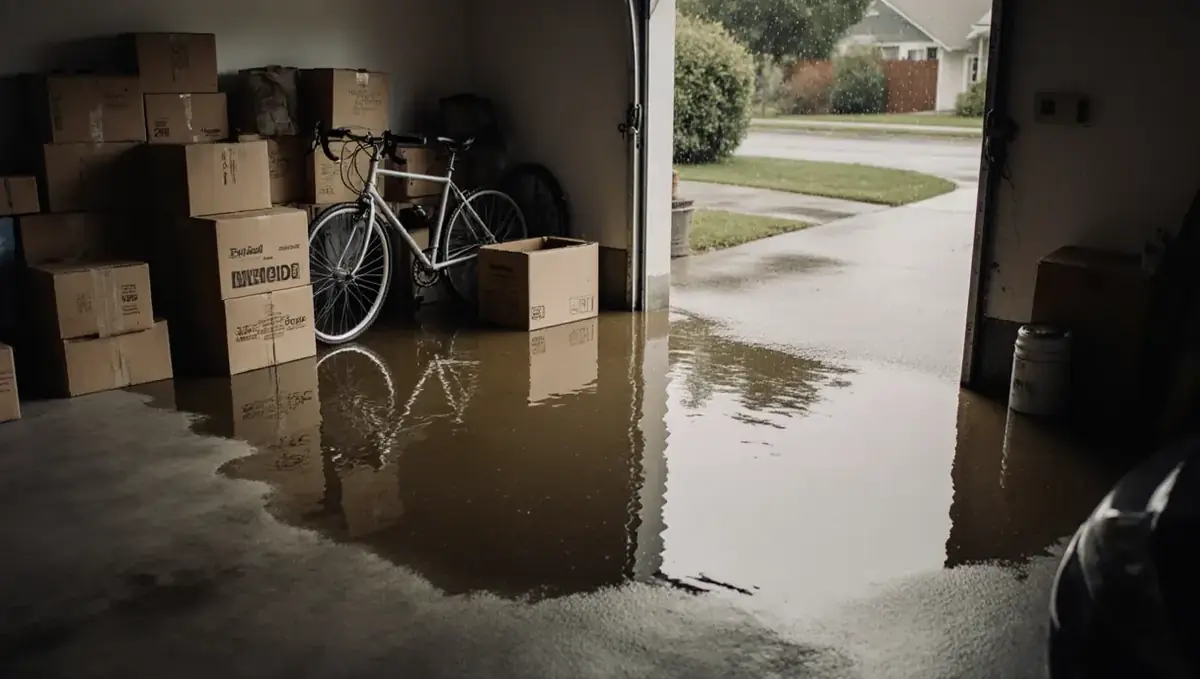
A City Built Around 400 Miles of Canals
Cape Coral is a planned city on a peninsula, with the Caloosahatchee River along its south and east sides and Matlacha Pass to the west. Development started in 1958, and the city now has more than 400 miles of navigable canals, more than any other city on earth. That design puts a huge number of homes right at the water's edge, at an average elevation of roughly 10 feet.
The City of Cape Coral names two main flood threats. Heavy rainfall is handled by swales, drainage inlets and the canals themselves. Storm surge is the bigger danger, and the City says it could reach 25 feet in an intense hurricane. One more detail surprises many owners: according to the City, about 25 percent of flooding happens outside areas formally designated as flood-prone.
Inside the house, the usual suspects still apply. Water heaters, washing machine hoses, ice-maker lines and air handler drain pans fail here as they do anywhere, and Cape Coral's wet season from May through October keeps indoor humidity high while you wait for things to dry.
Lessons From Hurricane Ian on the Caloosahatchee
Hurricane Ian made landfall at Cayo Costa in Lee County on September 28, 2022, as a Category 4 storm. The National Hurricane Center's report found maximum inundation of 6 to 9 feet above ground in Pine Island, Cape Coral and other communities along the mouth of the Caloosahatchee River. USGS surge sensors placed in Cape Coral and Matlacha were lost or destroyed.
Across Lee County, at least 52,514 structures were impacted, including 5,369 destroyed and 14,245 with major damage. The City also points to the 1926 hurricane, which brought 12-foot tides, as a reminder that surge here is not a new problem.
For homeowners, the takeaway is practical. Surge water is saltwater mixed with whatever it picked up along the way, so it is treated as Category 3 contaminated water. Drywall, insulation and carpet it touches usually have to be removed, not just dried. That is the core of flood damage restoration after a storm like Ian.
Your First Hour With Water in the House
- Shut off the source. Close the main water valve for a plumbing leak. For rising outside water, follow evacuation orders first; property can wait.
- Keep clear of electricity. Do not step into standing water near outlets, appliances or extension cords. Switch off the breaker only if you can reach it from a dry spot.
- Identify the water. A clean supply line leak (Category 1) and canal or surge water (Category 3) call for very different handling. Keep kids and pets out of floodwater.
- Record the damage. Photograph and video every room, the source and damaged contents before cleanup starts.
- Protect what you can. Move rugs, electronics and paperwork out of wet areas, and set furniture legs on blocks or foil.
- Bring in a pro. Call (888) 817-5061 and we will connect you with a local company that handles emergency water extraction.
What a Restoration Crew Does in a Cape Coral Home
The details change from job to job, but water damage restoration in Cape Coral generally moves through four stages.
Removing standing water
Pumps and extraction wands pull water from tile, carpet and pad. On a single-story slab home, water spreads quickly from room to room, so speed here limits how far it wicks into walls.
Finding hidden moisture
Moisture meters and thermal cameras show where water moved under baseboards, behind cabinets and into wall cavities. Those readings become the drying plan and part of your insurance file.
Drying and dehumidifying
Air movers and dehumidifiers run until materials hit dry targets, with daily checks. In Southwest Florida's humidity, structural drying leans heavily on dehumidification, and soaked drywall is often cut out at a flood line.
Putting it back together
After dry readings are confirmed, water damage repair replaces drywall, flooring, trim and cabinets. It is fair to ask any Cape Coral contractor to show its licensing, insurance and training (IICRC certification, for instance) before you sign a work authorization.
Rebuilding Rules: The 50 Percent Threshold
Cape Coral enforces the National Flood Insurance Program's substantial damage rule. If the cost to repair a building equals or exceeds 50 percent of its market value, the structure has to be brought into compliance with current flood regulations, which can include elevation requirements.
That matters when you plan storm damage cleanup and repairs after a hurricane. A few practical points:
- Get permits before rebuilding; the City's Building Division handles them.
- Keep itemized estimates and invoices, since repair cost is part of the substantial damage review.
- Use the City's Forerunner portal to check flood risk and look for an elevation certificate on file.
- Report unpermitted building or filling to Code Enforcement.
The City's flood protection page explains these rules and lists floodplain staff contacts.
Humidity, Mold and Florida's License Requirement
Per EPA guidance, a soaked Cape Coral wall or carpet can start sprouting mold within 24 to 48 hours. After a storm, power outages can leave a closed-up house hot and damp for days, which is exactly when mold takes hold. Getting air moving and moisture out quickly is the best defense.
Two separate Florida licenses come into play here, one for mold assessors and one for mold remediators, both issued by the Department of Business and Professional Regulation (DBPR). The statute's definitions tie the license to assessing or remediating more than 10 square feet of mold. A quick search by name or license number on MyFloridaLicense.com confirms whether the assessor and remediator on your job hold current licenses.
For larger mold removal or mold cleanup in Cape Coral, containment keeps spores from drifting into clean rooms. Read more about how mold removal works.
Flood Policies, CRS Discounts and Claim Deadlines
- Separate flood coverage. Standard homeowners policies generally exclude flood. Coverage comes from an NFIP or private flood policy, and NFIP policies usually have a 30-day waiting period.
- Local discount. Cape Coral is a Class 5 community in the NFIP Community Rating System, which means a 25 percent discount in A, AE and V zones and 10 percent in X zones.
- Florida notice deadlines. Florida Statute 627.70132 gives you 1 year from the date of loss to report a new or reopened property claim to your insurer, and 18 months for a supplemental one.
- Citizens policyholders. If Citizens insures your wind risk, plan for flood coverage too: it becomes mandatory on those personal residential policies by January 1, 2027.
WaterQ cannot predict what an insurer will pay, but photos, moisture logs and drying reports make any claim easier to support. Residential owners, landlords and commercial property managers can all call (888) 817-5061 to reach a local restoration provider.
Cape Coral Areas and Nearby Lee County Communities
The WaterQ referral line connects callers in every Cape Coral quadrant and nearby communities with independent local restoration companies.
Neighborhoods
- Southeast Cape Coral
- Southwest Cape Coral
- Northeast Cape Coral
- Northwest Cape Coral
- South Cape (downtown)
- Yacht Club
- Cape Harbour
- Tarpon Point
- Pelican
- Sandoval
- Coral Lakes
- Burnt Store
Nearby communities
- Fort Myers
- North Fort Myers
- Matlacha
- Pine Island
- Sanibel
- Fort Myers Beach
- Lehigh Acres
- Punta Gorda
- Port Charlotte
- Estero
Cape Coral Water Damage FAQ
How high did Hurricane Ian's surge get in Cape Coral?
The National Hurricane Center reported maximum inundation of 6 to 9 feet above ground in Cape Coral, Pine Island and other communities along the mouth of the Caloosahatchee River. Surge sensors in Cape Coral and Matlacha were lost or destroyed.
Can my Cape Coral home flood if it is not in a high-risk flood zone?
Yes. The City of Cape Coral says about 25 percent of flooding occurs outside areas formally designated as flood-prone. Flood insurance is available outside high-risk zones, and Cape Coral's CRS rating gives a 10 percent discount in X zones.
What is the 50 percent rule after storm damage?
If repair costs equal or exceed 50 percent of a building's market value, NFIP rules enforced by the City require the structure to meet current flood regulations, which can include elevating it. Talk with the City's floodplain staff before major repairs.
Is my evacuation zone the same as my flood zone?
No. Lee County hurricane surge evacuation zones A through E guide evacuation decisions, while FEMA flood zones are used for insurance and building rules. Check both for your address.
Does WaterQ do the restoration work itself?
No. WaterQ is a free referral service. When you call, you are connected with an independent, local restoration company that handles the inspection, the work and the paperwork for your job.
Local emergency and flood resources
Official sources for alerts, flood maps and preparedness in and around Cape Coral: