Inland, Higher Ground, and Still Plenty of Water
Gainesville sits about 171 feet above sea level, well away from the coast, so storm surge is not the worry it is in Jacksonville or Tampa. Water still finds its way into homes here, just by different routes. The City of Gainesville says most local flooding happens near its major water bodies, and there are a lot of them:
- Creeks: Hogtown Creek, Sweetwater Branch, Possum Creek, Little Hatchet Creek and Lake Forest Creek.
- Lakes: Lake Alice on the University of Florida campus, Clear Lake and Newnans Lake.
- Prairies and wetlands: Paynes Prairie, Hogtown Prairie and Kanapaha Prairie.
Flooding usually comes from heavy rain, either the long, soaking kind a tropical storm brings or a short, violent summer thunderstorm. Most of the year's roughly 48 inches of rain falls from June through September. Importantly, the City points out that one-third of flood loss claims come from properties outside the mapped 100-year floodplain. Being away from a creek does not make a house immune.
Elsa, Debby and the Westwood Estates Sinkhole
A few recent events show how water damage in Gainesville tends to unfold.
Tropical Storm Elsa (2021). In July 2021, Elsa's rain overwhelmed drainage ditches and retention ponds. Low-lying streets in northwest Gainesville flooded, including near the Meadowbrook area and NW 98th Street, and Lake Alice spilled over onto campus sidewalks and bike paths.
Debby (2024). The National Weather Service recorded 7.19 inches of rain on the UF campus and gusts to 54 mph. Trees came down on homes across Alachua County, water got into some campus buildings, Santa Fe College reported significant water damage in several buildings, and Gainesville, High Springs, Newberry and Alachua saw flood damage ranging from minor to major.
Westwood Estates sinkhole (2020). Gainesville sits on karst, limestone that slowly dissolves underground. In October 2020, a cover-collapse sinkhole grew to more than 100 feet across, collected ground and stormwater, and led to three homes being condemned and demolished. Events like that are rare, but they are a reminder that water and the ground here interact in unusual ways.
Trees, Roofs and Ceilings: Gainesville's Storm Damage Pattern
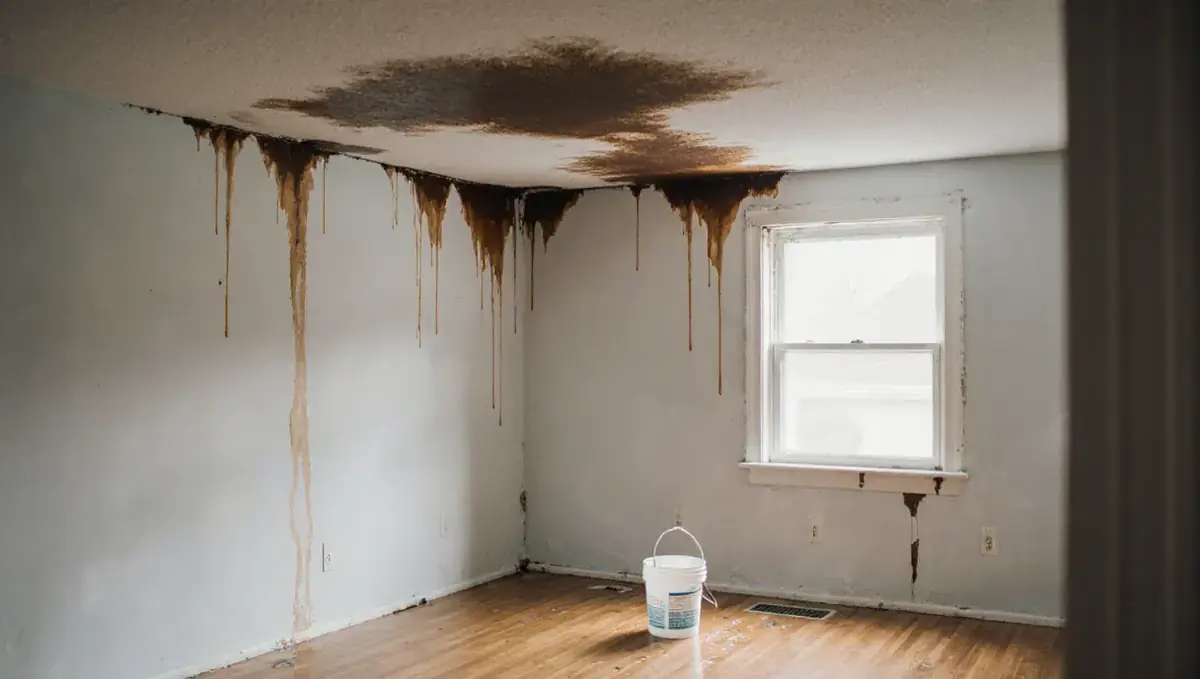
As Debby showed, many storm losses in Alachua County start with trees rather than rising water. When a limb or trunk punctures a roof, rain can soak attic insulation, drywall ceilings and the rooms below for hours before anyone can get up there.
- Get people out of rooms where the ceiling is sagging or bulging; wet drywall can come down suddenly.
- If it is safe, put buckets under drips and poke a small hole at the lowest point of a bulge so water drains in a controlled spot.
- Have the roof tarped as soon as conditions allow, then deal with the interior.
- Photograph the tree, the roof and every wet room before cleanup starts.
Professional storm damage cleanup in Gainesville typically pairs roof protection with interior drying, because a patched roof does not dry a soaked attic. Call (888) 817-5061 and the line will connect you with a local company that handles both.
Leaks Close to Campus and Around Town
Plenty of Gainesville water damage has nothing to do with weather. Burst supply lines, overflowing tubs, failed water heaters and dishwasher leaks are everyday problems in the apartments and rental houses near UF, as well as in older homes in districts like Pleasant Street and the Northeast and Southeast residential districts, where houses date to the 1880s and 1890s.
In a rental, tell your landlord or property manager right away and take photos. Many leases require prompt notice, and the owner needs to know before damage spreads to a neighboring unit. Landlords and property managers handling multiple units, offices or retail space can call the same 24/7 line for commercial help.
Gainesville also averages about 15 nights a year at or below freezing. On cold nights, drip faucets on exterior walls and protect outdoor spigots so a frozen line does not become a flooded room.
From Extraction to Rebuild: How Restoration Works
- Stop and secure. Close the water main or fixture valve, and keep away from wet outlets and appliances.
- Assess the water. Clean water from a supply line (Category 1) is handled differently from creek or stormwater runoff, which is treated as contaminated (Category 3).
- Extract. Crews use pumps and extraction wands for water removal from floors, carpet and pad.
- Tear out what cannot be saved. Saturated drywall, insulation and some flooring are removed so cavities can dry.
- Dry and verify. Air movers and dehumidifiers run while technicians log moisture readings until materials meet dry standards.
- Repair. Water damage repair restores drywall, trim, paint, cabinets and flooring.
Ask every company about its licensing, insurance and training, including IICRC certification, before work begins.
Mold Cleanup in a Humid College Town
EPA guidance says mold can start growing within 24 to 48 hours once materials stay wet, and Gainesville's humid summers give it a head start. Closets, bathrooms, attics under a leaking roof and the backs of cabinets are common trouble spots after a leak.
Under Chapter 468 of the Florida Statutes, the state's DBPR issues separate licenses to mold assessors and to mold remediators. The statute's definitions tie that licensing to work on more than 10 square feet of mold. You can search any assessor or remediator on MyFloridaLicense.com before hiring. For larger jobs, read more about mold removal and how containment works.
Flood Zones, Discounts and Claims in Alachua County
- Check your zone. The City runs a Flood Zone Hotline at 352-334-5069 and an online map viewer, and FEMA's Flood Map Service Center shows official flood maps.
- Gainesville earns a discount. As a Class 6 community in the NFIP Community Rating System, Gainesville residents get roughly 20% off flood insurance in Zones A and AE and 10% in Zone X.
- Flood is its own policy. Standard homeowners policies generally exclude flood, and NFIP coverage typically has a 30-day waiting period.
- Watch the deadlines. Florida Statute 627.70132 sets 1 year from the date of loss to give notice of an initial or reopened claim and 18 months for a supplemental claim.
- Get alerts. Sign up for Alert Alachua through Alachua County Emergency Management.
WaterQ cannot promise what an insurer will pay. For help with water damage restoration in Gainesville, call (888) 817-5061 and get connected with a local professional.
Gainesville Neighborhoods and Alachua County Towns
WaterQ's free referral line connects callers throughout Gainesville and nearby Alachua County communities with independent local restoration providers.
Neighborhoods
- Duckpond
- Pleasant Street
- Porters Community
- Grove Street
- Fifth Avenue
- University Park
- Westwood Estates
- Hibiscus Park
- Mason Manor
- Stephen Foster
- Springhill
- Raintree
- Royal Gardens
- North Lincoln Heights
- Black Acres
- Woodland Park
- Debra Heights
- Northwest Estates
Nearby communities
- Alachua
- Newberry
- High Springs
- Archer
- Micanopy
- Hawthorne
- Waldo
- Jonesville
- Haile Plantation
- Brooker
Gainesville Water Damage FAQ
Can my Gainesville home flood if it is not in a flood zone?
Yes. The City of Gainesville notes that one-third of flood loss claims come from properties outside the mapped 100-year floodplain. Heavy tropical rain or a strong thunderstorm can overwhelm ditches and retention ponds almost anywhere.
How do I find out my flood zone in Gainesville?
Call the City's Flood Zone Hotline at 352-334-5069, use the City's online map viewer, or look up your address on the FEMA Flood Map Service Center.
A tree fell on my roof during a storm. What should I do first?
Get everyone out of the rooms below, especially if the ceiling is sagging. Photograph the damage, have the roof tarped as soon as it is safe, and arrange for the attic and interior to be dried so mold does not set in.
Does a mold company need a license in Florida?
For jobs involving more than 10 square feet of mold, Florida requires mold assessors and mold remediators to hold DBPR licenses. You can verify a license on MyFloridaLicense.com.
What does WaterQ actually do?
WaterQ is a free referral service. Call any time and we connect you with an independent, local restoration company, which inspects the damage and performs the work.
Local emergency and flood resources
Official sources for alerts, flood maps and preparedness in and around Gainesville: