Where the Caloosahatchee Meets the City
Fort Myers is the county seat of Lee County, spread over about 49 square miles at an elevation of roughly 10 feet. The tidal Caloosahatchee River runs along the city and has shaped it since its earliest days, with downtown facing the water and newer subdivisions spreading out after the Edison Bridge opened in 1931.
Because the city sits inland from barrier islands such as Estero Island and Sanibel, people sometimes assume the Gulf cannot reach it. Hurricane Ian showed otherwise. Water driven into San Carlos Bay can travel up the river, and riverfront streets and low-lying neighborhoods are where it spreads first.
Fort Myers also sees about 89 thunderstorm days a year, which is often cited as the most in the nation. Most of its more than 57 inches of annual rain falls from June through September, so roofs, gutters and yard drainage get a workout every summer.
Ian Pushed Surge Miles Up the River
Hurricane Ian made landfall in southwest Florida on September 28, 2022, as a Category 4 storm. The National Hurricane Center found maximum inundation of 5 to 8 feet above ground up the Caloosahatchee River in Fort Myers, and the tide gauge near downtown measured a record 7.26 feet above mean higher high water. On Fort Myers Beach and Estero Island, inundation reached 10 to 15 feet.
Lee County bore the heaviest toll. At least 52,514 structures in the county were affected, 5,369 were destroyed and 14,245 received major damage, and most of the storm's surge deaths occurred there. Those numbers are a reminder to take evacuation orders seriously and to know your zone long before a storm forms.
Surge water carries salt, sewage and debris. Flood cleanup in Fort Myers after a surge or river flood generally means removing soaked materials well above the waterline, sanitizing and then drying. Read more about flood damage restoration.
Summer Thunderstorms, Roof Leaks and Wind-Driven Rain
Not every Fort Myers water problem comes from a hurricane. Afternoon thunderstorms with heavy rain and gusty wind can force water past worn flashing, cracked tiles or clogged gutters. During the multi-day South Florida rain event of June 2024, Fort Myers recorded 5.44 inches in 24 hours.
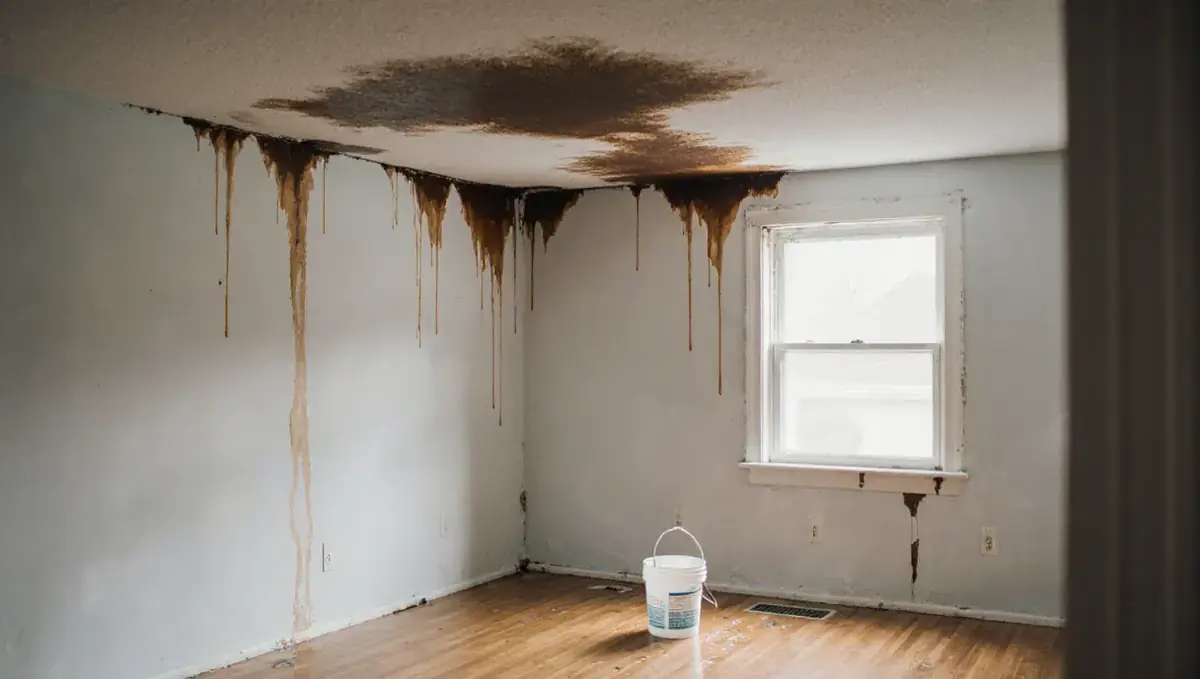
- Watch ceilings. Brown rings, bubbling paint or sagging drywall usually mean water has collected above.
- Check the attic after storms. Wet insulation loses its value and holds moisture against the drywall below.
- Look at window and door frames. Wind-driven rain often enters around openings rather than through the roof.
- Keep gutters and downspouts clear. Overflow can soak exterior walls and slab edges.
When a storm damages the roof, temporary tarping and quick drying can keep a small leak from becoming a ceiling collapse. Local providers handle storm damage cleanup; call (888) 817-5061 to be connected with one.
Older Homes Near Downtown and McGregor
Fort Myers grew from a small settlement of 575 people in 1890 into a city of 86,395 by 2020, so its housing spans more than a century. Historic homes near downtown and along McGregor Boulevard, along with older neighborhoods such as Edison Park and Dunbar, may have plaster walls, wood floors and older plumbing. Newer subdivisions farther out are more often slab-on-grade with drywall and tile.
Water damage repair in Fort Myers depends heavily on which of these you have. Original wood floors and plaster can sometimes be dried in place with careful monitoring, while modern drywall soaked by Category 3 water is usually cut out. Ask the restoration company how it plans to protect original materials, and photograph architectural details before work begins.
What to Do Before the Restoration Crew Gets There
- Stay clear of electricity. Don't walk through water near outlets, cords or appliances. Shut off breakers only from a dry, safe spot.
- Stop new water. Close the main valve for a plumbing leak, or put a bucket and tarp under a roof drip.
- Know what kind of water it is. Supply-line water is Category 1. River, surge or street floodwater is Category 3 and should be treated as contaminated.
- Document it. Photograph the source, waterlines and every damaged item.
- Move belongings. Lift furniture and take rugs, papers and electronics to a dry area.
- Call for help. Dial (888) 817-5061 any time, day or night, to be connected with a company offering water extraction.
The Drying Process From Start to Finish
Removing water
Pumps and extractors clear standing water from floors, carpet and pad so less of it soaks into walls.
Measuring moisture
Meters and thermal cameras show where water went inside walls, ceilings and subfloors. These readings set drying goals and support the insurance claim.
Drying and dehumidifying
Air movers and dehumidifiers run, with regular checks, until materials meet dry standards. Wet insulation and drywall are often removed to open up cavities. Learn more about structural drying.
Rebuilding
Once dry, crews move on to drywall, paint, flooring and trim. Before hiring, a Fort Myers property owner should ask about the company's licensing, insurance and technician training, with IICRC certification as one example. Businesses and rental owners follow the same path, often with tenants to coordinate.
Mold, Florida Licenses and Lee County Alerts
EPA guidance says mold can begin growing on wet materials within 24 to 48 hours, and Fort Myers summers make that window feel short. Mold cleanup in Fort Myers is often needed after roof leaks that went unnoticed in an attic or after flooded homes sat closed up.
The Florida DBPR issues separate licenses for mold assessors and mold remediators under Chapter 468, Part XVI. Each requires education or field experience, an exam and fingerprints for a background check, and the statute's definitions apply the license to more than 10 square feet of mold. Look up both on MyFloridaLicense.com and read about mold removal.
- Flood is excluded from standard homeowners policies; an NFIP or private flood policy covers it, and a new NFIP policy generally waits 30 days.
- Florida Statute 627.70132 gives 1 year from the date of loss for notice of an initial or reopened claim, and 18 months for a supplemental claim.
- If Citizens insures your Fort Myers home with wind coverage, plan on adding flood insurance, which becomes mandatory for those personal residential policies by January 1, 2027.
- Sign up for AlertLee and use the LeePrepares app to see your evacuation zone; details are on the Lee County alerts page.
Nearby, see Cape Coral and Naples.
Fort Myers Neighborhoods and Lee County Communities
Our free referral line connects callers in Fort Myers and surrounding Lee County communities with independent local restoration providers.
Neighborhoods
- Downtown River District
- McGregor
- Edison Park
- Dunbar
- Dean Park
Nearby communities
- Cape Coral
- North Fort Myers
- Lehigh Acres
- Fort Myers Beach
- Fort Myers Shores
- Iona
- San Carlos Park
- Estero
- Bonita Springs
- Sanibel
Fort Myers Water Damage FAQ
Can storm surge reach Fort Myers even though it is inland from the beaches?
Yes. During Hurricane Ian, the National Hurricane Center found 5 to 8 feet of inundation above ground up the Caloosahatchee River in Fort Myers, and the downtown tide gauge set a record at 7.26 feet above mean higher high water.
Why does my Fort Myers roof seem to leak every summer?
Fort Myers averages about 89 thunderstorm days a year, and heavy rain with gusty wind finds weak flashing, cracked tiles and clogged gutters. Check the attic after big storms and fix small leaks before they damage ceilings.
How do I get emergency alerts in Lee County?
Lee County's mass notification system is AlertLee, which sends alerts by phone, text and email. The free LeePrepares app also shows evacuation zones, shelters and preparedness information.
Do I need a licensed mold remediator in Florida?
Florida DBPR licenses mold assessors and remediators, and under the statute's definitions the license applies to jobs involving more than 10 square feet of mold. Verify a license on MyFloridaLicense.com.
Does WaterQ do the restoration work in Fort Myers?
No. WaterQ is a free referral service that connects you with an independent, local restoration company. That company inspects the damage and does the work, and our line is open 24/7.
Local emergency and flood resources
Official sources for alerts, flood maps and preparedness in and around Fort Myers: