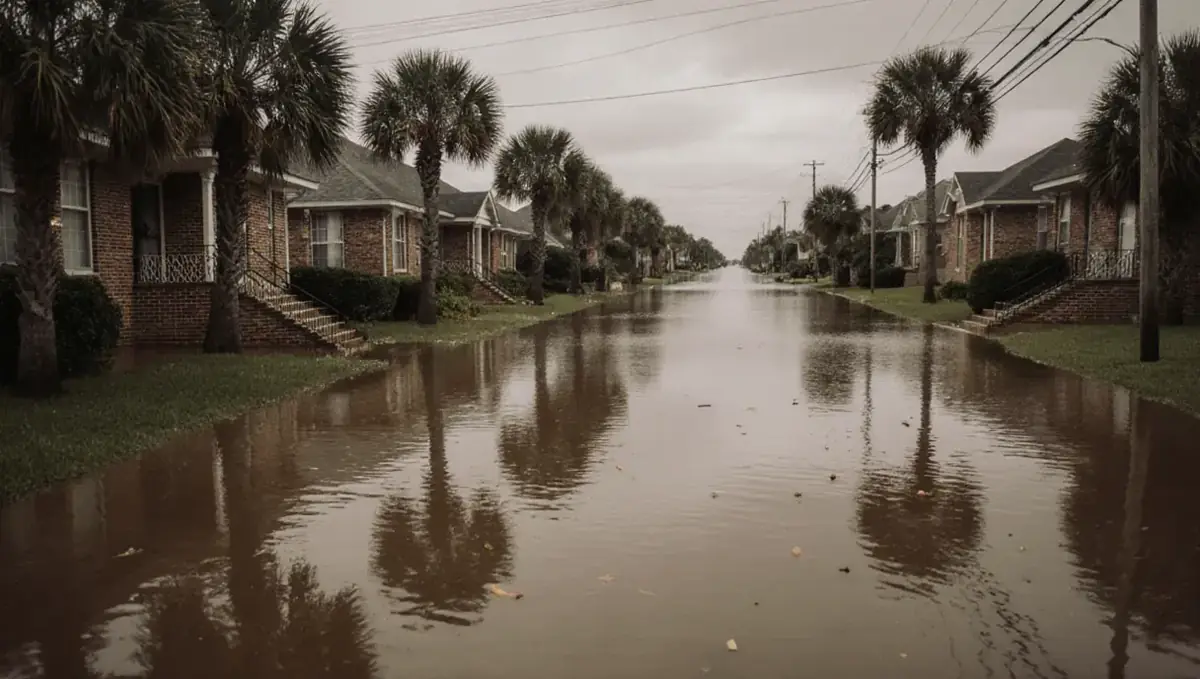
Nickajack Creek, the Chattahoochee and Smyrna's Ridges
Smyrna sits about 1,060 feet above sea level on classic Piedmont ground: broad ridges, sloping uplands and fairly narrow valleys between them. Most of the city drains toward those valleys, and the biggest one belongs to Nickajack Creek. The creek starts from groundwater up in Marietta, runs through Smyrna and drops roughly 325 feet before it meets the Chattahoochee River at Mableton.
That much fall means runoff moves fast. After a hard thunderstorm, water rushes off roofs, driveways and streets on the ridges and collects in the low spots near the creek. Homes at the bottom of a slope can take on water through a garage door, a basement window well or a crawlspace vent even when the street out front looks fine.
The river itself is close by, too. Vinings, which borders Smyrna to the east, is where the Chattahoochee hit 28.10 feet in September 2009, a crest the National Weather Service classified as a 500-year flood. During Helene in 2024, the river again ran more than three feet above major flood stage near Vinings. Neither event means every Smyrna street flooded, but both show how quickly the local drainage system can be overwhelmed.
Postwar Homes and New Townhomes Leak in Different Ways
Smyrna grew from about 2,000 people in 1950 to almost 20,000 by 1970, so a large share of its houses come from that postwar boom. Redevelopment that began with Market Village in 1991 has since replaced some of the older neighborhoods with cluster homes, townhouses and condominiums. Those two housing types tend to fail in different ways.
- Older single-family homes. Aging supply lines, water heaters and drain pipes are frequent sources. Water often spreads under flooring or into a crawlspace before anyone notices it.
- Townhomes and condos. Shared walls mean a leak in one unit can show up as a stain next door. Tell your HOA or property manager right away so they can check the neighboring units.
- Shops and offices. Downtown storefronts near the Village Green and businesses along the main corridors deal with roof leaks, sprinkler problems and restroom overflows that need quick water extraction to limit downtime.
If you own a rental or manage several units, one call to (888) 817-5061 can connect you with a local provider able to handle residential and commercial water damage repair in Smyrna.
What to Do While You Wait for a Restoration Crew
- Find the shutoff. Close the main water valve, usually near the meter or where the line enters the house. For a toilet or sink, use the valve under the fixture.
- Keep electricity out of the picture. Stay out of standing water near outlets and appliances. Only switch off a breaker if you can reach the panel without stepping into water.
- Judge the water. Clean supply-line water is Category 1. Water that came in from outside, overflowed from a toilet or backed up from a drain may be Category 2 or 3 and should be treated as contaminated.
- Take pictures first. Photograph the source, the water line on walls and damaged belongings before you move anything.
- Protect what you can. Lift rugs, papers and electronics off the floor and set furniture legs on foil or blocks.
- Call for help. Water damage restoration in Smyrna starts with getting the water out quickly, before it wicks into drywall and cabinets.
How a Smyrna Drying Job Usually Unfolds
Local providers follow a fairly standard process, adjusted to the size of the loss.
Getting the water out
Portable or truck-mounted extractors pull standing water from carpet, pad and hard floors. Wet pad is often removed so the subfloor can dry.
Measuring moisture
Moisture meters and thermal cameras show where water moved behind baseboards, under vinyl or into the next room. The numbers guide where equipment goes, and the log later backs up your claim.
Drying the structure
Air movers and dehumidifiers run until materials hit dry targets, with readings logged along the way. In Georgia's humid summers, structural drying leans heavily on dehumidification. Soaked drywall and insulation may be cut out to open wall cavities.
Putting it back together
Once the structure is confirmed dry, repair work replaces drywall, flooring, trim and cabinets. Before signing a reconstruction contract, check the contractor's Georgia license at verify.sos.ga.gov, and ask about insurance and training such as IICRC certification.
Storm Damage Cleanup and Flood Cleanup in Smyrna
Tropical remnants can reach Cobb County with very little warning of how much rain they will drop. Helene in 2024 set a 48-hour rainfall record for Atlanta, and the 2009 floods brought 10 to 20 inches in under 24 hours to parts of the metro, with Cobb among the hardest-hit counties.
Wind-driven damage is the other half of the picture. A tree limb through the roof can let rain soak attic insulation and ceilings for hours. Tarp the opening if it is safe, take photos, and arrange storm damage cleanup before ceilings start to sag.
Rising water from outside is a separate problem. Flood cleanup involves removing contaminated materials, cleaning and sanitizing, and then drying. Cobb County runs more than 70 outdoor warning sirens, but they are designed for people outdoors, so sign up for CobbLine alerts and keep Wireless Emergency Alerts turned on. Never drive into a flooded road; most of the Georgia deaths in the 2009 flood happened that way.
Mold Removal in Smyrna and What Georgia Does Not Require
Per EPA guidance, damp drywall, carpet pad or framing can start supporting mold in as little as 24 to 48 hours. A crawlspace or wall cavity that stays damp after a leak is exactly where it tends to start, often out of sight.
Georgia does not appear to have a state license specifically for mold assessors or mold remediators. That point comes from an industry roundup of state requirements, and we did not find an official Georgia agency statement confirming it, so treat it as unconfirmed by the state. In practice, ask any company doing mold cleanup for third-party certifications such as IICRC, written moisture readings before and after the work, and a Georgia contractor license if rebuilding is part of the job.
Our mold removal page explains how containment and air filtration keep spores from spreading during the work.
Insurance Paperwork That Makes Claims Easier
- Know which policy applies. Standard homeowners policies generally cover sudden plumbing leaks but exclude flood. Flood coverage comes from an NFIP or private flood policy, and a new NFIP policy typically takes 30 days to take effect.
- Check your flood zone. Look up your address on the FEMA Flood Map Service Center, especially if you live near Nickajack Creek or another stream.
- Report the loss promptly and ask your insurer what documentation it wants.
- Save everything. Keep photos, moisture logs, invoices and the drying report from the restoration company.
WaterQ cannot predict how any insurer will decide a claim. What we can do is connect you with a local company that documents the job carefully. Call (888) 817-5061, available 24/7.
Smyrna Areas and Surrounding Cobb County Communities
WaterQ's free referral line connects callers throughout Smyrna and the nearby communities of south and central Cobb County with independent local restoration providers.
Neighborhoods
- Market Village (downtown)
- Village Green
- Jonquil Plaza
- Smyrna Heights
- Spring Road corridor
- Concord Road / Ruff's Mill area
Nearby communities
- Vinings
- Marietta
- Mableton
- Austell
- Lithia Springs
- Cumberland
- Sandy Springs
- Atlanta
- Kennesaw
Smyrna Water Damage FAQ
Is flooding along Nickajack Creek a concern for Smyrna homeowners?
It can be for properties in low ground near the creek. Nickajack Creek runs through Smyrna and drops about 325 feet on its way to the Chattahoochee, so heavy rain moves quickly downhill. Check your address on FEMA's flood maps and consider flood coverage if you are near the stream.
How do I get emergency alerts in Smyrna?
Cobb County Emergency Management offers CobbLine subscription alerts through the CobbGov app and its sign-up page, along with Wireless Emergency Alerts, NOAA Weather Radio and more than 70 outdoor sirens. The sirens are meant for people outdoors, so do not rely on them indoors.
My townhome leak came from the unit next door. What should I do?
Stop the water if you can reach a shutoff, notify your HOA or property manager and the neighbor right away, and photograph the damage on your side. Your policy, the neighbor's policy and the association's policy may each cover different parts, so report it to your insurer promptly.
Do mold companies in Georgia need a state license?
Georgia does not appear to have a state license specifically for mold remediation, according to an industry roundup, though no official state statement confirming this was found. Ask for certifications such as IICRC and for before-and-after moisture readings.
Does WaterQ do the restoration work itself?
No. WaterQ is a free referral service. When you call, we connect you with an independent local restoration company in the Smyrna area, and that company inspects and performs the work.
Local emergency and flood resources
Official sources for alerts, flood maps and preparedness in and around Smyrna: