When Rain Meets High Tide in Savannah
Savannah sits on a bluff along the Savannah River about 20 miles upriver from the Atlantic, at roughly 20 feet of elevation, surrounded by tidal salt marsh. The Ogeechee River forms the city's southern limit. Low-lying parts of town drain through a network of canals, including Casey, Springfield, Placentia, Pipemakers and Hardin, that empty into tidal waters.
That design has a weak spot. When a heavy downpour lines up with high tide, the canals have nowhere to send water, and streets back up. The City identifies places such as Abercorn Street between DeRenne and Victory, Bay Street and the Fairmont-Hanover-Hodgson area as prone to flooding in heavy rain.
Tides alone are a growing factor. The City lists high-tide flooding and king tides as flood sources, and sea level at Fort Pulaski has risen roughly 8 to 10 inches since 1935. Driving through a flooded street can push a wake of water into nearby homes and garages, so waiting for the water to recede is the safer choice.
Hurricane Records at Fort Pulaski
The Fort Pulaski tide gauge at the mouth of the Savannah River tells much of the local storm story. Hurricane Matthew set its all-time record of 12.56 feet MLLW in October 2016, caused roughly 3 to 5 feet of inundation in parts of Chatham County and dropped 17.48 inches of rain at Hunter Army Airfield. Less than a year later, Irma brought the second-highest level on record, flooding coastal Chatham County, including Tybee Island.
Heavy rain on its own has a long record here, too. Chatham County's flood history notes that more than 5 inches of rain fell within 24 hours on July 10, 1948, and more than 14 flood events with 4 or more inches of rain have been recorded since then.
Chatham County also lists the Savannah, Wilmington, Vernon, Forest, Grove and Ogeechee rivers as flooding sources. If any of that water has entered your home, treat it as contaminated (Category 3) and let a professional handle flood damage restoration.
Live Oaks, Wind and Roof Leaks
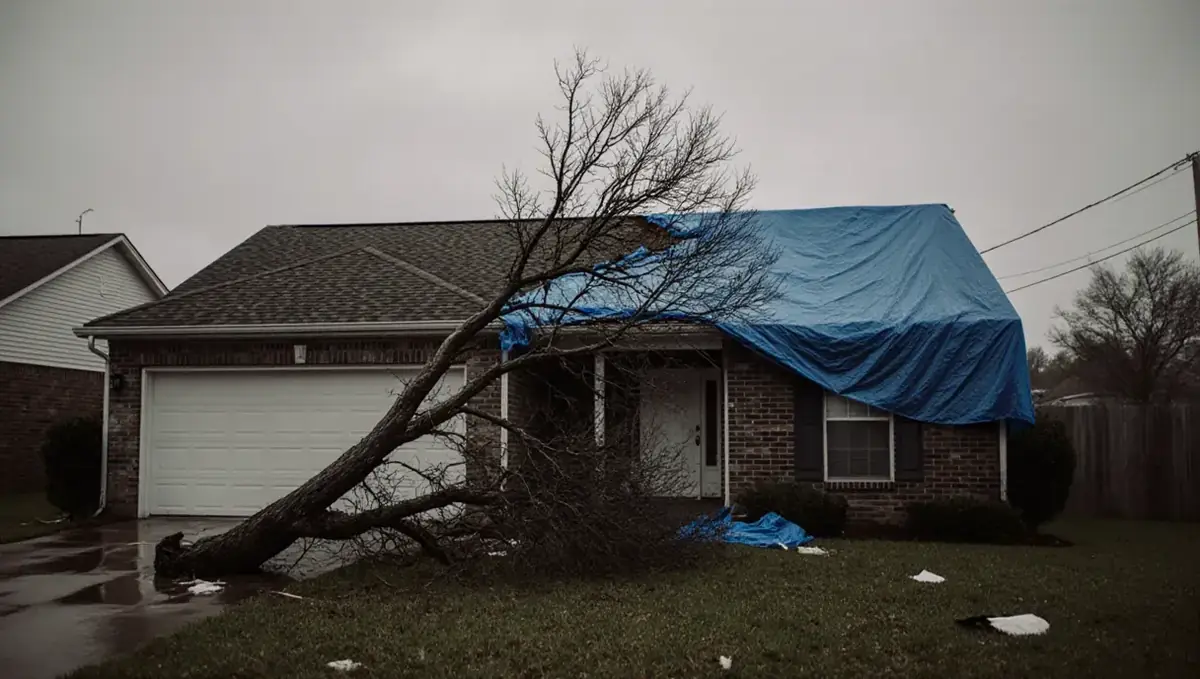
Not every storm brings surge, but wind-driven rain and fallen live oaks regularly cause roof and ceiling damage. In September 2024, Helene's gusts reached 76 mph in Savannah, knocked out power to more than 117,000 Georgia Power customers and contributed to a roof collapse on an 1890 building on Broughton Street.
After a storm, photograph the damage, tarp roof openings quickly if it is safe, and look for stains spreading across ceilings or down walls. Water that enters through the roof can sit in insulation and wall cavities for days. Ask about storm damage cleanup that includes drying, not just roof patching.
Caring for Older Buildings After Water Damage
Savannah has an unusually old building stock. The 1,300-acre National Historic Landmark District is dominated by 18th- and 19th-century buildings, the Victorian District and Thomas Square date to the late 1800s, and Ardsley Park, the city's first suburb, begun in 1910, is mostly made up of 1930s and 1940s homes. Mid-century neighborhoods such as Kensington Park, Groveland and Magnolia Park were built from about 1950 on.
Older homes are more likely to have aging plumbing and raised foundations with crawlspaces exposed to the region's high humidity. Moisture under a raised floor is easy to miss, so ask the restoration company to check the crawlspace as part of its inspection.
Inns, shops, restaurants and rental owners downtown can also call (888) 817-5061 to be connected with local providers who handle commercial water damage.
What to Do Right Away
- Protect people first. Avoid standing water near outlets or appliances, and stay off flooded streets.
- Stop leaks at the source. Shut off the main water valve for any plumbing failure.
- Sort out the water type. A clean supply line is Category 1. Tidal, river or canal floodwater is Category 3 and should not be handled without protection.
- Document before cleanup. Take photos and video of every affected room and item for your insurer.
- Get water out fast. Call (888) 817-5061 to be connected with a local restoration professional for emergency water removal.
Inside a Savannah Drying Job
Once on site, a restoration crew typically works in stages. First comes extraction, pulling standing water out of floors, carpet and, where needed, crawlspaces. Next is moisture mapping with meters and thermal cameras to see how far water traveled behind walls and under flooring.
Drying follows, with air movers and dehumidifiers running while readings are logged each day. In Savannah's humid summers, dehumidification is essential, and soaked drywall or insulation is often removed so cavities can dry. Our structural drying page explains the process in more detail.
The last stage is water damage repair. Before signing a reconstruction contract, verify the contractor's Georgia license at verify.sos.ga.gov, and ask about insurance and training such as IICRC certification.
Humidity, Mold and What Georgia Requires
About half of Savannah's roughly 48 inches of yearly rain falls from June through September, the same months that bring the most heat and humidity. EPA guidance notes that mold can begin growing within 24 to 48 hours on wet materials, so drywall, insulation and crawlspaces need prompt attention.
An industry roundup of state rules indicates Georgia has no state license specifically for mold assessors or remediators, though we have not found an official state confirmation. Ask for industry certifications such as IICRC, and request written moisture readings before and after the job. Learn more about mold removal.
When the Power Is Out After a Storm
Storms that bring down trees often take power lines with them, as Helene did when more than 117,000 Georgia Power customers lost service. Without power, fans and dehumidifiers cannot run, and Savannah's humid air keeps wet materials damp.
While you wait for power or for a restoration crew, you can still limit the damage:
- Remove wet rugs, cushions, papers and clothing from the house if you can do it safely.
- Pull wet items away from walls so air can reach them.
- Open windows when the outside air is drier than the inside air, and close them again when it is not.
- Never run a generator indoors, in a garage or near open windows.
- Write down when the water got in, since the timeline matters for both drying and insurance.
Once it is safe, a restoration company can bring its own equipment and begin flood cleanup and drying.
Flood Zones, Elevation Certificates and Coverage
Standard homeowners policies generally exclude flood. Coverage comes from the NFIP or a private flood policy, and NFIP policies typically have a 30-day waiting period, so buy well before hurricane season, which runs June 1 through November 30.
Before buying or renovating, look up the FEMA flood zone and any elevation certificate on file. The City of Savannah offers elevation certificate and base flood elevation lookups, and SAGIS hosts a flood zone finder. Report street flooding and clogged storm drains to the City through 311. When water does get inside, call (888) 817-5061 any time to be connected with local help.
Savannah Neighborhoods and Coastal Communities
WaterQ connects callers from the Historic District to the islands and nearby Chatham County towns with independent local restoration providers.
Neighborhoods
- Historic District (Downtown)
- Victorian District
- Thomas Square
- Starland District
- Baldwin Park
- Ardsley Park
- Chatham Crescent
- Parkside
- Gordonston
- Cuyler-Brownville
- Midtown
- Eastside
- Westside
- Southside
- Habersham Woods
- Kensington Park
- Groveland
- Magnolia Park
- Fairway Oaks
- Coffee Bluff
Nearby communities
- Tybee Island
- Thunderbolt
- Isle of Hope
- Wilmington Island
- Skidaway Island
- Garden City
- Pooler
- Port Wentworth
- Bloomingdale
- Richmond Hill
- Rincon
- Vernonburg
Savannah Water Damage FAQ
Why do Savannah streets flood when it rains at high tide?
The city's canals and drainage system discharge into tidal waters. When heavy rain coincides with high tide, that water has nowhere to go and backs up into streets. The City lists areas such as Abercorn Street between DeRenne and Victory and Bay Street as prone to flooding.
What is the highest water level recorded near Savannah?
The Fort Pulaski tide gauge recorded its all-time high of 12.56 feet MLLW during Hurricane Matthew in 2016. Irma produced the second-highest level there in 2017.
How can I find my flood zone in Savannah?
You can use the SAGIS flood zone finder or the FEMA Flood Map Service Center. The City of Savannah also offers elevation certificate and base flood elevation lookups.
Does Georgia require mold remediators to be licensed?
An industry roundup indicates Georgia has no state-specific mold remediation license, though no official state statement was found to confirm it. Ask for certifications such as IICRC and written moisture readings.
Is WaterQ a restoration company?
No. WaterQ is a free referral service. When you call, we connect you with an independent, local restoration company that inspects the damage and does the work, and the line is available 24/7.
Local emergency and flood resources
Official sources for alerts, flood maps and preparedness in and around Savannah: