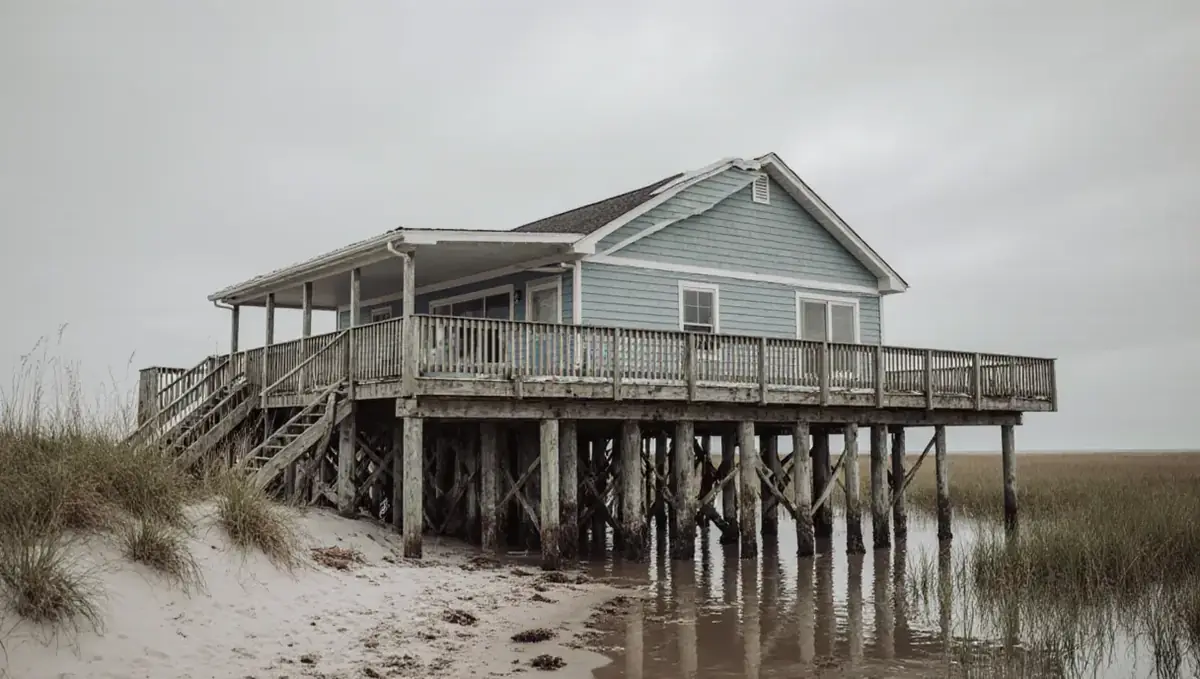
Georgia's Lowest City, Surrounded by Tidal Water
Brunswick occupies a peninsula at the apex of the Georgia Bight, sheltered by Jekyll and St. Simons islands. At roughly 10 to 14 feet above sea level, it is described as the lowest city in Georgia. The East and Turtle rivers run along its west side, the Brunswick River lies to the south, and the Mackay River and Intracoastal Waterway lie to the east, with the salt marshes Sidney Lanier made famous in "The Marshes of Glynn" in between.
The City lists the Altamaha, South Brunswick, Turtle and Little Satilla rivers, the Atlantic Ocean, tidal creeks, canals and marshes as flood sources. It also notes that the area has the highest tidal fluctuations on the Eastern Seaboard behind the Bay of Fundy. When a strong storm lines up with a higher-than-normal tide, waterways can overflow even when no hurricane is involved.
Add about 50 inches of rain a year, peaking in August and September, and it is easy to see why flood cleanup in Brunswick is not only a hurricane-season concern.
Storms That Shaped the Golden Isles
Brunswick has a long storm record. A Category 3 hurricane in 1893 left the city under about 6 feet of water, and the 1898 hurricane that came ashore near Cumberland Island produced a 16-foot storm surge and killed 179 people.
Recent storms have been less severe but still disruptive:
- Matthew (2016): The National Weather Service recorded gusts of 64 mph on Jekyll Island and 62 mph on St. Simons Island, with trees down in Brunswick. Roads were blocked in the Brunswick area, and every access point to St. Simons Island became impassable.
- Irma (2017): A 3.93-foot surge was measured at St. Simons Island, and surge caused extensive flooding on the island.
- Helene (2024): The Golden Isles saw tropical storm conditions, with a peak gust of 78 mph recorded in the region.
After any storm, storm damage cleanup often means tarping roofs, removing wet ceiling and wall materials and drying the structure. Surge or tidal water that enters a building should always be treated as contaminated (Category 3).
Old Town's Victorian Homes Need Careful Drying
The 289-acre Brunswick Old Town Historic District preserves the city's 1771 grid and its squares, including Hanover, Wright, Hillsboro, Orange and Palmetto. Most of its documented buildings date from about 1885 to the 1920s, in Queen Anne and Stick/Eastlake styles, with Victorian mansions along Union Street.
Homes of that age call for a measured approach. Plaster walls, original wood floors, trim and built-ins can often be dried in place instead of torn out, if moisture is caught early and monitored closely. Ask the restoration company how it plans to protect historic finishes and how it will check moisture in floor framing and under raised floors.
Downtown shops, restaurants, churches and offices face the same issues at a larger scale. Owners and managers can call (888) 817-5061 to be connected with local providers who handle commercial drying and repair.
Right After Water Gets Inside
- Stay safe. Keep out of water near outlets or appliances, and never drive through flooded streets or causeways.
- Stop what you can. For a plumbing failure, shut off the main valve. For tidal or storm water, wait until the water recedes and it is safe to return.
- Classify the water. Supply-line water is Category 1. Tidal, river or marsh water is Category 3 and can carry contaminants.
- Document it. Photograph the waterline on walls, damaged contents and the outside of the building.
- Protect belongings. Move photos, documents and electronics to a dry, upper area.
- Get professional help. Call (888) 817-5061 to be connected with a local restoration company for water extraction and flood damage restoration.
How the Work Moves From Extraction to Repair
Restoration companies around Glynn County generally work through the same stages. Standing water is extracted first, and contaminated materials such as carpet pad, insulation and the lower portion of drywall are removed when floodwater was involved. Surfaces are then cleaned and sanitized.
Next comes drying. Crews place air movers and dehumidifiers, then take daily moisture readings until floors, framing and walls reach dry standards. Coastal humidity means dehumidification carries much of the load. Our structural drying page explains what to expect.
Repairs follow once everything tests dry. Check any reconstruction contractor's license with the Georgia Secretary of State at verify.sos.ga.gov, and ask about insurance and training such as IICRC certification before work starts.
Salt Marsh Humidity and Mold Growth
EPA guidance says mold can begin growing within 24 to 48 hours once materials stay wet, and Brunswick's summer heat, frequent 90-degree days and marsh-side humidity work in mold's favor. A house closed up during an evacuation or a long power outage is especially vulnerable.
An industry roundup of state rules indicates Georgia does not have a state license specifically for mold assessors or remediators, though we did not find official state confirmation. For mold removal in Brunswick, ask about certifications such as IICRC, containment methods and written before-and-after moisture readings. More on mold removal.
Flood Zones, X Zones and Insurance in Glynn County
- Low risk is not no risk. The City points out that more than 20 percent of flood claims come from properties outside high-risk flood zones, so a shaded or unshaded X zone does not mean you are safe from flooding.
- Flood is separate from homeowners coverage. Standard homeowners policies generally exclude flood. NFIP or private flood policies provide that coverage, and NFIP policies typically carry a 30-day waiting period.
- County discounts. Unincorporated Glynn County holds a Class 5 rating in FEMA's Community Rating System, worth a 25 percent discount on flood insurance premiums there.
- Know your evacuation route. The City of Brunswick publishes evacuation zones and routes through its Emergency Management page.
Keep photos, receipts and drying records together for your adjuster. WaterQ cannot promise any claim result, but thorough records help.
Brunswick Neighborhoods and Golden Isles Communities
WaterQ's free referral line connects callers across Brunswick, the islands and surrounding Glynn County with independent local restoration providers.
Neighborhoods
- Old Town Historic District
- Downtown Brunswick
- Union Street
- Hanover Square
- Wright Square
- Hillsboro Square
- Orange Square
- Palmetto Square
- Howard Coffin Park area
Nearby communities
- St. Simons Island
- Sea Island
- Jekyll Island
- Dock Junction
- Country Club Estates
- Sterling
- Blythe Island
- Thalmann
- Darien
- Woodbine
Brunswick Water Damage FAQ
Why can Brunswick flood without a hurricane?
Brunswick sits only about 10 to 14 feet above sea level and has one of the largest tidal ranges on the East Coast. When heavy rain or a strong storm coincides with a higher-than-normal tide, rivers, creeks and canals can overflow.
My Brunswick home is in an X zone. Do I need flood insurance?
It is not usually required, but the City notes that more than 20 percent of flood claims come from properties outside high-risk zones. Standard homeowners policies generally exclude flood, so it is worth pricing an NFIP or private flood policy.
Can plaster walls and old wood floors in Old Town be saved after a leak?
Often they can be dried in place if moisture is found early and monitored closely, though water from a flood may require removing contaminated materials. Ask the restoration company how it will protect historic finishes.
Does Georgia require a mold remediation license?
An industry roundup indicates Georgia has no state license specifically for mold remediators, though we did not find an official state confirmation. Ask for certifications such as IICRC and written moisture readings.
Is WaterQ a local Brunswick contractor?
No. WaterQ is a free referral service. We connect you with an independent, local restoration company that inspects and handles the work, and the line is available 24/7.
Local emergency and flood resources
Official sources for alerts, flood maps and preparedness in and around Brunswick: