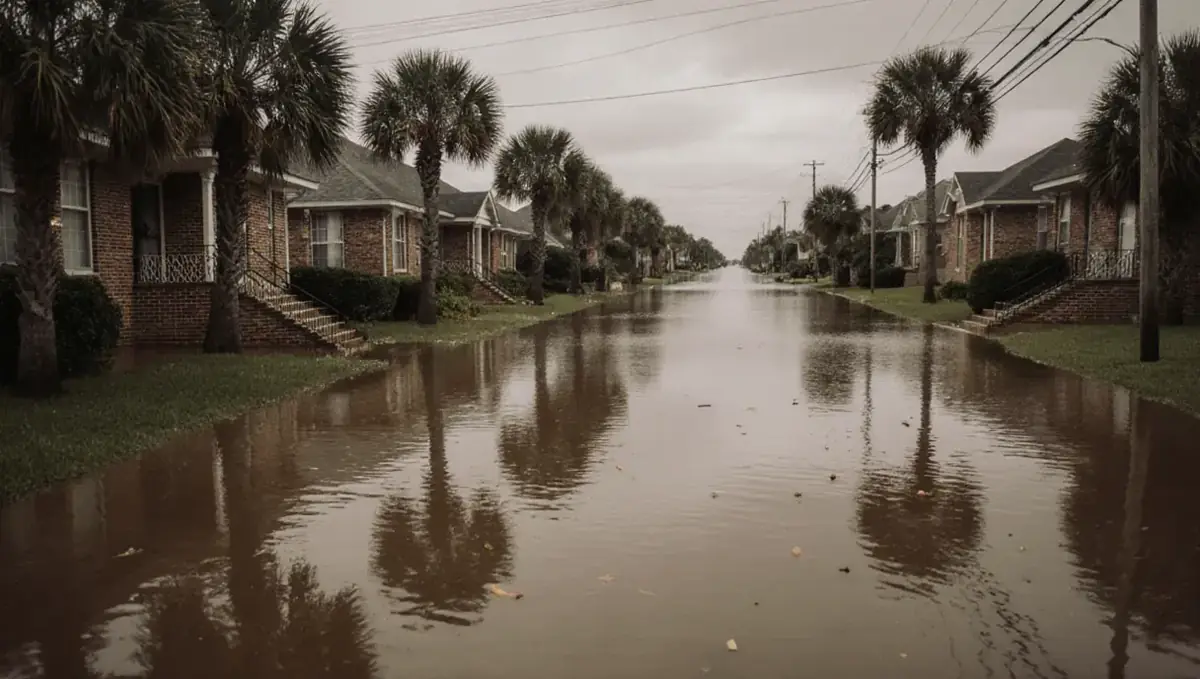
The Night 21 Inches of Rain Fell on Douglas County
When the National Weather Service tallied the September 2009 metro Atlanta flood, the single highest 24-hour rainfall total, 21.03 inches, came from a gauge at the Douglas County Water and Sewer Authority. Over one night, September 20 into 21, more than 18 inches fell across the county. Roads washed out, homes were destroyed, and Douglas County was declared a disaster area. Douglasville, Villa Rica, Austell, Lithia Springs and Chapel Hill were among the hardest-hit areas.
The streams that drain the county responded violently. The Dog River overtopped a U.S. Geological Survey stream gage by 12 feet and crested at Fairplay near 34 feet, compared with a flood stage of 13 feet. To the east, Sweetwater Creek near Austell rose 20 feet above flood stage, nine feet higher than its previous record.
That flood is a reminder that inland, hilltop suburbs can still take on serious water. It also explains why many Douglasville homeowners take flood insurance and drainage questions seriously.
Ridges, Creeks and Reservoirs West of Atlanta
Douglasville sits about 20 miles west of Atlanta at around 1,200 feet, higher than much of the surrounding county. Douglas County slopes from 1,340 feet at Andy Mountain down to about 740 feet along the Chattahoochee River, so rain that falls in town drains downhill through a network of creeks toward the river.
Two waterways shape local risk. The Dog River starts south of Villa Rica, flows east into Douglas County and feeds the Dog River Reservoir, the county's main drinking water source. Sweetwater Creek runs through Sweetwater Creek State Park about seven miles east of the city, past the ruins of the New Manchester mill.
Homes on high ground still deal with water: heavy rain can overwhelm gutters, grading and foundation drains and push water into basements and crawlspaces. Properties in low areas near creeks face true flooding. The City's Engineering Department suggests checking the FEMA Flood Map Service Center and contacting the department for local floodplain information.
Protect People First, Then Property
- Stay out of moving water. In Georgia's 2009 flood, 8 of the 10 deaths involved driving across flooded roads. Turn around at any water over the pavement.
- Shut off what you safely can. Close the main water valve for a plumbing leak. Leave the electrical panel alone if you would have to step into water to reach it.
- Treat floodwater as contaminated. Creek and stormwater runoff is Category 3 water. Wear boots and gloves and keep kids and pets away from it.
- Document before cleanup. Take photos and video of the water line on walls, damaged contents and the source.
- Remove what you can. Move dry belongings upstairs or to another room and get rugs off wet floors.
- Call (888) 817-5061. We connect you with a local provider for emergency water removal and drying.
Extraction, Drying and Rebuilding a Douglasville Home
The goal of water damage restoration in Douglasville is the same as anywhere: get the water out, dry the structure completely, and only then rebuild. Here is roughly how that looks on a typical job.
Day one
The crew assesses the water category, sets up safety measures and starts extraction. Carpet pad soaked by floodwater is usually discarded. Clean-water losses sometimes allow carpet to be dried in place.
The drying period
Dehumidifiers and air movers run continuously, often for several days. Technicians check moisture levels in framing, drywall and subfloors and adjust equipment as readings drop. Drywall and insulation below the waterline are commonly removed so wall cavities can dry out. This is the heart of structural drying.
Repairs
With dry readings documented, water damage repair replaces drywall, paint, flooring, trim and cabinets. For reconstruction, verify a contractor's Georgia license at verify.sos.ga.gov.
Basements, Crawlspaces and Newer Subdivisions
Douglasville has grown quickly, from about 20,000 residents in 2000 to nearly 35,000 in 2020, and Douglas County's population has more than doubled since 1990. That means a large share of homes are newer suburban construction. Common indoor sources in these homes include washing machine hoses, refrigerator lines, water heaters and leaks under sinks.
Basements and crawlspaces deserve special attention. These spaces collect water during heavy rain, and they are easy to ignore until a musty smell appears. After any big storm, take a flashlight and look for standing water, damp insulation or wet framing. Water in a crawlspace usually needs to be pumped out and the area dried with dehumidifiers before insulation or vapor barriers are replaced.
Flood Damage Restoration After Severe Weather
Douglasville sits inland, yet tropical systems and strong thunderstorms still reach it. Hurricane Helene in 2024 brought heavy rain and gusts of 50 to 80 mph to parts of Georgia and downed millions of trees statewide. When a tree breaks through a roof, rain can soak attic insulation, ceilings and the rooms below in a matter of hours.
Storm damage cleanup in Douglasville typically starts with an emergency tarp, then moves to removing wet ceiling drywall and insulation and drying the structure. Flood cleanup is more involved: anything porous that floodwater touched, such as carpet, pad and lower drywall, is usually removed, and surfaces are cleaned and disinfected. See flood damage restoration and storm damage cleanup for more.
Mold Cleanup Questions to Ask in Georgia
EPA guidance notes that mold can begin to grow within 24 to 48 hours on materials that stay wet. A basement that floods during a summer storm, or a slow leak behind a vanity, can develop visible growth in days.
Georgia does not have a state license specifically for mold assessors or remediators, according to an industry roundup of state requirements. We did not find an official Georgia agency statement confirming this, so treat it as unconfirmed by the state. Before hiring for mold removal in Douglasville, ask whether the company's staff hold third-party training such as IICRC certification, how it will contain the affected area, and whether it will provide moisture readings before and after the work. Visit our mold removal page for more detail.
Getting Your Claim and Coverage in Order
- Leaks vs. floods. Homeowners policies generally cover sudden, accidental water such as a burst pipe. Rising water from creeks or surface runoff is flood, excluded from standard policies and covered by NFIP or private flood insurance.
- Plan ahead. NFIP policies typically take effect after a 30-day waiting period.
- Keep a paper trail. Save photos, receipts, the claim number and the restoration company's moisture logs.
- Get alerts. Douglas County offers Alert Douglas notifications for emergencies and severe weather.
Business owners near the Arbor Place area or downtown can use the same line for commercial losses. Call (888) 817-5061 any time. Nearby, see our pages for South Fulton and Smyrna.
Douglasville Areas and Nearby West Metro Communities
WaterQ's free referral line connects callers throughout Douglasville and the rest of Douglas County, plus nearby Carroll, Cobb and Paulding County communities, with independent local restoration providers.
Neighborhoods
- Downtown Douglasville
- North Douglasville
- Chapel Hill
- Arbor Place area
- Douglas Boulevard corridor
- Highway 5 corridor
- Fairburn Road area
Nearby communities
- Lithia Springs
- Villa Rica
- Hiram
- Austell
- Bill Arp
- Winston
- Powder Springs
- Mableton
- Whitesburg
Douglasville Water Damage FAQ
How bad was the 2009 flood in Douglas County?
It was severe. More than 18 inches of rain fell in one night, and the National Weather Service recorded the event's highest 24-hour total, 21.03 inches, at the Douglas County Water and Sewer Authority. Roads and homes were destroyed and the county was declared a disaster area.
How do I find out if my Douglasville property is in a floodplain?
The City of Douglasville Engineering Department suggests checking the FEMA Flood Map Service Center, contacting the department for local floodplain data, or hiring a surveyor or engineer for a site-specific answer.
How do I sign up for emergency alerts in Douglas County?
Douglas County offers Alert Douglas notifications. You can sign up through the alert center on the county's website.
What should I do about water in my crawlspace after a storm?
Avoid entering if there is standing water near wiring. A restoration company can pump out the water, remove wet insulation and dry the space with dehumidifiers, which helps prevent mold and wood rot.
Is WaterQ the company that does the cleanup?
No. WaterQ is a free referral service. We connect you with an independent, local restoration company that inspects the damage and does the work.
Local emergency and flood resources
Official sources for alerts, flood maps and preparedness in and around Douglasville: