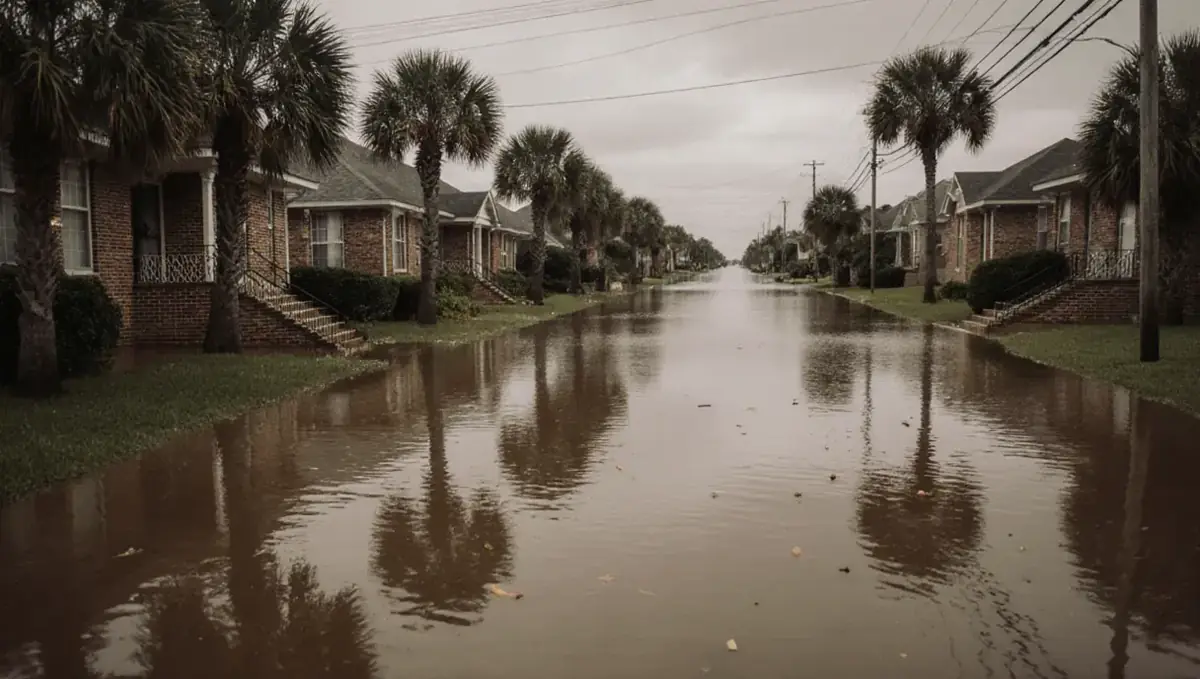
A City Shaped by the Flint River
Albany grew up on the banks of the Flint River at about 203 feet above sea level, and the river has flooded the city again and again. Extensive damage was recorded as far back as 1841 and 1925. Kinchafoonee and Muckalee creeks feed in from the north, which means heavy rain upstream in Lee County and beyond eventually arrives in Dougherty County.
Rain is plentiful even in an ordinary year. Albany averages about 52.6 inches annually and sees thunderstorms on roughly 86 days, more than twice the national norm. That combination of a big river, frequent storms and long humid summers makes water damage in Albany a recurring concern for homeowners, landlords and businesses alike.
The City of Albany tracks the river with a USGS gage at Albany and shares flood zone maps on its flooding and flood prevention page.
Remembering 1994 and 1998
The flood that followed Tropical Storm Alberto in July 1994 is still the reference point for many Albany families. The U.S. Geological Survey found that floods exceeded the 100-year level along almost the entire Flint River. In Albany, more than 20,000 residents evacuated, and floodwater effectively cut the city in two.
Four years later, in 1998, the Flint crested at 35 feet and flooded parts of the city again. Those events shaped local floodplain rules: properties in a Special Flood Hazard Area must meet specific construction standards, so talk with the City's Planning and Development staff before major rebuilding.
River water that enters a home should be treated as Category 3, meaning it may carry sewage, fuel and other contaminants. Flood cleanup after a river event typically means removing soaked drywall, insulation, carpet and pad, sanitizing the structure and only then drying it out.
Tornadoes, Michael and Wind-Driven Leaks
Not every Albany water loss starts at the riverbank. In January 2017, violent tornadoes struck the area on the 2nd and the 22nd. One was a large EF3 that tore across the south side of town and killed five people. The following year, on October 10, 2018, Hurricane Michael pushed through South Georgia as the first major hurricane to directly affect the state since the 1890s, with gusts reaching 115 mph in Donalsonville, southwest of Albany. The National Weather Service noted that in Albany, signs were blown down and roofs were peeled off buildings.
Wind events like these strip shingles, drop limbs and whole trees onto roofs and break windows, and rain follows. Prompt storm damage cleanup, including tarping, debris removal and pulling out wet ceiling materials, limits how far that water travels.
Your Game Plan for the First Hours
- Get safe. If the river is rising, follow evacuation orders and never drive into a flooded road. Indoors, stay away from water near outlets and appliances.
- Shut off the water. When a pipe bursts or a water heater lets go, turn the main valve off at the meter or where the line enters the house. Switch off power to wet rooms only if the panel is in a dry spot.
- Judge the water. A clean supply line (Category 1) and river or sewer backup (Category 3) need very different handling. Keep children and pets away from floodwater.
- Record the damage. Shoot photos and video of every affected room and item before cleanup.
- Save what you can. Move documents, photos and electronics to a dry place and lift furniture off wet floors.
- Bring in a pro. Call (888) 817-5061 and we will connect you with a local restoration provider for emergency water extraction.
How Albany Homes Get Dried Out and Rebuilt
Most water damage restoration in Albany follows a familiar path:
- Water removal. Pumps handle deep water; extractors clear carpet and hard floors.
- Moisture tracing. Meters and infrared cameras show how far water moved into walls, subfloors and cabinets, and create a record for your adjuster.
- Controlled drying. Commercial dehumidifiers and air movers run until readings reach dry standards. See structural drying.
- Repairs. Water damage repair restores drywall, flooring, trim and cabinetry.
Georgia's State Licensing Board for Residential and General Contractors licenses contractors, and you can look one up at verify.sos.ga.gov. It is also fair to ask any company about its insurance and training, for example IICRC certification.
Mold Prevention When Summers Run Long
The EPA says mold can begin to develop on damp materials within 24 to 48 hours. After a flood, when whole neighborhoods are drying out at once and power may be unreliable, Albany homes can cross that line before anyone has a chance to start fans.
A trade-industry survey of state regulations reports that Georgia does not license mold assessors or remediators at the state level. An official Georgia agency confirmation of that was not found, so it should be considered unconfirmed by the state. Ask a mold removal company in Albany about certifications such as IICRC, and request moisture readings before and after the work.
Good remediation isolates the area with containment, removes contaminated porous materials and cleans what remains. Our mold removal page explains the process.
Flood Insurance, CRS Discounts and Paperwork
Standard homeowners policies generally exclude flood, so Flint River damage depends on an NFIP or private flood policy, and NFIP coverage typically starts after a 30-day waiting period. Albany participates in FEMA's Community Rating System, which can lower flood insurance premiums for local policyholders.
- Look up your flood zone through the Georgia DFIRM site or the FEMA Map Service Center.
- Sign up for CodeRED emergency alerts and follow Dougherty County Emergency Management.
- Keep photos, receipts, moisture logs and drying reports in one place.
WaterQ can't promise how an insurer will respond, but good records help. Commercial owners, landlords and homeowners can all reach the free line at (888) 817-5061, available 24/7. Callers in Tifton and Thomasville use the same number.
Albany Neighborhoods and Southwest Georgia Towns
WaterQ's free referral line connects callers throughout Albany, Dougherty County and surrounding Southwest Georgia communities with independent local restoration companies.
Neighborhoods
- Downtown Albany
- Downtown Albany Commercial Historic District
- Albany Railroad Depot Historic District
- Tift Park area
- Radium Springs
- South Albany
Nearby communities
- Leesburg
- Putney
- Sylvester
- Camilla
- Baconton
- Dawson
- Newton
- Americus
- Cordele
- Moultrie
Albany Water Damage FAQ
How bad was the 1994 flood in Albany?
After Tropical Storm Alberto, the Flint River flooded at above the 100-year level along almost its entire length. More than 20,000 Albany residents evacuated, and the floodwater split the city in two. The river flooded parts of Albany again in 1998, cresting at 35 feet.
Where can I check the Flint River level?
The City of Albany points residents to the USGS Flint River gage at Albany for real-time readings, and to the Georgia DFIRM and FEMA map sites for flood zone lookups.
Does Albany offer flood insurance discounts?
Albany participates in FEMA's Community Rating System, which can reduce NFIP flood insurance premiums for policyholders in the city. Remember that new NFIP policies typically have a 30-day waiting period.
Are there special rules for rebuilding in an Albany flood zone?
Yes. Properties in a Special Flood Hazard Area must meet specific construction standards. Check with the City's Planning and Development department before major repairs or additions.
Is WaterQ the company that cleans up my home?
No. WaterQ is a free referral service open 24/7. It connects you with an independent, local restoration company that inspects your property and performs the work.
Local emergency and flood resources
Official sources for alerts, flood maps and preparedness in and around Albany: