Two Creeks, Two Directions: How Hinesville Drains
Hinesville is the Liberty County seat, set on the flat Atlantic coastal plain on the south side of Fort Stewart, about 39 miles from Savannah. At roughly 75 feet above sea level, it sits well above the marshes on the county's eastern coast, but flat ground does not move water quickly.
Rain that falls in the city heads two ways. On the east side it runs through Peacock Creek toward the North Newport River. On the west side it drains through Mill Creek into the Canoochee River system, which feeds the Ogeechee. When a slow tropical system or a stalled summer storm drops several inches of rain, those creeks, ditches and storm drains can back up into low yards, driveways and garages.
Liberty County's FEMA-approved hazard mitigation plan lists inland flooding, hurricane winds, storm surge and coastal flooding among the hazards the county plans for. For most Hinesville homes, the practical risks are heavy rain, wind-driven leaks and fallen trees, plus the everyday plumbing failures every household faces.
Military Moves, Rentals and Who Fixes What
Fort Stewart covers about 280,000 acres and is the largest Army installation by area in the eastern United States. Hinesville had 34,891 residents in 2020, and the county's planning documents call it one of the fastest growing cities in Southeast Georgia. Many households here rent, and many move on a military schedule.
That creates a few water damage situations that come up often:
- Leaks found at move-in or move-out. A stain under a sink or a soft spot in flooring may point to a slow leak that started before you arrived. Photograph it and report it in writing.
- Empty homes during deployments or travel. A supply line that fails while no one is home can run for days. Shut off the main valve before a long absence when possible.
- Renter versus owner responsibility. Repairs to the building usually fall to the landlord or property manager, while a renter's policy typically covers personal belongings.
Landlords, property managers and business owners along the U.S. 84 corridor can call (888) 817-5061 to be connected with local providers who handle residential and commercial water damage repair in Hinesville.
Inland From the Surge, Not From the Storm
Being inland does not mean being out of reach. Hurricane Matthew in 2016 brought more than 12 inches of rain to many locations in southeastern Georgia, and its gusts knocked down trees and power lines across the region, leaving at least 300,000 Georgia customers without power. A year later, Irma dropped roughly 5 to 10 inches of rain across coastal Georgia, and more than 1.5 million people lost power during the storm.
Common storm damage in Hinesville includes roof punctures from limbs, rain blown in around windows and doors, and wet attics that soak ceilings from above. Once it is safe, tarp roof openings, document the damage and look for storm damage cleanup that includes drying, not just a patch. If creek or yard water came inside, treat it as contaminated and ask about flood cleanup rather than handling it yourself.
Sign up for Alert Liberty to receive county emergency notifications.
When You Find Water: Steps in Order
- Make it safe. Keep everyone away from water near outlets, power strips and appliances. Turn off breakers only from a dry spot.
- Stop the source. Close the main shutoff or the valve at the fixture. In a rental, ask your property manager where the main is before you need it.
- Identify the water. Clean water from a supply line is Category 1. Water from outside, a backed-up drain or a toilet overflow may be contaminated (Category 2 or 3).
- Record the damage. Take photos and video of rooms, the source and damaged belongings before cleanup.
- Notify the right people. Tell your landlord or property manager and your insurer as soon as you can.
- Call for help. Dial (888) 817-5061 to reach a local restoration professional for water extraction and drying.
What Happens Once a Restoration Crew Is On Site
Inspection and moisture mapping
The crew traces where water went using moisture meters and, often, thermal imaging. Water spreads under vinyl plank and laminate flooring and behind baseboards farther than it looks, so readings are taken well beyond the visibly wet area.
Extraction
Pumps and extractors remove standing water from floors and carpet. Fast extraction reduces how much drywall and cabinetry have to be removed later.
Drying
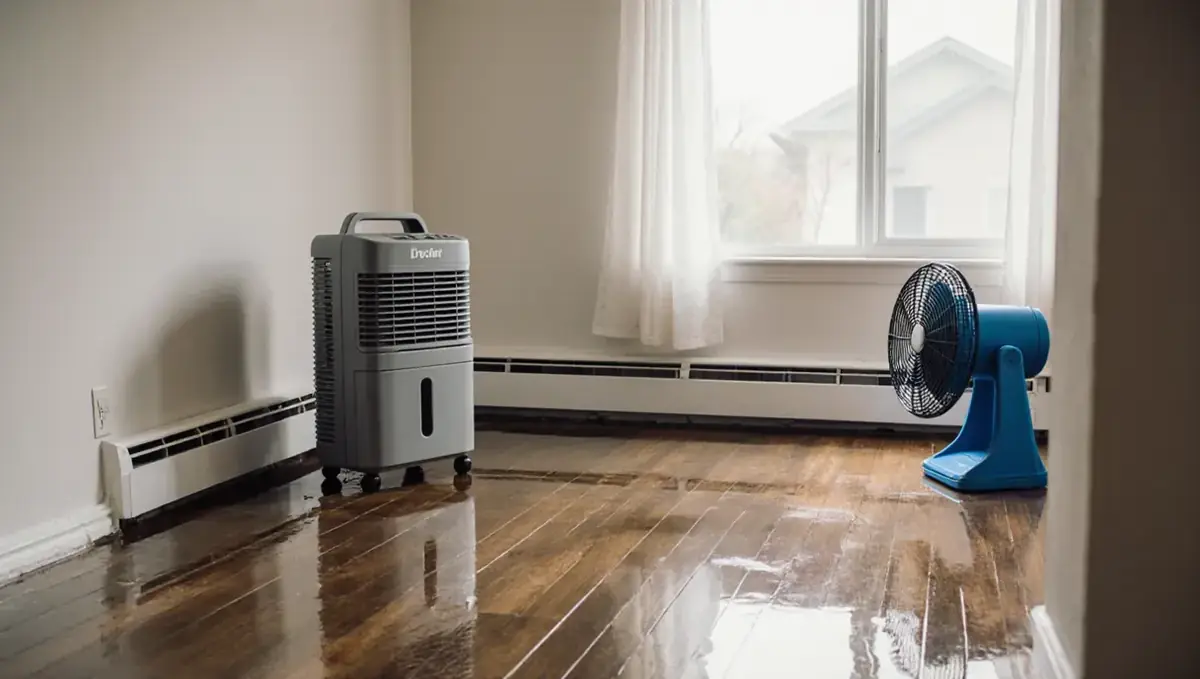
Dehumidifiers and air movers usually stay in place for several days, and the crew logs readings as materials dry out. In coastal Georgia's humidity, dehumidifiers do much of the work. Our structural drying page has more detail.
Rebuild
After materials test dry, damaged drywall, trim, flooring and cabinets are replaced. Verify any reconstruction contractor's Georgia license at verify.sos.ga.gov, and ask about insurance and training such as IICRC certification.
Mold Risk in a Closed-Up Liberty County Home
EPA guidance warns that mold may take hold on damp drywall, carpet pad and wood in as little as 24 to 48 hours. A home that sits shut with the power out after a storm, or empty during a deployment, can stay damp long enough for growth to begin behind walls and under flooring.
According to an industry roundup of state requirements, Georgia does not have a state license specifically for mold assessors or remediators, although we did not find an official state statement confirming that. When you hire help with mold removal in Hinesville, ask about third-party certifications such as IICRC, how the work area will be contained, and if written moisture readings will be provided before and after the job. Read more about mold removal.
Coverage and Records for Owners, Renters and Landlords
- Flood needs separate coverage. Standard homeowners and renter's policies generally exclude flood. NFIP and private flood policies fill that gap, and new NFIP policies usually have a 30-day waiting period.
- Know your map. Liberty County links to the Georgia DFIRM flood map viewer, and the FEMA Flood Map Service Center shows official flood zones, including areas along local creeks.
- Keep everything. Save photos, receipts, written notices to your landlord, and the drying logs from the restoration company.
WaterQ cannot promise any claim outcome, but organized records help owners, tenants and insurers work through the details. Call (888) 817-5061 any time to be connected with local help for water damage restoration in Hinesville.
Hinesville Areas and Nearby Liberty County Communities
Our free referral line connects callers throughout Hinesville, the Fort Stewart area and surrounding Liberty and Long County communities with independent local restoration providers.
Neighborhoods
- Downtown Hinesville (Liberty County Courthouse area)
- Peacock Creek watershed (east side)
- Mill Creek watershed (west side)
- U.S. 84 corridor
Nearby communities
- Flemington
- Allenhurst
- Walthourville
- Midway
- Riceboro
- Gumbranch
- Ludowici
- Fort Stewart
- Richmond Hill
Hinesville Water Damage FAQ
Hinesville is not on the coast. Can a hurricane still cause water damage here?
Yes. Hurricane Matthew in 2016 brought more than 12 inches of rain to many parts of southeastern Georgia, and its winds brought down trees and power lines across the region. Heavy rain, roof damage from fallen limbs and long power outages are the main concerns inland.
Where does rainwater go in Hinesville?
The east side drains through Peacock Creek toward the North Newport River, and the west side drains through Mill Creek into the Canoochee River system. Check the FEMA or Georgia DFIRM flood maps to see if your property is near a mapped floodplain.
I am a renter and found a leak before my PCS move. What should I do?
Photograph the damage, report it to your landlord or property manager in writing, and keep a copy. Building repairs are usually the owner's responsibility, while a renter's policy typically covers personal belongings.
How do I get emergency alerts in Liberty County?
Liberty County uses Alert Liberty for emergency notifications. You can sign up through the county's Emergency Management web pages.
Is WaterQ a restoration contractor?
No. WaterQ is a free referral service that connects you with an independent, local restoration company. That company inspects the damage and does the work, and our line is available 24/7.
Local emergency and flood resources
Official sources for alerts, flood maps and preparedness in and around Hinesville: