A River City Built Where the Piedmont Meets the Coastal Plain
Columbus grew up on the east bank of the Chattahoochee River, right where it crosses the Fall Line, at about 243 feet of elevation. Phenix City, Alabama sits directly across the water. The river's drop once ran textile mills, and between 2010 and 2013 the Eagle & Phenix and City Mills dams were breached to create a 2.5-mile whitewater course through Uptown.
The Chattahoochee itself is heavily managed. Upstream, West Point Dam, completed in 1970, was built for flood control, hydropower and navigation storage, and a chain of reservoirs including Lake Harding, Goat Rock Lake and Lake Oliver sits just above the city. For most homeowners, the water that causes trouble is closer to home: local creeks, overloaded storm drains, and plumbing failures inside the house.
Columbus averages roughly 49 inches of rain a year. Heavy downpours happen in every season, and tropical remnants add more. When Hurricane Helene passed in September 2024, about 4 inches of rain fell on the city in a single day, a daily record.
Bull Creek, Storm Drains and Combined Sewers
The City of Columbus notes that its many waterways, including Bull Creek and other tributaries of the Chattahoochee, have been prone to flooding in the past. The Stormwater Division keeps repetitive loss area maps, and the city's online map tool shows if your property sits in a Special Flood Hazard Area; find it on the floodplain management page.
Parts of older Columbus are served by a combined sewer system, where stormwater and sewage share pipes. The city's 19th Street Flood Abatement Project, along the west side of Veterans Parkway, is adding a box culvert and flood basin to contain that system and reduce flooding. For homeowners, the practical takeaway is that water backing up during a storm may be contaminated.
- Treat any backup from floor drains, toilets or tubs during heavy rain as Category 3 water.
- Keep children and pets out of affected rooms.
- Expect porous materials it touched, such as carpet pad and the lower part of drywall, to be removed rather than dried.
Sewage cleanup and flood cleanup in Columbus call for protective gear and disinfection. Call (888) 817-5061 and we will connect you with a local company equipped for it.
Mill Villages, Historic Districts and Rental Housing
Columbus has a long list of historic neighborhoods. National Register districts include the Columbus Historic District and High Uptown near the river, the former mill village of Bibb City, and residential areas such as Dinglewood, Wynnton Village, Weracoba-St. Elmo and Peacock Woods-Dimon Circle. Older houses can mean aging supply lines, original wood floors and plaster that need a gentler, slower drying plan.
Fort Benning, one of the region's largest employers, also means many households rent. Renters should report a leak to the landlord right away, take photos and check whether renters insurance covers their belongings. Landlords, apartment managers and business owners can call (888) 817-5061 to be connected with a restoration company that handles commercial and multi-unit water damage restoration.
The First Hour: Protecting People and Property
- Avoid shock hazards. Keep clear of wet areas around outlets, cords and appliances. Only flip a breaker if the panel can be reached without standing in water.
- Stop the flow. Close the main water valve for plumbing leaks. Before evacuating for flooding, the city advises turning off utilities and closing gas valves.
- Stay off flooded roads. Columbus officials urge residents to avoid driving through flooded areas and standing water.
- Record the damage. Photograph and video every wet room, the source and damaged items.
- Lift and move. Get rugs, electronics, documents and small furniture out of the water.
- Bring in help. Call (888) 817-5061 for emergency water removal. The line is available 24/7.
Extraction, Drying and Repair, Step by Step
Assessment
A restoration crew identifies the source and the water category, from clean supply-line water (Category 1) to gray water (Category 2) to floodwater or sewage (Category 3). That decision shapes what can be dried and what must go.
Water removal
Extractors pull water out of carpet, pad and hard floors. The faster this happens, the less water wicks into walls and cabinets.
Drying
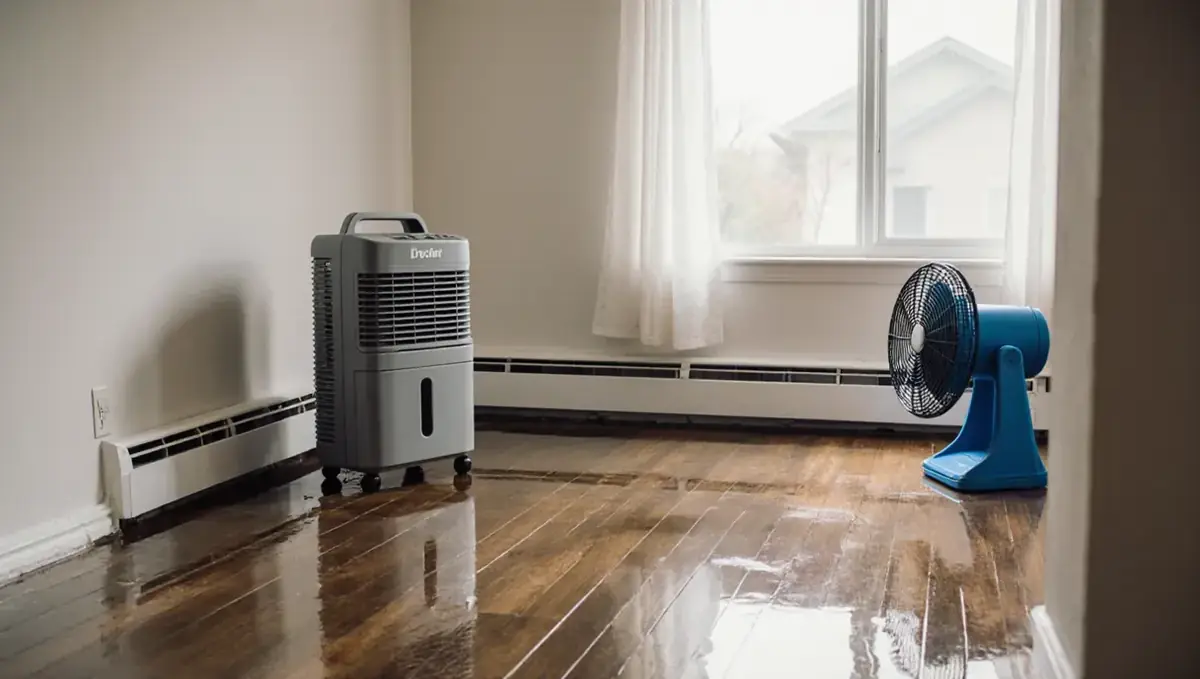
Dehumidifiers and air movers run while moisture is measured and logged, often daily. Wet insulation and drywall may be cut back so wall cavities can dry. See how structural drying works.
Rebuild
After materials test dry, water damage repair in Columbus covers drywall, paint, trim, flooring and cabinets. Ask any company about its licensing, insurance and training, such as IICRC certification, before work starts. Georgia licenses residential and general contractors through the Secretary of State, and you can look one up at verify.sos.ga.gov.
Storm Season in the Chattahoochee Valley
The Atlantic hurricane season runs June 1 through November 30, and storms that make landfall on the Gulf coast can bring heavy rain and wind deep into west Georgia. Fallen trees are a common way rain gets into homes, through damaged roofs or broken windows. A quick tarp, followed by drying the attic and ceilings, can keep a roof leak from becoming a much larger repair.
Columbus offers RAVE emergency alerts, outdoor warning sirens and NOAA weather radio guidance through its Homeland Security and Emergency Management office. For storm damage cleanup after high winds or a downpour, local providers can handle tarping coordination, water removal and storm cleanup.
Mold Prevention and What Georgia Does Not License
Following EPA guidance, mold can start growing within 24 to 48 hours on materials that stay wet. Columbus summers are long and humid, so prompt drying is the best defense.
Georgia does not have a state license specifically for mold assessors or mold remediators, according to an industry roundup of state requirements; no official Georgia agency statement confirming this was found, so consider it unconfirmed by the state. For mold removal or mold cleanup in Columbus, look for third-party certifications such as IICRC, and ask for written moisture readings before and after the work. Learn more about mold removal.
Saving on Flood Insurance in Columbus
Standard homeowners policies generally exclude flood, which is covered by the NFIP or private flood insurance. NFIP policies typically have a 30-day waiting period. Columbus participates in the NFIP Community Rating System with a Class 8 rating, which the city says gives residents a 10 percent discount on flood insurance policies.
Keep photos, receipts and the restoration company's moisture logs together for any claim. WaterQ cannot say how an insurer will decide, but thorough records help.
Columbus Neighborhoods and Chattahoochee Valley Towns
Our free referral line connects callers throughout Columbus and Muscogee County, plus nearby Georgia and Alabama communities, with independent local restoration providers.
Neighborhoods
- Uptown
- Columbus Historic District
- High Uptown
- Bibb City
- Dinglewood
- Wynnton Village
- Weracoba-St. Elmo
- Peacock Woods-Dimon Circle
- Hillcrest-Wildwood Circle
- Wynn's Hill-Overlook
- Green Island Hills
- Oldtown
- Wesley Woods
- Windsor Park
- Sears Woods
- Waverly Terrace
Nearby communities
- Phenix City, AL
- Fort Benning
- Cusseta
- Hamilton
- Pine Mountain
- Ladonia, AL
- Buena Vista
- Manchester
- West Point
- Lumpkin
Columbus Water Damage FAQ
How do I check whether my Columbus home is in a flood zone?
The City of Columbus floodplain page links to an online map where you enter your address and turn on the flood layer. You can also use the FEMA Flood Map Service Center or call the Stormwater Division.
Is water backing up from my drains during a storm dangerous?
It can be. Parts of Columbus use a combined sewer system, so storm backups may contain sewage. Treat it as Category 3 water, keep people and pets away, and have it cleaned and disinfected by professionals.
Do Columbus residents get a flood insurance discount?
Yes. According to the city, Columbus holds a Class 8 rating in the NFIP Community Rating System, which provides a 10 percent discount on flood insurance policies.
Do I need a licensed mold company in Georgia?
An industry roundup reports that Georgia has no state license specifically for mold assessors or remediators, though no official state statement confirming it was found. Ask for certifications such as IICRC and written moisture readings.
Is WaterQ the company that comes to my house?
No. WaterQ is a free referral service that connects you with an independent, local restoration company. That company handles the inspection and the work, and our line is answered 24/7.
Local emergency and flood resources
Official sources for alerts, flood maps and preparedness in and around Columbus: