The January 2023 Tornado and Its Aftermath
On the afternoon of January 12, 2023, an EF3 tornado with peak winds estimated at 155 mph tracked 32.8 miles from near Hollonville in Pike County across Spalding County. The western part of Griffin took the worst of it. Roughly 1,465 homes in the city were damaged and 18 people were injured.
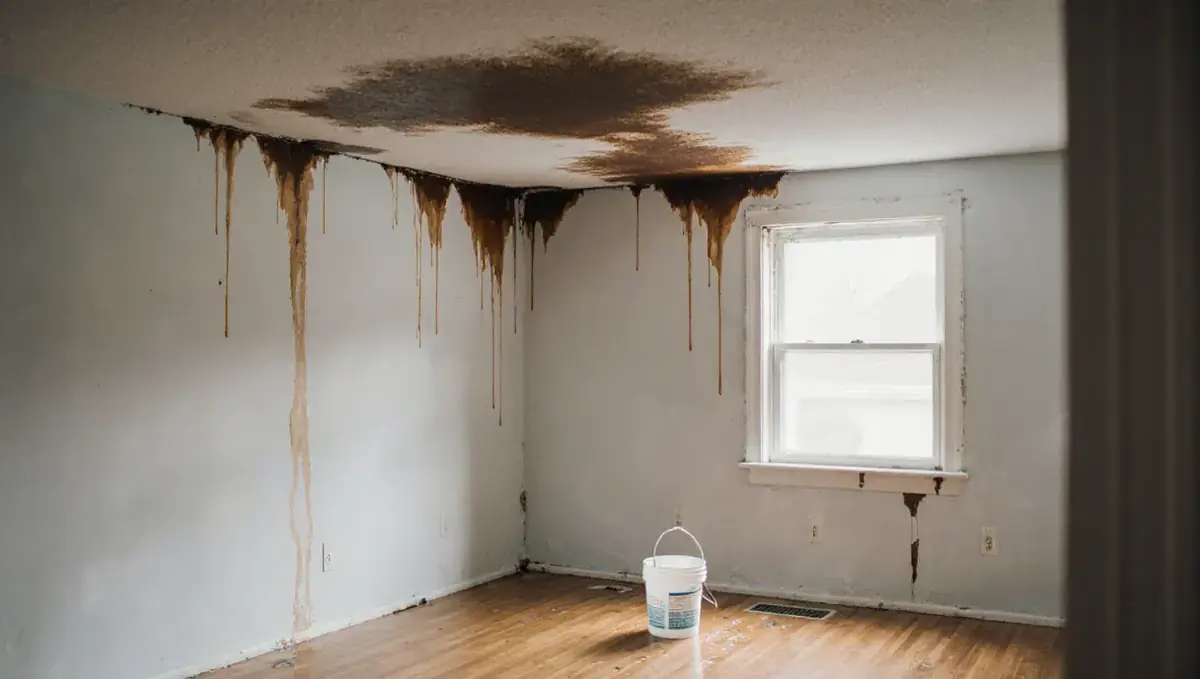
Wind events like that create water damage that shows up for weeks. Lifted shingles, cracked roof decking, broken windows and punctures from limbs let rain into attics and wall cavities, often out of sight. Insulation can hold water long after a ceiling stain appears.
If your roof was opened by wind or a falling tree, get it covered first, then have the wet areas inspected with moisture meters. Our page on storm damage cleanup explains how tarping, debris removal and drying usually fit together.
A Town on the Divide Between Two River Basins
Griffin sits at about 978 feet, on high ground that splits rainfall in two directions. Spalding County west of a line from Sunny Side through Griffin to Orchard Hill drains toward the Upper Flint River, while the eastern side drains to the Upper Ocmulgee. That means the city is surrounded by small headwater streams rather than a single large river.
Small streams react fast to heavy rain. Spalding County's stormwater program warns that when excess water has nowhere to go, it can damage land and structures, and that bank erosion and sediment buildup can raise flood potential. For homeowners, the practical risks are runoff into lower-level rooms, water collecting against foundations and overwhelmed yard drains.
Hurricanes reach this far inland too. During Helene in 2024, the hurricane warning stretched as far north as Spalding County, and gusts across Georgia brought down millions of trees. Flood cleanup in Griffin is often a mix of rainwater intrusion and wind damage rather than river flooding alone.
Older Downtown Buildings and Railroad-Era Homes
Griffin was founded in 1840, and the Macon and Western Railroad arrived in 1842. The Griffin Commercial Historic District, roughly bounded by Central Alley and Sixth, Taylor and Eighth streets, preserves much of the older downtown.
Older structures need a careful approach after a leak:
- Plaster and lath can hold water and lose its bond, so it is dried and checked before any decision to remove it.
- Original wood floors may cup as they absorb moisture and often recover with controlled drying.
- Shared walls between storefronts let water move from one business to the next.
- Aging roofs and flashing are a common source of slow, repeated leaks.
Commercial tenants and building owners downtown can call (888) 817-5061 to be connected with a local company experienced in commercial water losses.
Quick Actions When Water Gets Inside
- Watch the ceiling. A bulging, water-filled ceiling can collapse. Keep people out of the room and place a bucket under the lowest point.
- Turn off the water. Close the valve at the fixture or the main shutoff if plumbing is the source.
- Be careful with power. Do not step into water near outlets or appliances, and leave breaker panels alone if they are wet.
- Separate clean from dirty water. Category 1 water from a supply line is very different from Category 3 runoff that has crossed soil, yards or streets.
- Photograph everything. Wide shots of each room plus close-ups of damaged items help your insurer.
- Arrange help. Call and we connect you with a local pro for emergency water removal and drying.
What Restoration Looks Like in a Griffin Home
The local provider you are connected with will build a plan around your home, but water damage restoration in Griffin generally follows four phases.
Inspection
Moisture meters and thermal imaging trace how far water traveled, including into attic insulation after a roof leak.
Extraction and tear-out
Standing water is removed, and materials that cannot dry in place, such as saturated ceiling drywall or carpet pad, are cut out.
Drying
Dehumidifiers and air movers run while readings are recorded until materials meet drying goals. Read about structural drying.
Rebuild
Water damage repair then replaces ceilings, walls, trim and floors. Ask any contractor about licensing, insurance and training such as IICRC certification.
Mold Cleanup and Contractor Checks in Spalding County
Following EPA guidance, mold can begin growing on wet materials within 24 to 48 hours. A slow roof leak into an attic, or a wet wall cavity behind furniture, can grow mold before anyone notices a smell.
An industry trade roundup of state rules reports that Georgia has no license specific to mold assessment or mold remediation work. No official state agency source confirming that was found, so consider it unconfirmed. Look for third-party certifications like IICRC and request moisture readings before and after the work.
Reconstruction is different: the State Licensing Board for Residential and General Contractors licenses those trades, and you can check a license at verify.sos.ga.gov. See our mold removal page for how containment and cleanup work.
Insurance, Outages and Local Contacts
- Wind versus flood. Wind-driven roof damage often falls under a homeowners policy, depending on its terms, but rising water is generally excluded and needs an NFIP or private flood policy. NFIP policies typically take 30 days to start.
- Document before cleanup. Photograph fallen trees, roof openings and interior damage before anything is moved.
- Report drainage problems. Spalding County Stormwater takes reports on drainage and stormwater issues.
- Get alerts. Spalding County offers a Civic Ready alert sign-up for emergency notifications.
- Power outages. The City of Griffin runs its own electric utility and lets customers report outages.
For storm damage cleanup in Griffin or a burst pipe at home, call (888) 817-5061. The line is available 24/7. You can also read about nearby McDonough.
Griffin and Surrounding Spalding County Communities
Our free referral line connects callers in Griffin and nearby Spalding, Henry and Pike County communities with independent local restoration companies.
Neighborhoods
- Downtown Griffin
- Griffin Commercial Historic District
- East Griffin
Nearby communities
- Experiment
- Sunny Side
- Orchard Hill
- Heron Bay
- Hollonville
- Hampton
- Locust Grove
- McDonough
Griffin Water Damage FAQ
Can roof damage from the 2023 Griffin tornado still cause leaks?
It can. Wind may loosen shingles, flashing or decking without obvious signs, and repeated small leaks can wet insulation and ceilings over time. If you see new stains or musty odors, have the attic and ceiling checked with a moisture meter.
Does Griffin flood from a major river?
Griffin sits on high ground along the divide between the Flint and Ocmulgee basins, so it is surrounded by small headwater streams. Most water problems come from heavy rain runoff, roof damage and plumbing failures.
How do I report a drainage problem in Spalding County?
Spalding County's Stormwater Department handles stormwater concerns and offers an online contact form, or you can call (770) 467-4765.
Do I need a licensed mold remediator in Georgia?
Georgia does not appear to license mold remediators specifically, based on an industry roundup, though no state agency has confirmed this. Ask for certifications such as IICRC and verify any reconstruction contractor at verify.sos.ga.gov.
Will WaterQ send someone to my Griffin property?
WaterQ is a free referral service, not a contractor. We connect you with an independent, local restoration company that schedules the visit and performs the work. The line is available 24/7.
Local emergency and flood resources
Official sources for alerts, flood maps and preparedness in and around Griffin: