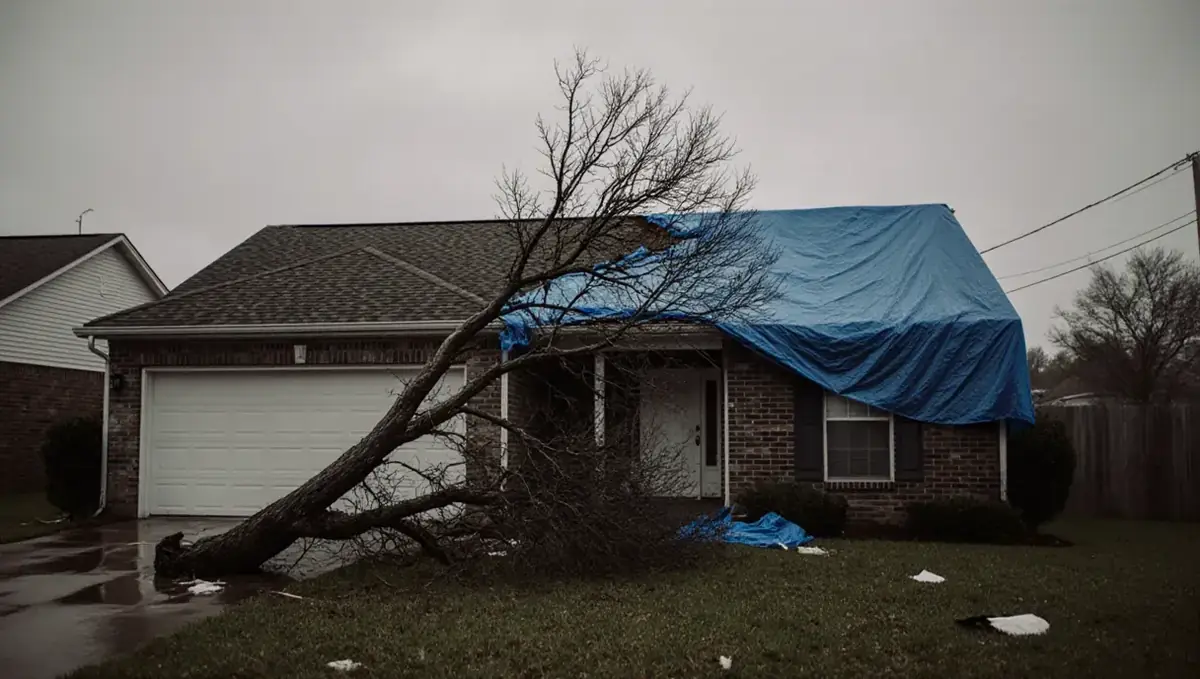
What Helene Taught Augusta About Wind and Water
Augusta is far inland, yet Hurricane Helene in 2024 showed how much damage an inland tropical storm can do here. Peak gusts in Augusta and Richmond County were reported to exceed 100 mph. Thousands of trees came down or were damaged, and some parts of the city lost as much as 80 percent of their tree canopy. Countywide damage was estimated at more than $500 million, and six people in Richmond County died from falling trees.
For most households, the water damage from a storm like that does not come from rising water. It comes from above. A limb punches through shingles, rain follows it into the attic, and within hours insulation is soaked and ceiling drywall starts to sag. Long power outages then leave homes closed up and humid, which speeds up secondary damage.
If a tree or limb has opened your roof, storm damage cleanup usually starts with getting the opening covered and the attic and ceilings dried before mold has a chance to take hold. Call (888) 817-5061 and we will connect you with a local provider who can assess the damage.
Living on the Fall Line of the Savannah River
Augusta grew up on the fall line, where the Savannah River drops out of the Piedmont at roughly 148 feet of elevation. Across the river is North Augusta, South Carolina. The 13-mile Augusta Canal, finished in 1845 to power mills and supply water, still runs through the city, and Riverwalk Augusta sits along and on top of the downtown levee.
River flooding is far more controlled today than it once was. Major floods in the 1920s and 1930s led to federal repair work on the canal, including a new spillway built by the Works Progress Administration. Upstream, the J. Strom Thurmond Dam at Clarks Hill Lake was built for flood control, power and navigation. During a major flood in March 1964, its spillways held the river at Augusta to 25 feet instead of an estimated 38, below the 32-foot flood stage.
That does not make flooding impossible. Augusta's emergency management office warns that flash floods can peak within minutes during intense storms, and that low-lying property, property near water and property downstream from a dam carry extra risk. Check your address on the FEMA flood map and through the city's floodplain management page.
Steps to Take Before the Restoration Crew Gets There
- Put safety first. Stay out of rooms where water is near outlets, cords or appliances, and keep away from downed lines outside. If a tree is resting on the house, do not go into the rooms beneath it.
- Shut off the source. For a plumbing leak, close the main water valve. For a roof breach, move belongings away from the drip and set out buckets.
- Run generators outdoors only. Long outages are common after big wind storms. Keep any generator well away from doors and windows.
- Photograph everything. Capture the roof, the ceiling, wet floors and damaged items before anything is thrown away.
- Protect what you can. Pull rugs, electronics and paperwork out of wet areas and prop furniture up off soaked carpet.
- Get help moving. Call (888) 817-5061 any time, day or night, to be connected with a local company for emergency water removal and drying.
Avoid driving through water over the road. Augusta's own guidance points out that a foot of moving water can float a full-sized car.
How a Wet Augusta Home Gets Dried and Rebuilt
Water damage restoration in Augusta follows the same basic path whether the water came through a roof, a supply line or a flooded floor. The details change with the source.
Inspection and water category
The crew identifies where the water came from. Clean water from a supply line is Category 1. Water that has picked up contaminants, such as dishwasher overflow, is Category 2. Floodwater from outside or sewage backup is Category 3 and calls for removing porous materials it touched.
Extraction
Pumps and extractors pull standing water from floors, carpet and pad. Getting the bulk water out early limits how far it wicks up drywall and into cabinets.
Drying and monitoring
Dehumidifiers and air movers run while moisture readings are logged daily. Attic insulation soaked by roof leaks is often removed so framing and ceiling drywall can dry. Learn more about structural drying.
Repairs
When materials test dry, water damage repair replaces ceilings, drywall, trim and flooring. Ask any company about its licensing, insurance and training, such as IICRC certification, before you sign anything.
Historic Districts, Older Homes and Base Housing
Augusta has a deep stock of older buildings. The Augusta Downtown Historic District covers most of the pre-Civil War downtown, and National Register districts such as Summerville, Harrisburg-West End, Pinched Gut, Laney-Walker North, Bethlehem and Sand Hills hold many older homes. Plaster walls, original wood floors and aging plumbing all react differently to water than modern materials, so drying plans for these houses tend to be slower and more careful.
Commercial owners and property managers face their own issues, from downtown storefronts sharing walls to apartment complexes where one leak reaches several units. Families near Fort Gordon often rent, and renters should tell the landlord about a leak right away and check whether a renters policy covers their belongings. Property managers can call (888) 817-5061 to be connected with a restoration company that handles commercial water damage restoration and documentation.
Humid Summers, Closed-Up Houses and Mold
Per EPA guidance, mold can begin growing on wet materials within 24 to 48 hours. In Augusta, that window often overlaps with hot, humid weather and, after big storms, days without air conditioning. A wet attic or a soaked crawlspace can turn into a mold problem quickly if nobody is drying it.
Georgia does not have a state license specifically for mold assessors or mold remediators, according to an industry roundup of state requirements. That point comes from a trade source, not a state agency, so it remains unconfirmed by Georgia officials. Ask for third-party certifications such as IICRC, and for written moisture readings before and after the work. When reconstruction is part of the job, the State Licensing Board for Residential and General Contractors licenses contractors, and you can check a license at verify.sos.ga.gov.
Read more about mold removal and containment if you see growth or smell a musty odor after a leak.
Claims, Flood Policies and Paperwork in Richmond County
- Wind and tree damage to a roof is often handled under a homeowners policy, subject to its terms and deductible. Report it promptly and keep receipts for tarps and emergency work.
- Flood is a separate policy. Standard homeowners policies generally exclude flood. Coverage comes from the NFIP or a private flood policy, and NFIP policies typically have a 30-day waiting period.
- Keep the drying records. Moisture logs, photos and the restoration company's reports help show what was wet and how it was dried.
- Sign up for alerts. Augusta Emergency Management offers an emergency alert sign-up.
WaterQ cannot predict how an insurer will treat a claim, but good records make it easier. For flood cleanup in Augusta or help after a storm, call any time and we will connect you with a local restoration professional.
Augusta Districts and CSRA Communities on Our Referral Line
Our free referral line connects callers across Augusta-Richmond County and nearby Georgia and South Carolina communities with independent local restoration providers.
Neighborhoods
- Downtown Augusta
- Summerville
- Harrisburg
- Pinched Gut (Olde Town)
- Laney-Walker
- Bethlehem
- Sand Hills
- Woodlawn
- Broad Street
- Greene Street
- Hyde Park
- Augusta Canal Industrial District
Nearby communities
- North Augusta, SC
- Martinez
- Evans
- Grovetown
- Hephzibah
- Blythe
- Aiken, SC
- Thomson
- Waynesboro
- Belvedere, SC
Augusta Water Damage FAQ
A tree fell on my Augusta house. What should happen first?
Get everyone out of the rooms under the tree and stay clear of downed power lines. Once it is safe, the opening needs to be covered and the attic and ceilings dried. Photograph the damage before cleanup begins, then call your insurer and a local restoration company.
Does the Savannah River still flood Augusta?
Major river floods are much better controlled than in the early 1900s. The J. Strom Thurmond Dam upstream was built partly for flood control and held the March 1964 flood to 25 feet at Augusta, below flood stage. Flash flooding from heavy rain can still affect low-lying areas, so check your flood zone.
How do I get emergency alerts in Augusta?
Augusta Emergency Management has an online sign-up form for emergency alerts, and Augusta 311 is the city's main contact for reporting problems such as drainage issues.
Is a mold remediation license required in Georgia?
According to an industry roundup, Georgia has no state license specifically for mold assessors or remediators, though we did not find an official state statement confirming it. Ask for certifications such as IICRC and written moisture readings before and after the work.
Who actually does the work when I call WaterQ?
WaterQ is a free referral service. We connect you with an independent, local restoration company, which handles the inspection, the drying and any repairs. The line is available 24/7.
Local emergency and flood resources
Official sources for alerts, flood maps and preparedness in and around Augusta: