Big Creek and Alpharetta's Flash Flood Risk
Alpharetta sits about 26 miles north of downtown Atlanta, spread across roughly 27 square miles of north Fulton County. Its main waterway is Big Creek, which begins near Cumming in Forsyth County and winds south through the city on its way to Roswell and the Chattahoochee. The 12-mile Big Creek Greenway follows the stream through the woods, and the path near Mansell Road has flooded repeatedly.
The city is direct about the risk. Its floodplain page notes that Alpharetta is susceptible to flash floods, where streams and creeks can rise quickly out of their banks. Development adds rooftops, parking lots and roads, and all of that runoff has to go somewhere when a heavy storm parks over north Fulton.
Annual rainfall averages a little over 51 inches, and snow is rare. Most water damage in Alpharetta comes from rain, storms and everyday plumbing failures rather than winter weather.
Leaks in Offices, Data Centers and Mixed-Use Buildings
Alpharetta has grown into a major business hub, with corporate offices, data centers and large mixed-use projects such as Avalon, an 86-acre development that opened in 2014, and Alpharetta City Center downtown. Water damage in these settings has a different set of stakes than in a single-family home.
- Downtime. Wet carpet tiles, drywall and ceiling grids can close a suite or a storefront until they are dry.
- Shared spaces. A leak in an upstairs residence or restaurant can reach retail or office space below.
- Sensitive equipment. Server rooms and electrical rooms need water kept away from them and should be inspected before power is restored.
Facility and property managers can call (888) 817-5061 to be connected with local providers that handle commercial extraction and drying. See our water extraction page for how large-area water removal works.
Common Causes Inside Alpharetta Homes
Away from the creeks, most household water damage starts with something ordinary. Typical culprits include:
- Burst or cracked supply lines under sinks and behind toilets
- Washing machine hoses and dishwasher connections
- Water heaters that leak or fail
- Clogged gutters that send rain against the foundation
- Roof leaks after high winds or hail
- Sump pump or drain problems during long rain events
A slow leak can be worse than a dramatic one, because water spreads under flooring and into wall cavities before anyone sees it. Warped baseboards, soft spots in floors or a stain spreading across the ceiling are all reasons to call for an inspection and possible water damage repair.
Your First Hour After Discovering Water
- Stop the flow. Shut the house main or the valve for the leaking fixture.
- Put safety first. Avoid standing water near outlets and appliances, and shut off power only if you can do so from a dry area.
- Know what kind of water it is. Clean supply-line water (Category 1) can turn into a bigger problem if it sits. Creek floodwater or a sewer backup is Category 3 and should be treated as contaminated.
- Avoid flooded roads. Fast-rising creeks can cover a road within minutes.
- Photograph before you clean. Insurers will want to see the damage and the source.
- Save what you can. Move rugs, electronics and documents to a dry room.
- Call for help. Dial (888) 817-5061 to reach a local restoration company that can start removing water.
Inside the Restoration Process
Inspection
The crew identifies the source, sorts the water category and maps moisture with meters and thermal imaging. This shows whether water ran under cabinets, into the next room or down to the level below.
Extraction and removal
Standing water is pulled out, and materials that cannot be saved, such as soaked pad or crumbling drywall, are removed.
Drying
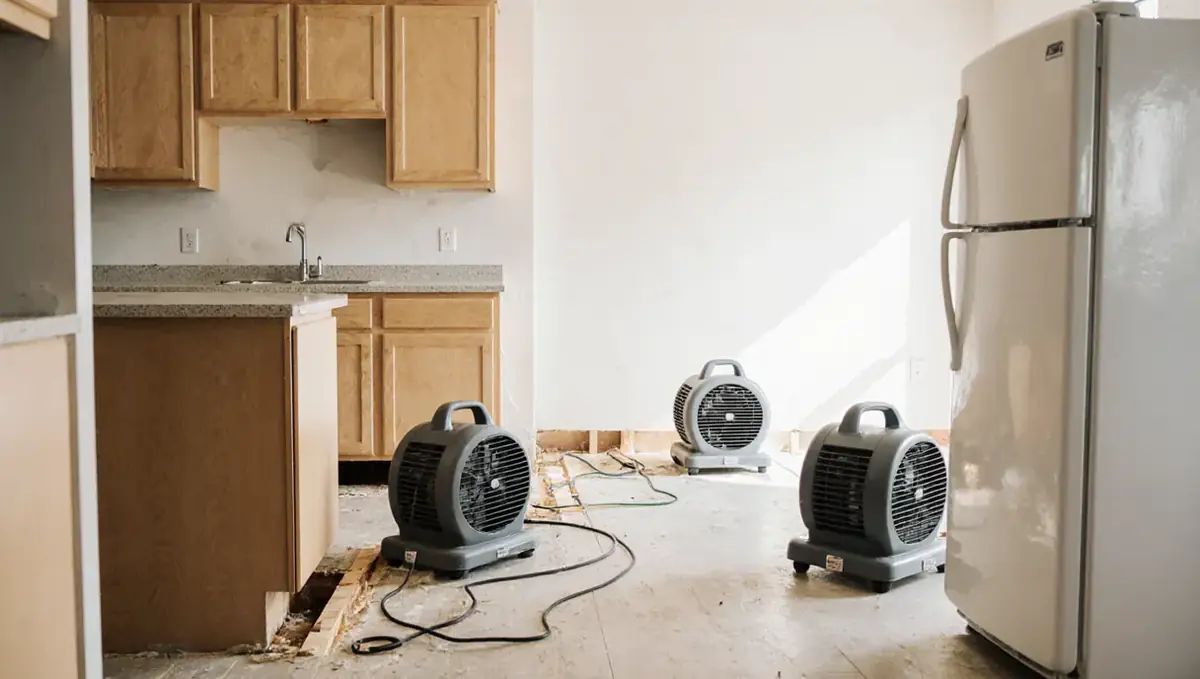
Air movers and dehumidifiers bring materials back to normal moisture levels, and readings are taken until the targets are met. Our structural drying page explains the equipment and the goals.
Rebuild
The final phase restores drywall, cabinets and flooring. For any reconstruction, verify the contractor's Georgia license through the Secretary of State's license lookup and ask about insurance and training such as IICRC certification. Learn more on our water damage repair page.
Storms, Flood Cleanup and Mold Removal in Alpharetta
Severe thunderstorms and tropical remnants can bring both flooding rain and falling trees to north Fulton. Hurricane Helene in 2024 dropped 6 to 14 inches of rain across parts of north and central Georgia, with some of the highest totals in the Atlanta metro area. After a storm, storm damage cleanup may mean tarping a roof, removing wet insulation and drying ceilings, while flood cleanup after creek water enters a home also includes cleaning and sanitizing.
Mold is the next concern. Following EPA guidance, it can start on wet materials within 24 to 48 hours. Containment keeps spores from spreading during mold removal, which our mold removal page explains.
Georgia does not seem to license mold assessors or remediators specifically, according to an industry roundup of state requirements, although we did not find an official Georgia statement confirming that. Ask for IICRC or similar certification and for written moisture readings before and after the work.
Floodplain Checks and Insurance Paperwork
Alpharetta publishes floodplain information for residents, and you can also look up your address on the FEMA Flood Map Service Center. Homes near Big Creek and its tributaries deserve a closer look.
- Separate flood coverage. Typical homeowners policies leave out flood damage. NFIP or private flood insurance fills that gap, and new NFIP policies usually wait 30 days before taking effect.
- Detailed records. Keep photos, an inventory of damaged items, receipts and the drying logs from the restoration company.
- Report drainage issues. The city's Public Works department takes stormwater problem reports online.
For cleanup help at any hour, call (888) 817-5061. Nearby residents can also see our Johns Creek page.
Alpharetta Areas and Surrounding Communities
Our free referral line connects callers throughout Alpharetta and neighboring north metro communities with independent local restoration companies.
Neighborhoods
- Downtown Alpharetta
- Alpharetta City Center
- Avalon
- Windward
- Crabapple
- Old Milton
- Kimball Bridge
- Mansell Road area
- Big Creek Greenway area
Nearby communities
- Roswell
- Johns Creek
- Milton
- Cumming
- Suwanee
- Sandy Springs
- Duluth
- Dunwoody
Alpharetta Water Damage FAQ
Does Alpharetta really get flash floods?
Yes. The City of Alpharetta says it is susceptible to flash floods where streams and creeks can rise quickly out of their banks. The Big Creek Greenway near Mansell Road has flooded several times.
Where does Big Creek come from?
Big Creek starts near Cumming in Forsyth County and runs about 26.5 miles through Alpharetta and Roswell before joining the Chattahoochee River. Heavy rain upstream can raise it in Alpharetta.
Can WaterQ help with a leak at my office or store?
Yes. Call the line and we will connect you with a local restoration company that handles commercial water damage, including offices, retail spaces and mixed-use buildings.
Do mold remediators need a Georgia state license?
An industry roundup reports that Georgia does not have a state license specifically for mold remediators, though we have not found an official state statement. Ask for IICRC or similar certifications and written moisture readings.
Where can I check my Alpharetta flood risk?
The city posts floodplain information on its website, and the FEMA Flood Map Service Center lets you look up the flood zone for any address.
Local emergency and flood resources
Official sources for alerts, flood maps and preparedness in and around Alpharetta: