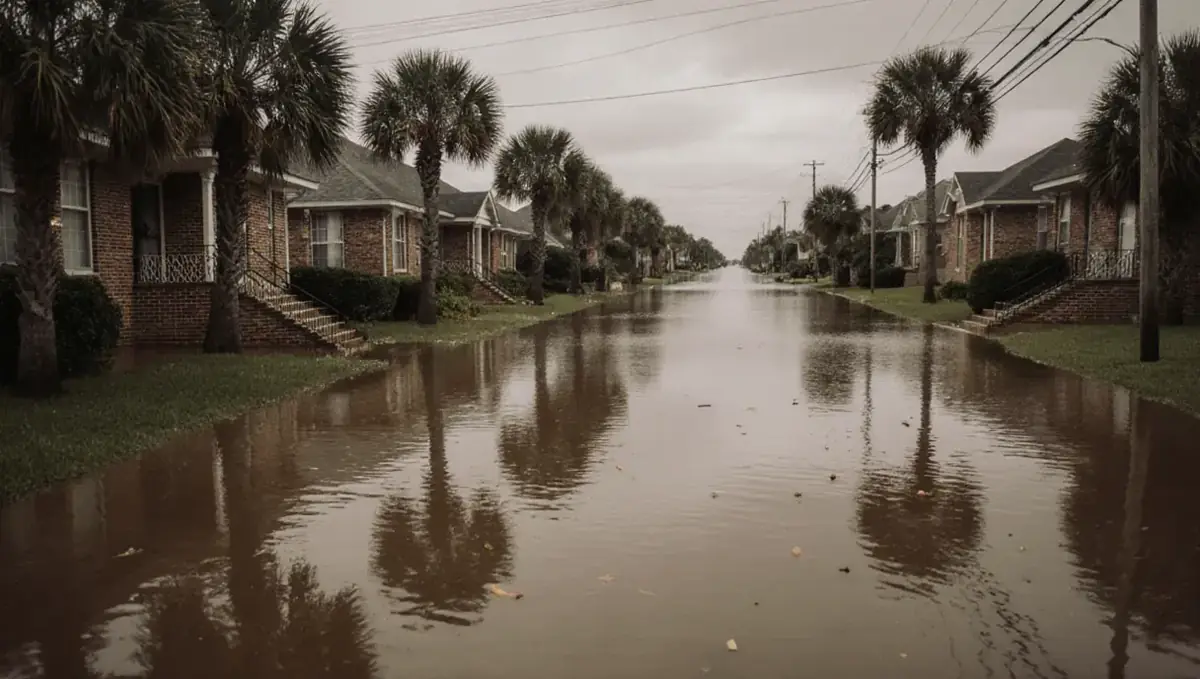
Macon's Place on the Ocmulgee
Macon was founded on the Fall Line of the Ocmulgee River, about 85 miles southeast of Atlanta, at roughly 381 feet of elevation. The north side of the city rolls with hills, while the south side flattens out toward the coastal plain. Tobesofkee Creek and Echeconnee Creek are among the streams that feed the river in this part of Middle Georgia.
Rain is spread through the whole year, averaging about 45.7 inches. The bigger risk comes from tropical systems that stall over the region. Middle Georgia sits far from the coast, but that has never kept hurricane remnants from bringing extreme rain here, and the river responds.
Remembering Alberto: When the River Took the Water Supply
In July 1994, Tropical Storm Alberto dropped about 24 inches of rain on Macon. Floods along almost the entire Ocmulgee rose above the 100-year level. For a time, floodwater cut every road in and out of the city. Two major water treatment plants were inundated, most of Macon lost water service, and restoring it took nearly three weeks.
Alberto is a reminder that a flood affects more than the rooms that get wet. Utilities, roads and drinking water can all be disrupted while you are trying to clean up.
- Keep bottled water and basic supplies on hand during hurricane season, which runs June 1 through November 30.
- Know your flood zone. Look up your address on the FEMA Flood Map Service Center.
- Never drive across a flooded road; in the 2009 Georgia flood, 8 of the 10 deaths involved people driving across flooded roads.
- Sign up for MBCAlert, Macon-Bibb County's emergency notification system.
River and creek floodwater is Category 3, meaning it can carry sewage and contaminants. Flood cleanup in Macon after that kind of water calls for removing soaked porous materials, cleaning and disinfecting, and then drying the structure. Learn more about flood damage restoration.
Tornadoes, Tropical Gusts and Roof Leaks
Wind is the other half of the story. On May 11, 2008, an EF2 tornado carved an 18-mile path through Macon, with peak winds near 130 mph around Eisenhower Parkway and Pio Nono Avenue. In 2024, Hurricane Helene brought gusts of 59 mph to Macon-Bibb County and closed schools in Bibb and Twiggs counties.
When wind tears off shingles or drops a limb onto a roof, rain follows. Wet insulation, stained ceilings and soaked drywall can spread across several rooms before the weather clears. Covering the opening fast and drying the attic early limits the damage. For storm damage cleanup in Macon, call (888) 817-5061 and we will connect you with a local company. See our page on storm damage cleanup.
Caring for Vineville, Ingleside and Other Older Homes
Macon has a long roster of National Register historic districts, including the downtown Macon Historic District, Vineville, Ingleside, Shirley Hills, North Highlands, Pleasant Hill, Fort Hill and East Macon. Older homes often have plaster walls, heart-pine or hardwood floors, and plumbing that has been patched over the decades.
Those materials can be dried, but they need more patience than modern drywall. A good drying plan uses moisture readings to decide what can stay and what has to be replaced. Ask any restoration company about its licensing, insurance and training, such as IICRC certification, and about its experience with older buildings.
Owners of rental houses, apartments, churches and storefronts can use the same line. Call (888) 817-5061 to be connected with a provider that handles commercial water damage restoration and the documentation property managers need.
Your First Moves When Water Shows Up in Macon
- Check for electrical danger. Wet outlets and appliances are a shock risk. Stay out of standing water unless you know the power to that area is off.
- Close the valve. Shut off the main supply for plumbing failures, or the fixture valve for a toilet or sink.
- Figure out what kind of water it is. A clean supply-line leak is very different from floodwater or a sewer backup.
- Take pictures first. Document the source, the wet areas and damaged belongings for your insurer.
- Move valuables. Get photos, documents and electronics up and away from the water.
- Start drying quickly. Professional water extraction removes standing water so drying can begin.
What Professional Drying Looks Like
Water damage repair in Macon usually comes after several days of controlled drying. The restoration crew starts by extracting standing water from carpet, pad and hard floors. Next comes moisture mapping, using meters and sometimes thermal imaging, to find where water has moved behind baseboards or under flooring.
Dehumidifiers and air movers then run while readings are checked and logged. In humid Georgia summers, dehumidification does much of the work. Drywall or insulation that cannot be saved is cut out so cavities can dry. Once readings confirm materials are dry, rebuilding begins. For reconstruction, Georgia's State Licensing Board for Residential and General Contractors licenses contractors, and licenses can be checked at verify.sos.ga.gov. More on structural drying.
Mold After Leaks and Floods in Middle Georgia
Mold can begin growing on wet materials within 24 to 48 hours, per EPA guidance, and Macon's warm, humid months give it plenty of help. Hidden moisture inside walls, under flooring or in a damp attic is the usual culprit.
An industry roundup of state rules reports that Georgia has no state license specifically for mold assessors or mold remediators. Georgia officials have not confirmed that point in a statement we could find, so treat it as unconfirmed by the state. For mold removal in Macon, ask for third-party certifications such as IICRC and written moisture readings before and after the work. See mold removal for how containment works.
Insurance Basics for Macon-Bibb Property Owners
Standard homeowners policies generally exclude flood. Flood coverage comes from the NFIP or a private flood policy, and NFIP policies typically have a 30-day waiting period, so buy coverage well before a storm is forecast. Sudden plumbing leaks and wind damage are generally addressed under the terms of your homeowners policy.
Keep a single folder with photos, receipts, the restoration company's moisture logs and any correspondence. WaterQ cannot predict a claim decision, but complete records help. Report drainage problems through Macon-Bibb's SeeClickFix service.
Macon Neighborhoods and Middle Georgia Towns We Serve
Our free referral line connects callers across Macon-Bibb County and surrounding Middle Georgia communities with independent local restoration providers.
Neighborhoods
- Downtown Macon
- Vineville
- Ingleside
- Shirley Hills
- North Highlands
- Pleasant Hill
- Fort Hill
- East Macon
- Napier Heights
- Cherokee Heights
- Tindall Heights
- Wesleyan College area
Nearby communities
- Warner Robins
- Byron
- Lizella
- Gray
- Forsyth
- Jeffersonville
- Perry
- Roberta
Macon Water Damage FAQ
What happened in Macon during the 1994 flood?
Tropical Storm Alberto dropped about 24 inches of rain on Macon in July 1994. The Ocmulgee flooded, roads in and out of the city were cut for a time, and two water treatment plants were inundated, leaving most of the city without water service for nearly three weeks.
How do I get emergency alerts in Macon-Bibb County?
Sign up for MBCAlert, the county's emergency notification system, through the Macon-Bibb website. The Emergency Management Agency also posts weather information and updates.
Can older Macon homes with plaster walls be dried instead of torn out?
Often, yes, if drying starts quickly and the water was clean. Moisture readings guide what can be saved. Floodwater or sewage usually means porous materials it touched must be removed.
Does Georgia license mold remediators?
An industry roundup reports that Georgia has no state license specifically for mold assessors or remediators, but no official state confirmation was found. Look for certifications such as IICRC and ask for before-and-after moisture readings.
What does WaterQ do when I call?
WaterQ is a free referral service. We connect you with an independent, local restoration company that handles the inspection and the work. You can call 24/7.
Local emergency and flood resources
Official sources for alerts, flood maps and preparedness in and around Macon: