Piedmont Hills, a Big Reservoir and Spring Tornadoes
LaGrange sits at roughly 781 feet in the foothills of the Georgia Piedmont, about 60 miles southwest of Atlanta. A few miles west, West Point Lake spreads across more than 25,000 acres of the Chattahoochee River valley. All of Troup County drains toward that stretch of the Chattahoochee, so heavy rain anywhere in the county ends up moving through local streams and low ground on its way to the river.
The water risks here look a little different from coastal Georgia. Instead of surge and tides, LaGrange properties mostly deal with:
- Severe storms and tornadoes that strip shingles, break windows and puncture roofs, letting rain pour into attics and living spaces.
- Heavy rain from inland tropical systems, which can saturate the ground and bring down trees across west Georgia.
- Everyday plumbing failures such as burst supply lines, leaking water heaters and appliance hoses.
- High water near the Chattahoochee, where flooding depends on how much rain falls upstream.
Any of these can call for water damage restoration, and the steps that follow are similar no matter where the water came from.
Lessons From the January 2023 Tornado
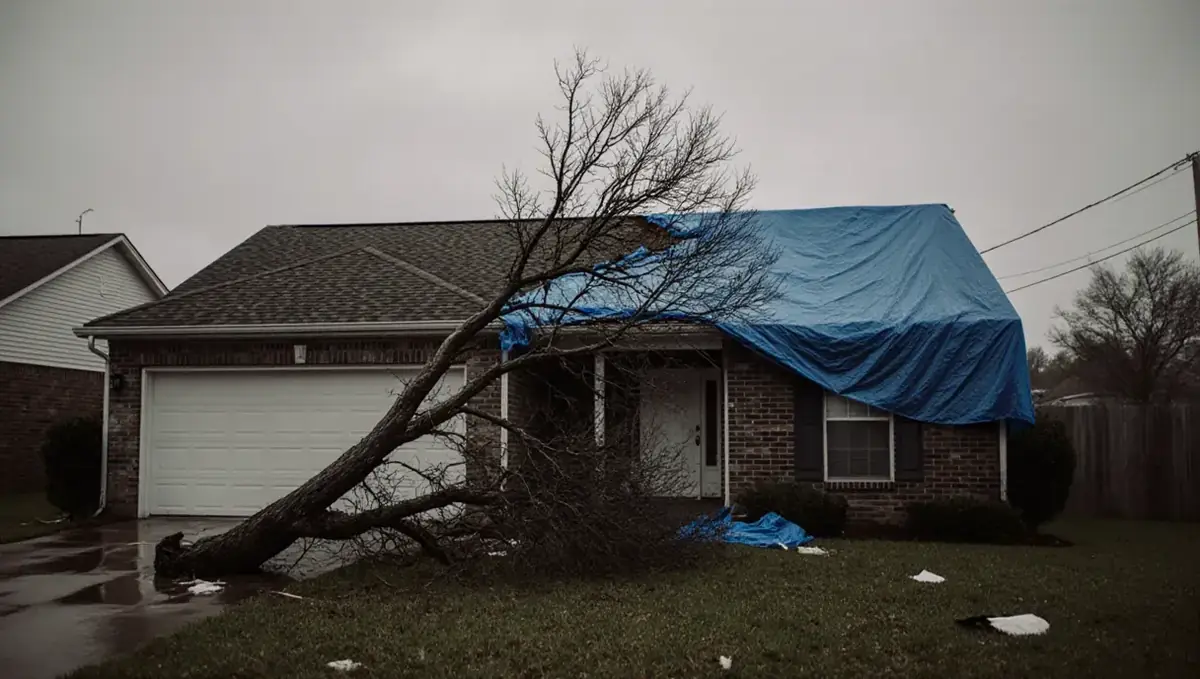
On January 12, 2023, an EF2 tornado tracked nearly 19 miles and heavily damaged the southern half of LaGrange. More than 30 homes had significant damage, with roofs and some exterior walls torn away, and metal warehouses and industrial buildings were damaged or destroyed. Four people were hurt. The National Weather Service office serving Atlanta also lists April 2014 tornadoes in Troup and Heard counties among its notable events.
The pattern after a storm like that is familiar. Wind opens the building, then rain finishes the damage. Wet insulation, ceilings and drywall can be ruined within days if the opening is not covered and the structure is not dried.
- Stay out of rooms with sagging ceilings or exposed wiring.
- Photograph the outside damage before anyone tarps or removes debris.
- Get openings covered as soon as it is safe, then focus on drying.
For storm damage cleanup in LaGrange, call (888) 817-5061 and we will connect you with an independent local company that can help with tarping, water removal and drying.
Getting Control in the First Hour
A calm, simple order of operations protects both people and property:
- Make it safe. If water is near outlets, cords or the electrical panel, keep clear. Shut off power to the area only if you can reach the breaker without standing in water.
- Stop the source. Close the main water valve for a plumbing leak. Since the City of LaGrange is the water utility, it is the call to make about problems on the city side of the meter.
- Sort the water. Clean supply-line water (Category 1) is far less hazardous than rising stream or lake water (Category 3), which should be treated as contaminated.
- Record it. Take wide shots and close-ups of every affected room, the source and damaged belongings.
- Save what you can. Move rugs, photos, documents and electronics to a dry room, and set furniture legs on blocks or foil.
After that, emergency water extraction is usually the next priority.
Extraction, Drying and Rebuilding, Step by Step
Most LaGrange restoration companies work through the same general stages, adjusted to the building:
Pulling out standing water
Pumps and extractors remove water from floors, carpet and pad. Getting bulk water out quickly limits how far it wicks into drywall, trim and cabinets.
Finding hidden moisture
Moisture meters and thermal cameras show where water has traveled under flooring, inside wall cavities and into crawlspaces. Those readings guide the plan and support the insurance file.
Drying the structure
Air movers and dehumidifiers run while technicians check readings each day. Saturated drywall and insulation are often cut out so cavities can dry. Learn more about structural drying.
Putting it back together
Once materials test dry, water damage repair covers drywall, flooring, trim and cabinets. For reconstruction, Georgia's State Licensing Board for Residential and General Contractors licenses contractors, and you can check a license by name or number at verify.sos.ga.gov.
Older Mill Villages, Historic Homes and Local Businesses
LaGrange grew on cotton and textile mills, and its National Register districts include the Broad Street and Vernon Road historic districts and the Dixie Cotton Mills mill village. Older houses often have plaster walls, original wood floors and crawlspaces, which hold moisture differently than newer construction. Ask the restoration company how it plans to dry those materials before anything is torn out.
Commercial properties face their own pressures. Warehouses and industrial buildings were part of the 2023 tornado damage, and offices, shops and rental properties all need fast decisions to limit downtime. Property managers can call (888) 817-5061 to reach a local provider that handles commercial drying and documentation.
Mold After a Wet Spell: What Georgia Does and Does Not License
EPA guidance warns that wet building materials can begin to grow mold in as little as 24 to 48 hours. In west Georgia's humid summers, a damp crawlspace or a wet wall cavity behind a cabinet can turn into a mold problem quickly.
According to an industry roundup of state requirements, Georgia has no state license specifically for mold assessors or mold remediators. We could not locate an official statement from a Georgia agency that confirms it, so consider the point unconfirmed by the state. In practice, ask any company about its training and third-party certifications (such as IICRC), and ask for written moisture readings before and after the work.
Professional mold removal typically involves containment, removal of affected materials, cleaning and drying so the growth does not return.
Insurance, Flood Coverage and Keeping Good Records
- Wind versus flood. Rain entering through a storm-damaged roof is often handled differently from rising water. Most standard homeowners policies leave out flood entirely; that risk is insured separately through the NFIP or a private flood carrier.
- Plan ahead. NFIP policies typically have a 30-day waiting period, so coverage needs to be in place well before a storm.
- Check your map. Look up your address on the FEMA Flood Map Service Center, especially near the lake or the Chattahoochee.
- Keep a paper trail. Save photos, receipts, moisture logs and drying reports from the restoration company.
WaterQ cannot predict how an insurer will decide a claim, but a well-documented file helps. For flood cleanup in LaGrange or a simple leak, call (888) 817-5061 and get connected with a local restoration company.
LaGrange Areas and Troup County Communities We Connect
WaterQ's free referral line connects callers in LaGrange and across Troup County and neighboring communities with independent local restoration providers.
Neighborhoods
- Downtown LaGrange (LaGrange Commercial Historic District)
- Broad Street Historic District
- Vernon Road Historic District
- Dixie Cotton Mills Mill Village
- LaGrange College area
Nearby communities
- Hogansville
- West Point
- Abbottsford
- Harrisonville
- Long Cane
- Mountville
- Pine Mountain
- Franklin
- Greenville
- Lanett, AL
LaGrange Water Damage FAQ
My LaGrange roof was damaged by wind and rain got inside. What should I do first?
Stay clear of sagging ceilings and wet wiring, photograph the damage inside and out, and get the opening covered as soon as it is safe. Then call (888) 817-5061 to be connected with a local restoration company that can remove water and dry the structure.
Can homes near West Point Lake flood?
West Point Lake's dam was built partly for flood control, but flooding along the Chattahoochee still depends on how much rain falls upstream. In 2003, heavy upstream rain caused a serious flood in the city of West Point. Check your address on the FEMA Flood Map Service Center and consider flood coverage if you are in or near a mapped flood zone.
How do I get emergency alerts in Troup County?
Troup County offers a free emergency notification system by text, email or voice for evacuation orders, shelter-in-place notices, boil water notices and similar alerts. You can sign up on the county website or text your zip code to 38276.
Is a license required for mold remediation in Georgia?
Georgia does not appear to have a state license specifically for mold remediators, based on an industry roundup of state rules, though we did not find an official state statement confirming it. Ask companies about IICRC or similar certification and for written moisture readings.
Does WaterQ do the restoration work in LaGrange?
No. WaterQ is a free referral service that connects you with an independent, local restoration company. The line is available 24/7, and the company you are connected with handles the inspection and the work.
Local emergency and flood resources
Official sources for alerts, flood maps and preparedness in and around LaGrange: