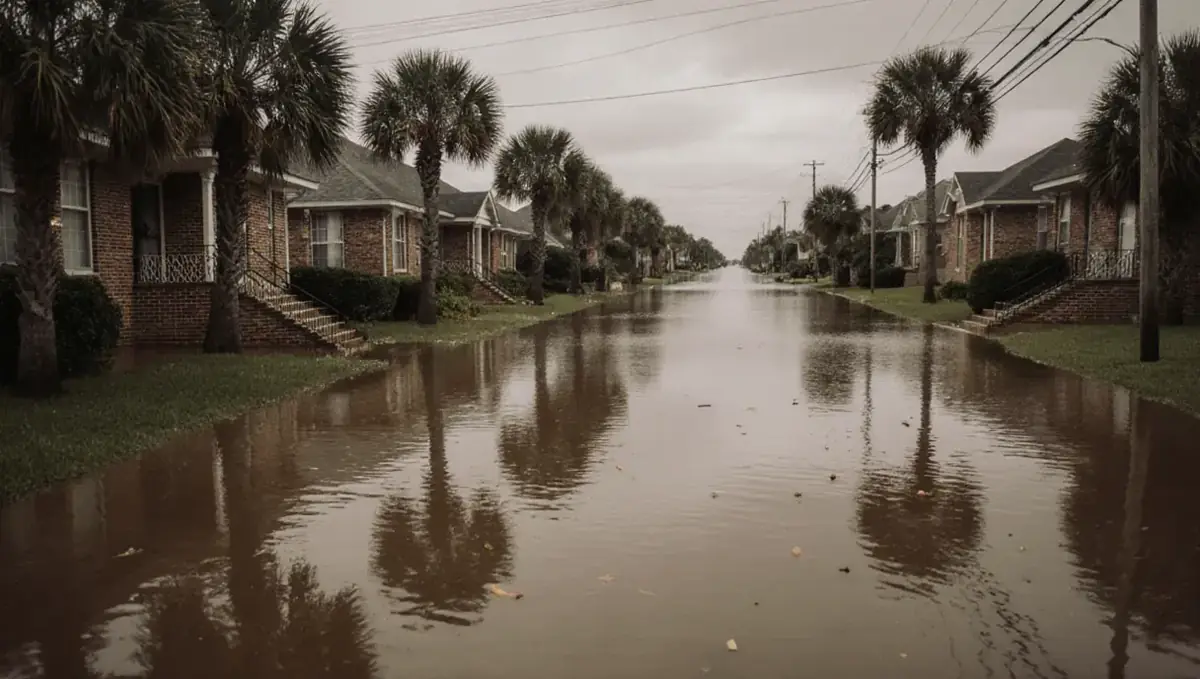
Where the South River Begins
East Point sits about 7 miles southwest of downtown Atlanta, just north of Hartsfield-Jackson Atlanta International Airport. The South River actually starts here, daylighting just north of the airport before it heads southeast toward Jackson Lake. Camp Creek and Utoy Creek also drain parts of the city, and the City of East Point names all three as its main flood sources.
The city's own guidance is plain about it: low-lying areas near streams are particularly subject to flooding. East Point documented major flood events in fall 2009 and again in winter 2010, when floodwater ranged from 1 to 3 feet deep in some areas. Fulton County was among the counties declared a federal disaster area after the September 2009 metro floods.
Most of East Point's 14.7 square miles is built out, with nearly 18,000 housing units, so heavy rain moves fast over roofs and pavement toward those creeks.
The Season the City Watches Most
East Point's Water & Sewer department identifies June through November, the hurricane and rainy season, as the period with the most serious flood threat. Storms that make landfall on the Gulf or Atlantic coast can still unload heavy rain this far inland. When Helene's remnants crossed the region in September 2024, Atlanta set a 48-hour rainfall record of 11.12 inches.
Flooded roads are the biggest danger to people. The city points out that six inches of water reaches the bottom of a passenger car and two feet of rushing water can carry away most vehicles. Do not drive or walk through moving water, and stay away from downed power lines.
Winter has its own risk. During the Christmas 2022 freeze, temperatures stayed below freezing for three days, and burst pipes and sprinkler lines flooded homes, hotels, businesses and even the airport around metro Atlanta.
Your Utilities Are Run by the City
Unlike many metro suburbs, East Point operates its own water and sewer system and its own electric utility. That matters when water gets inside:
- Water main or meter problems: East Point Water & Sewer at 404-474-3834, or 404-240-2183 after hours.
- Power outages: East Point Power at 404-902-2097 or PowerOutage@EastPointCity.org.
- Drainage and storm drains: the city's Stormwater Division, created in 2012 to replace storm pipes and reduce flooding.
- Non-emergency issues: SeeClickFix, listed by the city as Access East Point.
If water is already inside your home or business, the next call is to a restoration company. Our free line at (888) 817-5061 connects you with one near you.
First Moves When Water Comes In
- Cut off the source. Close your main shutoff for a plumbing leak. For floodwater, move to higher ground in the building first.
- Avoid shock hazards. Do not step into water that may be touching outlets or appliances. Turn off breakers only from a dry spot.
- Treat creek water as contaminated. Floodwater from outdoors is Category 3 and can carry sewage, chemicals and debris. A clean supply-line leak is Category 1, but it can degrade if left standing.
- Record the damage. Photograph the waterline, the source and damaged belongings before cleanup.
- Lift and remove. Raise furniture, and move documents, rugs and electronics to dry areas, as the city's flood guidance suggests.
- Get water removal started. The sooner water extraction begins, the less material may need to be torn out.
How Flood Cleanup and Drying Are Handled
Flood cleanup in East Point after creek water enters a home is different from drying out a clean pipe leak. With contaminated water, soaked carpet, pad, insulation and the lower part of drywall are commonly removed, then surfaces are cleaned and sanitized before drying starts. See how flood cleanup and flood damage restoration work.
Measuring and drying
Crews map moisture with meters and thermal imaging, then set up air movers and dehumidifiers. Readings are taken until floors, framing and walls reach normal levels.
Rebuilding
After the structure is dry, water damage repair replaces drywall, flooring and trim. Georgia licenses residential and general contractors through the Secretary of State, and you can verify a license at verify.sos.ga.gov before signing.
Ask any provider about its insurance and training, such as IICRC certification, and request copies of the moisture logs.
Preventing Mold After East Point Storms
Following EPA guidance, mold can begin growing on damp materials within 24 to 48 hours, and Georgia's warm, humid months speed that up. Wall cavities, closets and spaces behind cabinets are where it tends to hide after flooding.
Based on an industry roundup of state requirements, Georgia does not have a state license specifically for mold assessors or mold remediators; no official Georgia agency statement confirming that was found, so treat it as unconfirmed by the state. In practice, look for certifications such as IICRC, written moisture readings before and after the job, and a general contractor license when rebuilding is part of the work.
Read more about mold removal and containment.
Flood Maps, Insurance and Building Rules
- Look up your flood risk. The Stormwater Division links to the Georgia D-FIRM viewer so you can check if your property sits in a Special Flood Hazard Area. It also keeps elevation certificates and floodplain maps.
- Check with the city before building. East Point asks owners to contact the Stormwater Division before building on or filling property.
- Buy flood coverage early. Homeowners policies generally exclude flood, and the city notes the 30-day waiting period on flood insurance.
- Document everything. Photos, receipts and drying reports help any claim.
Rental owners and commercial property managers can use the same 24/7 line. Call (888) 817-5061 and we will connect you with a local restoration company for storm damage cleanup, drying and repairs. Nearby South Fulton is covered too.
East Point Areas and Neighboring South Metro Cities
Our free referral line connects callers across East Point and nearby south Fulton and Clayton County communities with independent, local restoration providers.
Neighborhoods
- Downtown East Point
- East Point Historic Civic Block
- Colonial Hills
- Camp Creek Marketplace area
- Sumner Park area
- Brookdale Park area
Nearby communities
- Atlanta
- College Park
- Hapeville
- South Fulton
- Union City
- Fairburn
- Forest Park
- Red Oak
East Point Water Damage FAQ
Which creeks cause flooding in East Point?
The City of East Point names Camp Creek, Utoy Creek and the South River as its main flood sources, and says low-lying areas near streams are particularly subject to flooding.
Who do I call about a water main break in East Point?
East Point runs its own water utility. Call Water & Sewer at 404-474-3834, or 404-240-2183 after hours. For water already inside your property, shut off your main valve and call a restoration company.
How can I get emergency alerts in East Point?
The city uses CodeRED for emergency notifications, and you can sign up through the link on the city's website. Atlanta-Fulton County Emergency Management also posts preparedness information.
Is a mold license required in Georgia?
An industry roundup reports that Georgia has no state license specifically for mold remediators, though an official state source confirming this was not found. Ask for certifications like IICRC and written before-and-after moisture readings.
Does WaterQ do the cleanup itself?
No. WaterQ is a free referral service available 24/7. We connect you with an independent, local restoration company, and that company performs the inspection and the work.
Local emergency and flood resources
Official sources for alerts, flood maps and preparedness in and around East Point: