Thirteen Miles of River Frontage
Johns Creek became a city on December 1, 2006, but crossroads communities such as Ocee and Warsaw are much older. The river forms the city's entire southern border for about 13.5 miles, and the ground climbs from about 880 feet at the water to 1,180 feet near Ocee. The stream that gave the city its name, Johns Creek, runs through town to the river over shoals and small rapids.
Buford Dam sits upstream, and the National Park Service notes that river levels depend on releases from Buford and Morgan Falls dams along with rain across the watershed. During the September 2009 flood, the Chattahoochee reached between 100-year and 500-year flood magnitudes at various points, according to USGS.
Most Johns Creek homes sit well above the river, so the more common water problems start indoors. Still, if you live near Rogers Bridge Park, the Chattahoochee Dog Park or a low spot along a tributary, know your flood zone before the next big storm.
Suburban Homes and the Leaks They Tend to Have
Johns Creek grew as a place after Technology Park/Johns Creek opened in 1981, and by 2020 the city had about 29,139 housing units and a homeowner vacancy rate of just 1.1 percent. Neighborhoods range from the historic crossroads of Ocee, Newtown, Shakerag and Warsaw to golf communities such as Country Club of the South, St. Ives and Rivermont.
In larger, multi-level houses, water rarely stays where it started. Some of the most common sources are:
- An upstairs washing machine or bathroom supply line that leaks through the ceiling below
- A water heater nearing the end of its life
- Ice maker and refrigerator lines behind kitchen cabinets
- Irrigation and hose bib leaks that soak the foundation
- Roof flashing or gutter problems around dormers and chimneys
When a ceiling stain appears, it often means water has already spread across subfloor and insulation. Fast water extraction and moisture mapping keep the damage from growing.
What to Do in the First Few Minutes
- Find the shutoff. Close the main water valve or the supply valve on the fixture that failed. Learn where your main is now, before you need it.
- Protect yourself. Keep away from outlets, power strips and appliances near water. Use the breaker panel only if you can stand on dry ground.
- Identify the water. Clean supply water is Category 1. River or creek water and sewer backups are Category 3, so wear gloves and keep children and pets clear.
- Catch the drips. Put buckets under ceiling leaks, and poke a small hole in a bulging ceiling only if it is safe, so water drains instead of bringing the drywall down.
- Document. Photograph the source, the damage and your belongings.
- Call (888) 817-5061. We will connect you with a local restoration professional who can start removing water and drying the home.
Extraction, Drying and Repairs, Step by Step
The local restoration company you are connected with will typically start by confirming the source and the water category, then pulling out standing water with portable or truck-mounted extractors. Carpet pad that is saturated is usually discarded, while the carpet itself can sometimes be saved if the water was clean.
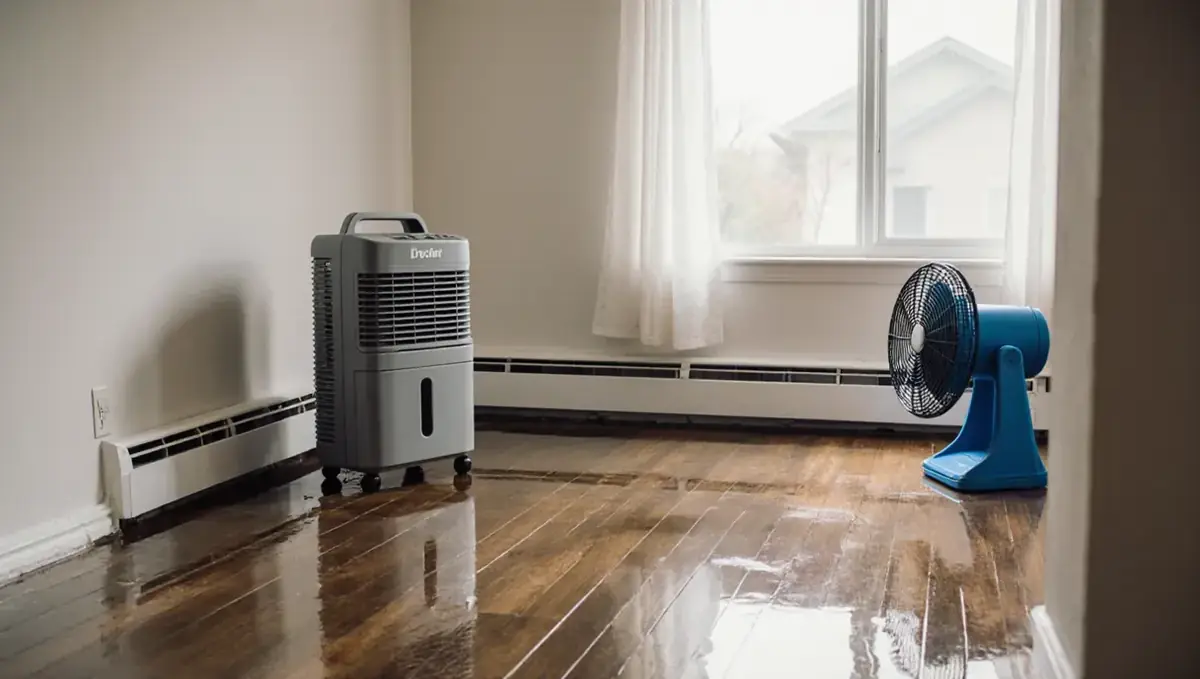
Next, technicians use moisture meters and thermal imaging to see how far water traveled, including down into the ceiling of a lower level. Dehumidifiers and air movers are set up, and the drying is checked with readings until materials reach acceptable levels. Our structural drying page describes this stage.
Once everything is confirmed dry, water damage repair restores drywall, paint, flooring and cabinets. Before you sign a reconstruction contract, look up the contractor on the Georgia Secretary of State's license verification site, and ask about insurance and training such as IICRC certification.
Tropical Rain, Fallen Trees and Storm Damage Cleanup
Even this far inland, tropical systems leave their mark. Hurricane Helene in 2024 brought 6 to 14 inches of rain across parts of north and central Georgia, with some of the highest totals in metro Atlanta, and downed millions of trees across the state. Strong thunderstorms can do similar damage on a smaller scale.
When a tree or large limb punctures a roof, rain can soak attic insulation and ceilings quickly. If it is safe, tarp the opening and photograph the damage for your insurer. Ask for storm damage cleanup that includes a moisture check of the ceilings and walls below. If water from a creek or the river ever enters your home, flood cleanup adds cleaning and sanitizing because that water is contaminated.
Keeping Mold From Taking Hold
EPA guidance says mold can start growing within 24 to 48 hours on materials that stay wet. Hot, humid Georgia summers speed things up, and hidden moisture under a floor or behind a vanity can feed growth for weeks before anyone notices a smell.
An industry roundup of state rules reports that Georgia issues no license aimed specifically at mold assessment or mold remediation work. We did not find an official state statement confirming this, so treat it as unconfirmed. Ask the company for IICRC or comparable certification, a written scope of work, and moisture readings before and after the job. Our mold removal page explains containment and cleanup.
Claims, Flood Policies and Local Resources
- Know what is covered. A sudden burst pipe is often treated differently from a slow leak or from flooding. Standard homeowners policies typically exclude flood, which is covered separately by NFIP or private policies with a usual 30-day NFIP waiting period.
- Check your zone. Look up your address on the FEMA Flood Map Service Center or the Georgia Flood Map Program.
- Stay informed. The Atlanta-Fulton County Emergency Management Agency shares preparedness information for floods, storms and winter weather across Fulton County.
- Keep everything. Save photos, receipts, damaged item lists and drying reports.
WaterQ cannot tell you how an insurer will decide, but a complete file helps. For 24/7 emergency help, call (888) 817-5061. Neighbors to the west can also see our Roswell page, and to the northwest our Alpharetta page.
Johns Creek Communities and Nearby Cities
WaterQ connects callers across Johns Creek and neighboring north Fulton and Gwinnett communities with independent local restoration providers.
Neighborhoods
- Ocee
- Newtown
- Shakerag
- Warsaw
- Country Club of the South
- St. Ives
- Medlock Bridge
- Rivermont
- Atlanta Athletic Club area
- Technology Park
- State Bridge Road corridor
- Old Alabama Road area
Nearby communities
Johns Creek Water Damage FAQ
Can the Chattahoochee flood homes in Johns Creek?
Low-lying areas near the river can flood. River levels change with releases from Buford Dam and Morgan Falls Dam and with rain across the watershed, and in 2009 the river reached 100- to 500-year flood levels at various locations.
Water is coming through my ceiling from an upstairs bathroom. What should I do?
Shut off the water to that bathroom or the whole house, keep away from wet light fixtures, put buckets under the drips and photograph everything. Then call to be connected with a local restoration company that can dry the ceiling and the floor above.
How quickly can mold start after a leak?
According to EPA guidance, mold can begin growing within 24 to 48 hours on wet materials. Getting water out and drying the structure quickly is the best prevention.
Does Georgia license mold removal companies?
An industry roundup reports that Georgia has no state license specifically for mold remediators, but we have not found an official state confirmation. Ask for IICRC or similar certifications and written moisture readings.
Is WaterQ the company that does the work?
No. WaterQ is a free referral service that connects you with an independent, local restoration company. That company provides the inspection, drying and repairs, and our line is available 24/7.
Local emergency and flood resources
Official sources for alerts, flood maps and preparedness in and around Johns Creek: