Between the Ogeechee Marsh and Interstate 95
Richmond Hill sits about 21 miles south of downtown Savannah at an elevation of roughly 20 feet. The Ogeechee River forms the city's eastern edge, and south Bryan County opens onto salt marsh and tidal rivers, including the marshland around Fort McAllister. Interstate 95 runs along the western edge of town, so most of the city sits on the coastal side of the highway.
That location shapes the water risks here:
- Tropical rain. During Tropical Storm Debby in 2024, the heaviest rain anywhere in Georgia, 9.5 inches in 24 hours, fell at Blitchton in Bryan County.
- Surge and evacuation. Ahead of Hurricane Matthew in 2016, the governor ordered mandatory evacuation for areas east of I-95. The Fort Pulaski gauge near Savannah then recorded 7.70 feet above normal tide levels, the highest U.S. reading of the storm.
- Wind and trees. Matthew's gusts brought down trees and power lines along the Georgia coast and left at least 300,000 customers in the state without power.
- Everyday leaks. Water heaters, washing machine hoses, ice maker lines and toilet supply lines fail in brand-new homes as well as old ones.
A Fast-Growing City With Lots of Newer Homes
Richmond Hill's population jumped from 9,281 in 2010 to 16,633 in 2020, an increase of about 79 percent. Subdivisions built since the 1970s range from starter homes to gated golf communities, and Henry Ford's former winter estate is now The Ford Plantation. Growth tied to Fort Stewart has also brought many military families, some of whom rent and move on a regular schedule.
Newer construction does not rule out water damage. A small leak behind a dishwasher or inside a wall can soak drywall, baseboards and flooring for days before anyone notices a stain or a soft spot. Renters should tell the landlord or property manager right away, because the building and its repairs are usually the owner's responsibility, while personal belongings typically fall under a renter's policy.
Shops, offices and restaurants along U.S. 17 and Ford Avenue face the same risks at a larger scale. Business owners and property managers can call (888) 817-5061 to be connected with local providers who handle commercial water damage repair and drying.
What to Do in the First Hour
- Shut off the water. Find the main valve, which is often near the water heater, in the garage or where the line enters the house. Close individual fixture valves for a single appliance leak.
- Stay clear of electricity. Do not step into standing water near outlets, extension cords or appliances. Switch off breakers only if you can reach the panel without touching water.
- Judge the water. A broken supply line is clean water (Category 1). Storm water, river water or anything that came in from outside should be treated as Category 3, meaning possibly contaminated.
- Take pictures first. Photograph the source, the standing water and damaged items before moving anything.
- Protect what you can. Lift furniture onto blocks or foil, roll up rugs and move electronics and paperwork to a dry room.
- Get help started. Call (888) 817-5061 to reach a local restoration professional for emergency water removal.
How a Richmond Hill Drying Job Unfolds
Most local restoration companies follow a predictable path, though every home is different.
Pulling out the water
Portable or truck-mounted extractors remove standing water from carpet, pad and hard floors. Getting bulk water out quickly limits how far it wicks up drywall and into cabinet bases.
Finding hidden moisture
Moisture meters and thermal cameras show where water traveled under flooring, behind baseboards and into neighboring rooms. Those readings set the drying goals and support the insurance file.
Drying the structure
Air movers and dehumidifiers run while the crew checks readings each day. Coastal Georgia humidity makes dehumidification especially important, and wet insulation or the bottom of soaked drywall is often removed so wall cavities can dry. Learn more on our structural drying page.
Putting it back together
Once materials test dry, the work shifts to replacing drywall, trim, flooring and cabinets. Before signing a reconstruction contract, verify the contractor's Georgia license through the Secretary of State at verify.sos.ga.gov, and ask about insurance and training such as IICRC certification.
After a Tropical Storm Passes Through Bryan County
Atlantic hurricane season runs from June 1 through November 30. Bryan County was among the coastal counties that opened emergency operations centers ahead of Hurricane Helene in 2024, and residents can follow local alerts through the City's Alert Center.
When you return home after a storm, look for these common problems:
- Roof openings from fallen limbs, and ceiling stains spreading from the attic
- Wind-driven rain around windows, doors and soffits
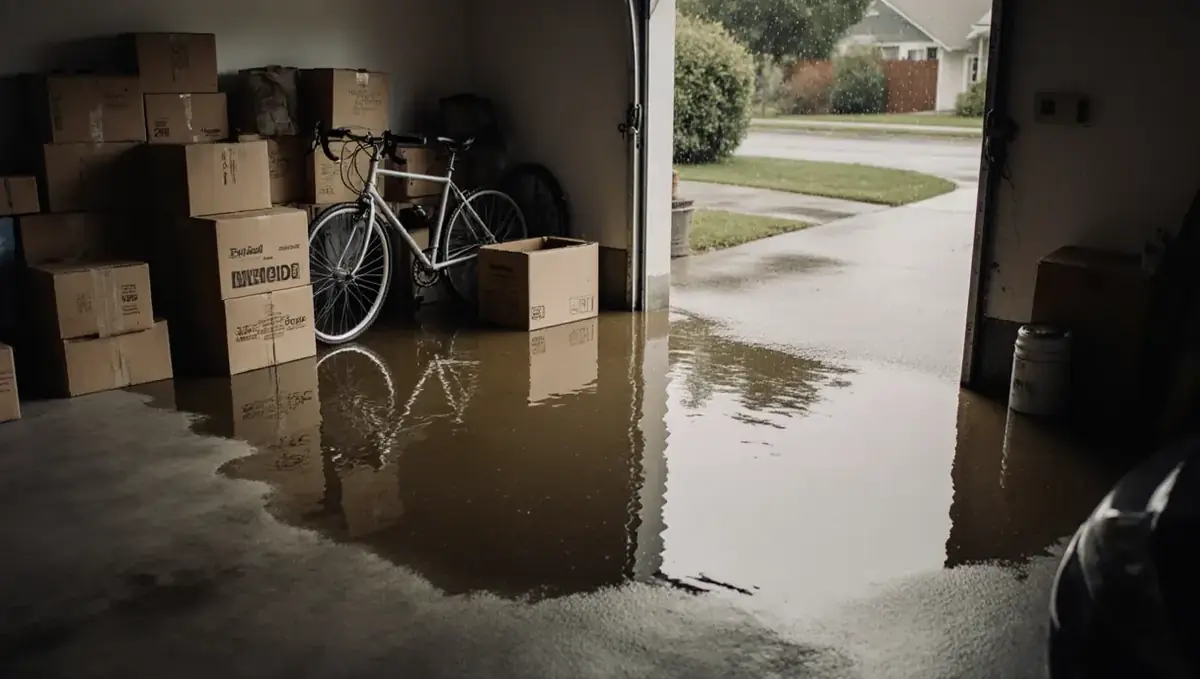
- Water in garages and ground-floor rooms after heavy rain or rising water
- Wet insulation and drywall in rooms that lost power for days
Tarp roof openings only if it is safe, and document everything before cleanup. Storm damage cleanup and flood cleanup in Richmond Hill usually start with removing contaminated materials, then cleaning, sanitizing and drying. Never drive through flooded roads on the way back.
Humidity, Mold and Georgia's Rules
Following EPA guidance, mold can begin to grow on wet materials within 24 to 48 hours. In a humid coastal climate, a closed-up house after an evacuation or a power outage can reach that point quickly, so drying should start as soon as it is safe.
An industry roundup of state requirements indicates Georgia does not have a state license specifically for mold assessors or mold remediators, though we did not find an official state statement confirming that. Ask any company handling mold cleanup in Richmond Hill for third-party certifications such as IICRC, written moisture readings before and after the job, and a clear plan for containment. Our mold removal page explains how containment keeps spores from spreading.
Paperwork That Protects Your Claim
- Flood is its own policy. Standard homeowners policies generally exclude flood. Coverage comes from the NFIP or a private flood policy, and a new NFIP policy typically takes 30 days to take effect, so do not wait for a storm in the forecast.
- Check your flood zone. Look up your address on the FEMA Flood Map Service Center or the Georgia DFIRM viewer before buying, building or renovating.
- Keep a running record. Save photos, video, receipts, moisture logs and the drying report from the restoration company.
- Call your insurer early. Report the loss promptly and ask what documentation the adjuster wants.
WaterQ cannot predict how an insurer will handle a claim, but good records make the process smoother. When water gets in, call (888) 817-5061 any time, day or night, for water damage restoration in Richmond Hill.
Richmond Hill Areas and Nearby Bryan County Communities
WaterQ's free referral line connects callers across Richmond Hill, south Bryan County and nearby coastal Georgia towns with independent local restoration providers.
Neighborhoods
- The Ford Plantation
- Ford Avenue (GA 144) corridor
- U.S. 17 (Ocean Highway) corridor
- J.F. Gregory Park area
- Fort McAllister / south Bryan County marsh area
Nearby communities
- Savannah
- Pembroke
- Blitchton
- Pooler
- Midway
- Hinesville
- Fort Stewart
Richmond Hill Water Damage FAQ
Is Richmond Hill inside the hurricane evacuation area?
Interstate 95 runs along the city's western edge, and ahead of Hurricane Matthew in 2016 the governor ordered mandatory evacuation for areas east of I-95. Evacuation orders vary by storm, so follow Bryan County emergency alerts and the City's Alert Center.
My home in Richmond Hill is only a few years old. Can it still have hidden water damage?
Yes. Supply lines, water heaters and appliance hoses can fail in any home, and a slow leak inside a wall or under flooring may go unnoticed for days. Moisture meters and thermal cameras can show how far the water spread.
I rent near Fort Stewart. Who handles water damage in my unit?
Tell your landlord or property manager right away. The building and its repairs are usually the owner's responsibility, while your belongings are typically covered by a renter's policy if you have one. Photograph damaged items before anything is thrown out.
Does Georgia license mold remediation companies?
An industry roundup indicates Georgia has no state license specifically for mold remediators, though we did not find an official state confirmation. Ask for certifications such as IICRC and written moisture readings before and after the work.
Does WaterQ do the restoration work itself?
No. WaterQ is a free referral service. When you call, we connect you with an independent, local restoration company that inspects the damage and does the work. The line is available 24/7.
Local emergency and flood resources
Official sources for alerts, flood maps and preparedness in and around Richmond Hill: