A Young City on Old Acadian Farmland
Youngsville was settled by Acadian farmers in the early 1800s and stayed a small village for most of its history. That changed quickly. The population roughly doubled between 2010 and 2020, from about 8,100 to nearly 16,000 residents, and Wikipedia notes it was the fastest-growing town in Louisiana from 1990 to 2005.
The city covers about 12.5 square miles of land in southeastern Lafayette Parish, bordered by Lafayette to the north and Broussard to the east. There are no large lakes or rivers inside the city limits, and the ground sits at about 26 feet above sea level. That can give newer homeowners a false sense of security.
Rain that falls here has to travel through ditches, subdivision drainage and the parish's network of coulees and bayous before it reaches the Vermilion River, which Lafayette Consolidated Government calls the area's major stormwater outfall. When that system is overwhelmed, water backs up into streets, yards and sometimes living rooms.
How Heavy Rain Turns Into Water in the House
The Lafayette area receives about 63 inches of precipitation in a normal year, with June and July the wettest months. Most of the time that rain drains away. The trouble comes when a slow-moving system parks over Acadiana.
- Coulee and bayou backups. Parish waterways such as Coulee des Poches, Coulee Ile des Cannes, Coulee Mine and Bayou Queue de Tortue carry runoff toward the Vermilion. When they run full, local drainage has nowhere to go.
- A river that runs backward. During very high flows, the Vermilion can actually reverse direction near Lafayette. The largest reverse flow on record came on August 13, 2016.
- Flash flooding. The area sits on higher prairie ground than the wetlands to the east and south, so most flooding is local and fast rather than slow river flooding.
- Everyday plumbing failures. Water heaters in attics or garages, washing machine hoses, ice maker lines and slab leaks cause plenty of water damage in Youngsville with no storm at all.
Any of these can call for emergency water extraction before floors and drywall soak up more than they already have.
Lessons From 1940, 2016 and Hurricane Laura
Lafayette Consolidated Government keeps a long list of significant parish floods, starting in 1907 and including 1940, 1993, Tropical Storm Allison in 2001, 2012 and 2016. The worst on record came in August 1940, when 27.33 inches of rain fell over four days.
In August 2016, between about 12 and 26 inches of rain fell across the Vermilion River basin, and the river crested at 17.62 feet on August 15. Lafayette Parish was declared a federal disaster area, and many schools in the Lafayette area closed because of flooding.
Four years later, Hurricane Laura made landfall at Cameron as a Category 4 storm. The National Weather Service in Lake Charles lists Lafayette Parish among the areas that received 5 to 11 inches of rain. The takeaway for Youngsville residents is simple: you do not need to live on the coast or beside a river to need flood cleanup or storm damage cleanup.
What to Do Before the Restoration Crew Gets There
- Shut off the source. For a plumbing leak, close the main valve, which is often near the street or where the line enters the house. For rising outside water, there is nothing to shut off, so focus on safety.
- Stay clear of electrical risks. Keep out of standing water near outlets, cords and appliances. Flip breakers only if you can reach the panel without stepping in water.
- Treat floodwater as dirty. Water that came in from the yard or street is Category 3 under industry terms and can carry sewage, chemicals and bacteria. Wear gloves and boots, and keep kids and pets away.
- Take pictures first. Photograph rooms, waterlines on walls, damaged furniture and the source of the leak before you move anything.
- Get air moving if it is safe. Prop open interior doors, and keep the air conditioning running as long as the unit itself stayed dry.
- Call for help. Dial (888) 817-5061 and we will connect you with a local restoration professional who can assess the damage.
From Wet Slab to Finished Repair
In a house built on a concrete slab, water spreads sideways under flooring and into the bottom of walls instead of draining into a crawlspace. A typical job moves through these stages:
Removal and assessment
The restoration company pulls standing water from carpet, pad and hard floors, then maps moisture with meters and thermal cameras. Wet carpet pad and the lower section of soaked drywall are often removed so the wall cavity can dry.
Drying and monitoring
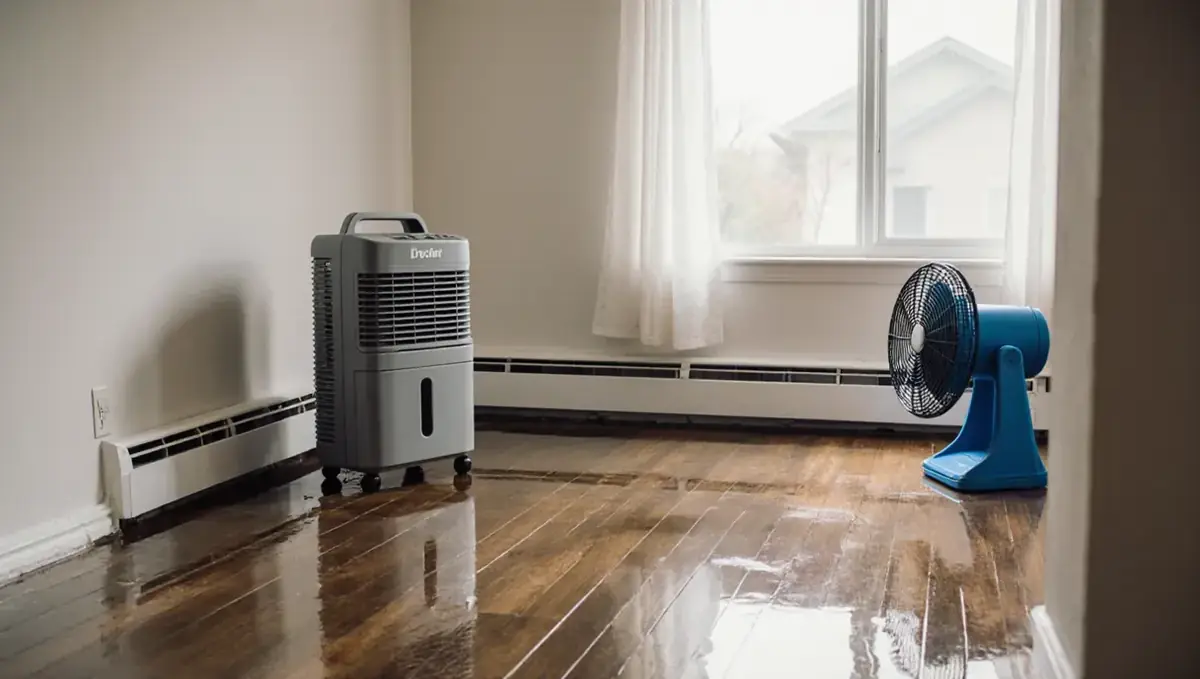
Dehumidifiers and air movers run for several days, and readings are logged until materials hit dry targets. In south Louisiana humidity, skipping this step is how mold ends up behind new paint. Learn more about structural drying.
Putting the home back together
After everything is verified dry, water damage repair covers drywall, baseboards, flooring, cabinets and paint. Ask any contractor about licensing, insurance and training, such as IICRC certification, before you sign anything.
Mold in Acadiana Humidity and the LSLBC License
EPA guidance says mold can start growing on wet building materials within 24 to 48 hours. With Youngsville's warm, damp air, that window is easy to miss if a leak goes unnoticed behind a vanity or under a refrigerator.
Louisiana regulates this work. The Louisiana State Licensing Board for Contractors (LSLBC) requires a Mold Remediation license for remediation work valued at $7,500 or more, and applicants complete 24 hours of board-approved training. Home improvement work of $7,500 or more needs a Home Improvement Registration. Thresholds can change, so confirm current rules and check any company with the Verify Licensure search on lslbc.gov.
See how professional mold removal uses containment and HEPA filtration so spores do not spread to clean rooms.
Flood Policies, Claims and Parish Paperwork
- Flood coverage is its own policy. Standard homeowners insurance generally excludes flood. NFIP or private flood policies cover it, and a new NFIP policy usually has a 30-day waiting period.
- Check your map and elevation. Lafayette Consolidated Government provides parish flood maps and a Know Your Elevation page. The 2016 flood showed that water can reach homes outside high-risk zones.
- Document as you go. Keep photos, moisture logs, receipts and the drying reports from the restoration company.
- Ask about permits. Repairs after a flood may need permits, especially in a floodplain. Contact the City of Youngsville or LCG at 311 before rebuilding.
WaterQ cannot predict how an adjuster will handle your claim, but a clean paper trail helps. Call (888) 817-5061 when you are ready to get the process started.
Homes, Rentals and Local Businesses
The same call works for a family home, a rental house or a small commercial space along one of Youngsville's busy corridors. Commercial water damage restoration often involves wet carpet tiles, ceiling leaks from flat roofs and pressure to reopen quickly, and the local provider you are connected with can plan drying around business hours. Owners with property in nearby Lafayette can use the same free line.
Youngsville and Surrounding Acadiana Communities
WaterQ's free referral line connects callers in Youngsville and the surrounding parts of Lafayette, Iberia and Vermilion parishes with independent local restoration providers.
Nearby communities
- Lafayette
- Broussard
- Milton
- Maurice
- Scott
- Carencro
- New Iberia
- Abbeville
- St. Martinville
Youngsville Water Damage FAQ
Youngsville isn't near the coast. Can it really flood?
Yes. Rain drains through parish coulees and bayous to the Vermilion River, and when they run full, water backs up into neighborhoods. Lafayette Parish was declared a federal disaster area after the August 2016 flood, when 12 to 26 inches of rain fell in the Vermilion basin.
Where can I check flood maps for a Youngsville address?
Lafayette Consolidated Government publishes parish flood maps and a Know Your Elevation page, and FEMA's Flood Map Service Center has the official maps. You can also call LCG at 311 or (337) 291-8200 with questions.
Do I need a licensed contractor for mold cleanup in Louisiana?
For larger jobs, yes. The LSLBC requires a Mold Remediation license for remediation work valued at $7,500 or more. Thresholds can change, so verify the current rule and the company's license on lslbc.gov.
Will my homeowners policy pay for water from a heavy rainstorm?
Usually not if it is rising floodwater, which standard homeowners policies generally exclude. Flood coverage comes from an NFIP or private flood policy. Sudden plumbing leaks are a different matter, so read your policy and talk with your agent.
Is WaterQ a restoration company?
No. WaterQ is a free referral service available 24/7. We connect you with an independent, local restoration company, which inspects the damage and does the work.
Local emergency and flood resources
Official sources for alerts, flood maps and preparedness in and around Youngsville: