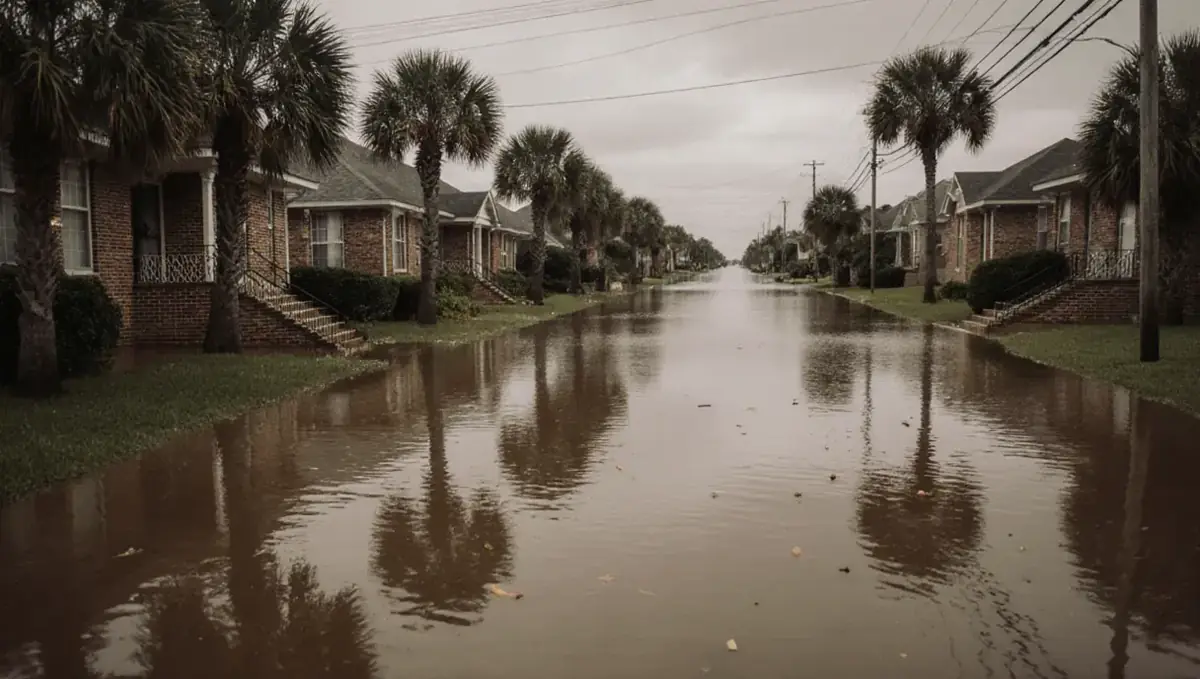
What March 2016 Taught the Twin Cities
Monroe sits on the Ouachita River, facing West Monroe across the water, at roughly 72 feet above sea level. Most of the time the risk feels distant. Then came March 2016.
Starting March 8 of that year, 15 to 20 inches of rain fell across the region in three days, about 45 percent of a normal year's rainfall and more than any three-day period on record. In Ouachita Parish alone, 9,500 homes had flood damage, 5,400 of them were completely flooded, and responders carried out more than 1,700 high-water rescues. Local officials said areas flooded that had never flooded before.
Meteorologists have stressed that calling it a 500-year flood is misleading, because a similar event could return within years. For Monroe homeowners, the practical takeaway is simple: you do not need to live beside the river to need flood cleanup one day.
Spring Storms, Tornadoes and Roof Openings
Normal precipitation in Monroe tops 51 inches a year, and the wettest months are April and June. Spring is also severe-weather season. On Easter Sunday, April 12, 2020, a low-end EF3 tornado traveled about eight miles through downtown and nearby neighborhoods, crossing the Ouachita River three times and destroying a hangar at Monroe Regional Airport. Across Ouachita Parish, 458 homes were impacted, and losses reached about $250 million. Advance warnings meant no one died.
Wind damage quickly becomes water damage. A lifted section of shingles, a broken window or a tree through the roof lets the next storm soak insulation, ceilings and walls. Storm damage cleanup in Monroe typically pairs emergency tarping or board-up with interior drying so the problem does not spread. See how storm damage cleanup works.
Your Checklist for the First Hour
- Get people safe. If water is rising, move to higher ground. Never drive or walk through moving water on a flooded street.
- Stay away from electricity. Do not enter flooded rooms where outlets or appliances may be energized. Use the breaker only if you can reach it while standing on dry ground.
- Stop what you can. For a plumbing leak, shut the main water valve. For roof leaks, move belongings and catch drips.
- Identify the water. A broken supply line is clean (Category 1). Outdoor floodwater and sewage backups are Category 3 and can carry bacteria and chemicals.
- Photograph everything. Capture the water line on walls, damaged contents and the source before cleanup starts.
- Make one call. Phone (888) 817-5061 and we will connect you with a local restoration professional for water extraction and drying.
Inside a Monroe Flood Damage Restoration Job
Flood damage restoration is more involved than drying a clean-water leak, because anything floodwater touched has to be cleaned or removed.
Pump-out and extraction
Standing water comes out first, using submersible pumps for deep water and extractors for carpet and hard floors.
Tear-out
Porous materials that absorbed Category 3 water, such as carpet pad, insulation and the lower portion of drywall, are usually removed and bagged. This is often called a flood cut.
Cleaning and sanitizing
Remaining framing, slabs and subfloors are cleaned and treated to reduce contamination and odor.
Drying and verification
Air movers and dehumidifiers run until moisture meters show framing and subfloors are dry. Only then should walls be closed up. More detail is on our flood damage restoration page.
For clean-water leaks, the process is lighter, and water damage repair in Monroe may mean little more than drying, a section of drywall and new baseboards.
Older Downtown Buildings and Family Homes
Monroe has an older core. The Downtown Monroe Historic District, listed on the National Register, runs right up to the Ouachita River, and the Monroe Residential Historic District holds many of the city's long-established homes. Older buildings can have plaster walls, wood floors and wall cavities where water spreads quietly.
- Homeowners should ask for moisture readings in adjoining rooms, not just the room where the leak started.
- Landlords of rentals near the university or downtown benefit from written drying records to share with tenants and insurers.
- Businesses can ask about after-hours work and phased drying to limit closures.
Commercial and residential callers alike can reach the line at (888) 817-5061, any time of day or night.
Mold After a Monroe Flood: Timing and Licensing
EPA guidance says mold can begin to grow within 24 to 48 hours on wet materials. After a large event like the 2016 flood, many homes wait days for help, so lifting rugs, pulling out soaked items and getting air moving early can make a real difference.
Louisiana's contractor board sets rules for this work. The Louisiana State Licensing Board for Contractors (LSLBC) requires a Mold Remediation license for remediation valued at $7,500 or more, and applicants complete 24 hours of board-approved training in mold remediation and basic mold assessment. Before signing for mold removal in Monroe, look up the company with the Verify Licensure tool at lslbc.gov, and confirm the current thresholds with the board, since they can change.
Our mold removal page explains containment and why spores should not be disturbed without it.
Flood Coverage, Wind Claims and Records to Keep
Many 2016 flood victims learned the hard way that standard homeowners policies generally exclude flood. Rising water is covered by NFIP or private flood insurance, and a new NFIP policy usually carries a 30-day waiting period. Tornado and wind damage, including rain that enters through a damaged roof, is typically a homeowners claim, but policies vary.
- Look up your flood zone on the FEMA Flood Map Service Center, and remember that 2016 flooded places outside high-risk areas.
- Save receipts for emergency services like tarping and extraction.
- Keep the drying logs and photos the restoration company provides.
WaterQ cannot tell you how an insurer will decide, but good records help. For other cities in the region, see Alexandria or the full list of Louisiana service areas.
Monroe Neighborhoods and Northeast Louisiana Communities
WaterQ's free referral line connects callers in Monroe and nearby Ouachita Parish communities with independent local restoration companies.
Neighborhoods
- Downtown Monroe
- Monroe Residential Historic District
- North Monroe
- South Monroe
- University of Louisiana at Monroe area
- Monroe Regional Airport area
Nearby communities
- West Monroe
- Sterlington
- Richwood
- Swartz
- Calhoun
- Claiborne
- Rayville
- Bastrop
Monroe Water Damage FAQ
My Monroe home did not flood in 2016. Do I still need flood insurance?
It is worth considering. During the March 2016 flood, officials said areas flooded that had never flooded before, and experts warn a similar event could happen again. Standard homeowners policies generally exclude flood, and NFIP policies usually have a 30-day waiting period.
Is tornado damage in Monroe a flood claim or a homeowners claim?
Wind damage and rain entering through a wind-damaged roof are generally handled under a homeowners policy, while rising surface water is a flood claim. Check your own policy and document the roof damage with photos.
What is a flood cut?
It is the removal of the lower section of drywall, often a couple of feet above the water line, after a flood. It lets crews remove contaminated insulation, clean the framing and dry the wall cavity properly.
What license should a Louisiana mold remediation company have?
The Louisiana State Licensing Board for Contractors requires a Mold Remediation license for remediation work valued at $7,500 or more. Use the Verify Licensure search on lslbc.gov and confirm current rules with the board.
Is WaterQ a restoration contractor?
No. WaterQ is a free referral service available 24/7. We connect you with an independent, local restoration company in the Monroe area that inspects the damage and does the work.
Local emergency and flood resources
Official sources for alerts, flood maps and preparedness in and around Monroe: