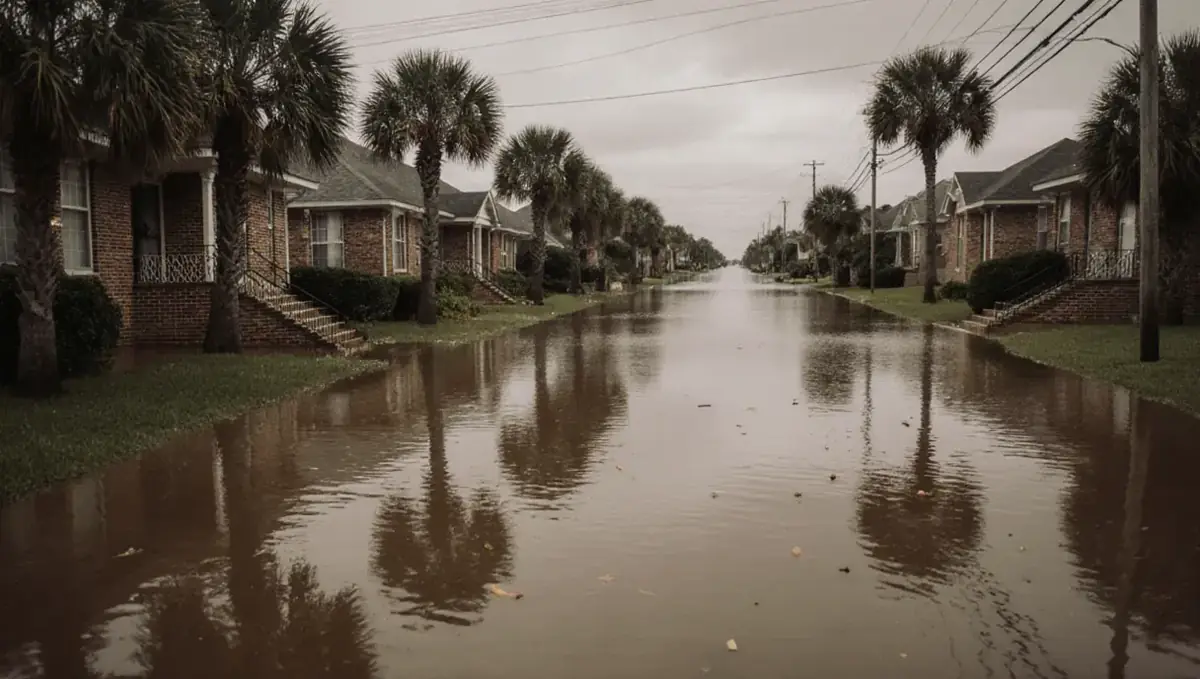
Living Beside the Amite River
Denham Springs is the largest city in Livingston Parish, a short drive east of Baton Rouge where US 190, Interstate 12 and LA 16 come together. The Amite River forms part of the city boundary. At about 43 feet above sea level, the city is higher than much of south Louisiana, yet its relationship with the river defines its flood risk.
Rivers respond to the whole watershed, not just the local sky. When heavy rain falls upstream, water arrives in Denham Springs hours or days later, so a sunny morning does not always mean the danger has passed. Watching river forecasts from the National Weather Service is a habit worth keeping during any long rain event.
Rain is plentiful the rest of the time too. Baton Rouge Metropolitan Airport, a few miles west, averages about 62 inches a year. Between river flooding, heavy thunderstorms and ordinary plumbing failures, water damage in Denham Springs can start in several different ways.
The August 2016 Crest and Its Lasting Lessons
From August 11 to 13, 2016, a stalled storm system poured historic rain over the Florida Parishes. The National Weather Service recorded 25.52 inches at Livingston, and the event's highest total, 31.39 inches, fell at Watson, just up the road. The Amite River crested at Denham Springs nearly 5 feet above its previous record.
One parish official estimated that 75 percent of homes in Livingston Parish were a total loss. Even if your home stayed dry that August, keeping an eye on river gauges and reviewing your flood coverage is time well spent.
Three takeaways stand out: river flooding can exceed anything in living memory, homes outside high-risk zones can flood, and the cleanup that follows a long-duration flood involves contaminated water, heavy tear-out and patient drying.
If Water Is Rising or Already Inside
- Leave when told to. Follow evacuation orders and never drive into water over a road.
- Return carefully. Wait until authorities say it is safe. Have the power checked before using outlets that were submerged.
- Treat floodwater as contaminated. River water is Category 3. Wear boots and gloves and keep children and pets out.
- Record the damage. Photograph the waterline on walls, every room and damaged belongings before removing anything.
- Do not wait on drying. Wet drywall and flooring left in place for days invite mold.
- Call for help. Dial (888) 817-5061 and we connect you with a local provider for water extraction and cleanup.
For a burst pipe or appliance leak, the first move is simpler: shut off the main valve and keep clear of wet electrical equipment.
Muck-Out to Move-In: How Flood Restoration Proceeds
After river flooding, flood damage restoration has more steps than a typical leak. Most local companies work through a sequence like this:
- Assessment. The crew checks safety, identifies the water category and maps moisture with meters and thermal imaging.
- Muck-out. Mud, debris and ruined contents come out. Carpet, pad, insulation and drywall that touched floodwater are typically removed, often to a set height above the waterline.
- Cleaning and sanitizing. Remaining framing, slabs and surfaces are cleaned and treated.
- Drying. Dehumidifiers and air movers run until framing and slabs reach dry readings. Read more on structural drying.
- Rebuild. New insulation, drywall, flooring and cabinets go in. See flood damage restoration for more on this phase.
Ask any contractor about its licensing, insurance and training, for example IICRC certification, and get a written scope before work begins.
Storms, Wind and Roof-Driven Leaks
Not every water problem in Denham Springs comes from the river. Tropical systems and strong summer thunderstorms can tear shingles, bring down trees and push rain under flashing. A small roof leak can soak attic insulation and ceiling drywall long before a stain appears in the room below.
After a storm, look for wet spots on ceilings, dripping light fixtures and damp insulation in the attic. Storm damage cleanup in Denham Springs usually starts with tarping, then moves to removing soaked ceiling materials and drying the attic space. More detail is on our storm damage cleanup page.
Mold After Long-Standing Water, and Louisiana's License Rules
Water that sits for days, as it did in 2016, gives mold plenty of time. Following EPA guidance, growth can begin on damp materials in as little as 24 to 48 hours, so drying and tear-out should start as soon as the home is safe to enter.
In Louisiana, the State Licensing Board for Contractors (LSLBC) requires a Mold Remediation license for remediation jobs valued at $7,500 or more, with 24 hours of board-approved training. Home improvement work at that level needs a Home Improvement Registration, and residential construction over $50,000 needs a residential license. Thresholds may be updated, so confirm with the Verify Licensure search on lslbc.gov before you hire anyone for mold removal in Denham Springs.
Our mold removal page explains containment and cleanup.
Flood Records, Coverage and City Tools
The City of Denham Springs Office of Planning and Development handles flood zone determinations, Base Flood Elevations and the Community Rating System, and keeps a list of addresses that have elevation certificates on file. The city also offers a property flood risk portal through Forerunner and an emergency alert service called DS Alert.
- Standard homeowners policies generally exclude flood; NFIP or private flood policies cover it, and a new NFIP policy usually has a 30-day waiting period.
- Keep photos, receipts and the restoration company's moisture logs together for the adjuster.
- Ask the city about permits before rebuilding after a flood.
Homes, rentals, churches and the shops of the Antique Village all face these risks. Call (888) 817-5061 to be connected with local restoration help. Callers in Baton Rouge and Hammond can use the same number.
Denham Springs Areas and Livingston Parish Neighbors
The free line connects callers in Denham Springs and nearby Livingston Parish and Baton Rouge-area communities with independent local restoration providers.
Neighborhoods
- Denham Springs Antique Village (downtown)
- Range Avenue corridor
- US 190 corridor
- Interstate 12 / LA 16 area
Nearby communities
- Walker
- Watson
- Livingston
- Port Vincent
- French Settlement
- Central
- Baton Rouge
- Hammond
Denham Springs Water Damage FAQ
How high did the Amite River get in Denham Springs in 2016?
During the August 2016 floods, the Amite River crested at Denham Springs nearly 5 feet above its previous record. A parish official estimated that 75 percent of homes in Livingston Parish were a total loss.
Where can I look up flood risk for my Denham Springs address?
The City of Denham Springs offers a property flood risk portal through Forerunner, a flood zone determination form and a list of addresses with elevation certificates. The Office of Planning and Development can help with questions.
Do I need to rip out drywall after river flooding?
In most cases, yes. River floodwater is considered contaminated, so drywall, insulation and carpet pad that it soaked are usually removed, and the framing is cleaned and dried before rebuilding.
How can I get emergency alerts in Denham Springs?
The city runs an alert service called DS Alert. Signing up, along with following National Weather Service river forecasts, helps you prepare when the Amite starts to rise.
Will WaterQ do the cleanup at my house?
No. WaterQ is a free referral service. The line is open 24/7, and we connect you with an independent, local restoration company that inspects and handles the work.
Local emergency and flood resources
Official sources for alerts, flood maps and preparedness in and around Denham Springs: