A Canal Community on the West Bank
Harvey covers about 7 square miles on the south side of the Mississippi River, opposite New Orleans, at an elevation of roughly 3 feet. Its history is tied to the Harvey Canal, which began as a ditch cut south from the riverbank toward Bayou Barataria. Joseph Harvey and his wife, Louise Destrehan, built the locks that connected that canal to the Mississippi, and the settlement once known as Cosmopolite City took the Harvey name.
Today the community is bordered by Gretna to the east, Marrero to the west and Woodmere to the southwest, with the Intracoastal Canal along its western side. Low ground, heavy rain and Gulf storms mean water damage in Harvey can come from the sky, the street or a failed pipe inside the house.
Inside homes, the everyday causes are familiar: a split washing machine hose, a corroded water heater, an air conditioning drain line that backs up during a long, humid summer. Those leaks are usually clean water at first, but the longer they run, the deeper the moisture travels into walls and flooring.
Unincorporated, So the Parish Runs Drainage
Harvey is not an incorporated city. It is a census-designated place, and Jefferson Parish government, led by a parish president and parish council, provides services such as drainage pumping, permits and emergency management. For storm updates and drainage questions, start with the Jefferson Parish government website, and sign up for the parish's JPAlert community alert system.
Parish drainage has limits. During the May 1995 flood, pumping stations rated for about 1 inch of rain per hour could not keep pace, and 14,600 homes and apartments flooded across Jefferson Parish. A slow-moving storm can still put water into streets and low homes faster than it can be pumped away.
What Hurricane Ida Showed the West Bank
Hurricane Ida made landfall near Port Fourchon on August 29, 2021, as a Category 4 storm. Major damage was reported across Jefferson Parish, and a large Entergy transmission tower near Avondale on the West Bank collapsed, leaving much of the parish without electricity. South of the post-Katrina protection system, water overtopped levees in lower Jefferson Parish and flooded Lafitte.
For Harvey homes inside the levees, the bigger issue was often roof damage combined with long outages. With no power for air conditioning or dehumidifiers, wet ceilings, insulation and carpet sat in humid air. Storm damage cleanup in Harvey after a hurricane typically starts with tarping, then removing soaked materials so drying can begin as soon as power and equipment are available. Learn more on our storm damage cleanup page.
Water on the Floor: What to Do First
- Check for electrical risk. Keep out of water that may be touching outlets, cords or appliances.
- Find the shutoff. Close the main water valve for any plumbing leak, from a supply line to a water heater.
- Know what kind of water it is. Clean supply water is Category 1. Water from the street, a canal or a sewer backup is Category 3 and should be treated as contaminated.
- Run generators outside only. Keep them well away from windows, doors and garages to prevent carbon monoxide buildup.
- Photograph everything. Get images of the source, waterlines and damaged items before cleanup.
- Get help started. Call (888) 817-5061, and we will connect you with a local company for water extraction.
Restoring a Home Step by Step
Water damage restoration in Harvey usually follows four phases, adjusted to the house and the water source.
Extraction
Pumps and extractors remove standing water from floors and carpet. Porous materials touched by floodwater are generally removed during flood cleanup.
Inspection
Moisture meters and infrared cameras show how far water traveled into drywall, cabinets and subfloors.
Drying
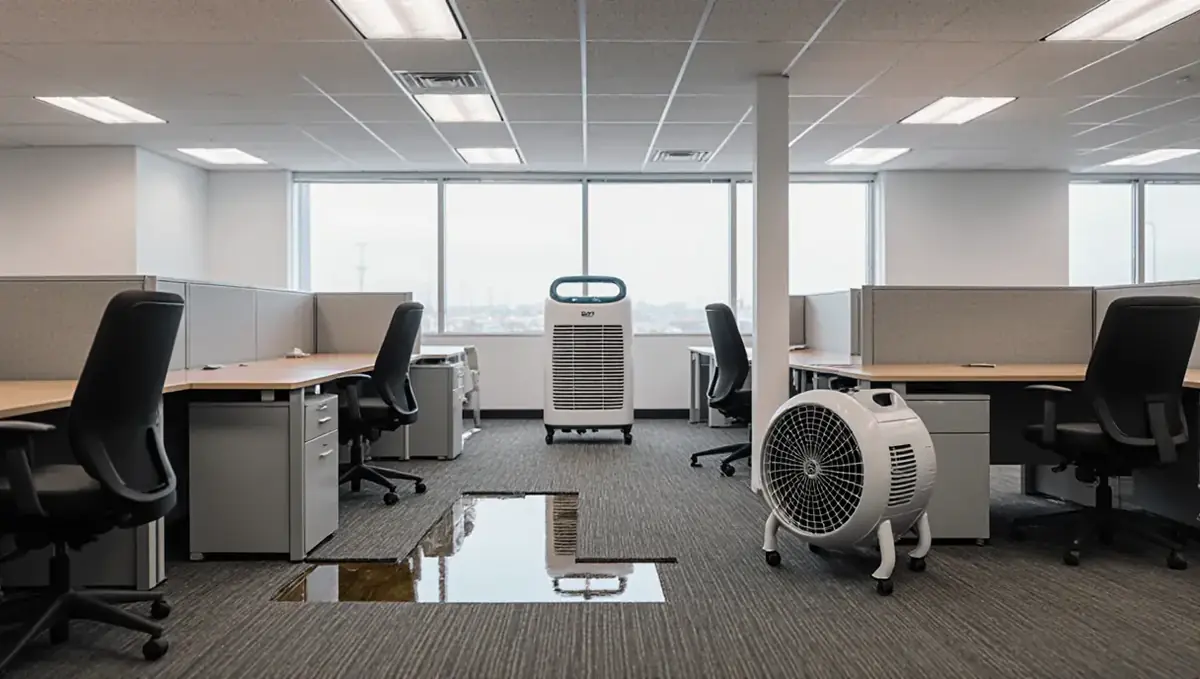
Dehumidifiers and air movers run in closed rooms until materials return to normal readings, which are recorded each day.
Repair
After the structure tests dry, water damage repair restores drywall, insulation, flooring and trim.
Shops, Warehouses and Marine Businesses
Businesses along the Harvey Canal and the Westbank Expressway range from retail and offices to industrial and marine operations. Water in a commercial building often means lost operating time, wet inventory and questions about responsibility among owners, tenants and insurers.
Commercial drying plans can be scheduled around operations, with sections of a building isolated so work can continue elsewhere. Detailed moisture logs and photos help document the loss. Property managers and owners can call (888) 817-5061, available 24/7, to be connected with a local restoration provider. Ask any company about its licensing, insurance and training, such as IICRC certification, before work begins.
Mold Risk and State Licensing in Louisiana
On wet drywall, wood and carpet, mold can start growing within 24 to 48 hours, and the West Bank's humidity gives it plenty of help. Fast drying or removal of soaked materials is the best way to avoid a larger mold removal job in Harvey later.
Louisiana sets licensing rules for larger projects. The Louisiana State Licensing Board for Contractors requires a Mold Remediation license for remediation valued at $7,500 or more, along with 24 hours of board-approved training in remediation and basic mold assessment. Thresholds may be updated, so confirm the current rules and search the company on the LSLBC verification site. Our mold removal page explains containment and cleanup.
Flood Insurance and Building Your Claim
Standard homeowners policies generally exclude flood, so damage from rising water needs NFIP or private flood coverage. A new NFIP policy typically has a 30-day waiting period, which is why coverage needs to be in place before hurricane season gets busy. Check your flood zone on the FEMA Flood Map Service Center.
Keep dated photos, a list of damaged property, receipts for emergency services and the restoration company's drying records. Note whether water came through the roof or rose from the ground, since wind and flood are often handled separately. Nearby West Bank help is available on our Gretna and Marrero pages.
Harvey and Nearby West Bank Communities
Callers across Harvey and the surrounding West Bank can be connected with independent local restoration companies.
Neighborhoods
- Harvey Canal corridor
- Westbank Expressway corridor
- Cosmopolite City (historic core near the river)
Nearby communities
- Gretna
- Marrero
- Woodmere
- Terrytown
- Estelle
- Westwego
- Algiers
- Belle Chasse
- New Orleans
- Lafitte
Harvey Water Damage FAQ
Does Harvey have its own city government?
No. Harvey is an unincorporated community, so Jefferson Parish government provides drainage, permits and emergency services. Check the parish website and JPAlert for storm and drainage information.
How did Hurricane Ida affect Harvey and the West Bank?
Ida caused major damage in Jefferson Parish in 2021, and a transmission tower collapse on the West Bank cut power across much of the parish. Many homes dealt with roof leaks while power was out, which slowed drying.
Is it safe to run a generator to power drying equipment?
Only outdoors, well away from windows, doors and garages. Carbon monoxide poisonings from generator use were reported on the West Bank after Ida. Never run a generator inside a home or garage.
Can a restoration company work around my business hours?
Many commercial drying jobs can be planned in sections so part of a building stays open. Discuss scheduling and documentation with the restoration company you are connected with.
Who verifies mold remediation licenses in Louisiana?
The Louisiana State Licensing Board for Contractors. A Mold Remediation license is required for jobs of $7,500 or more. You can look up a company on lslbc.gov.
Local emergency and flood resources
Official sources for alerts, flood maps and preparedness in and around Harvey: