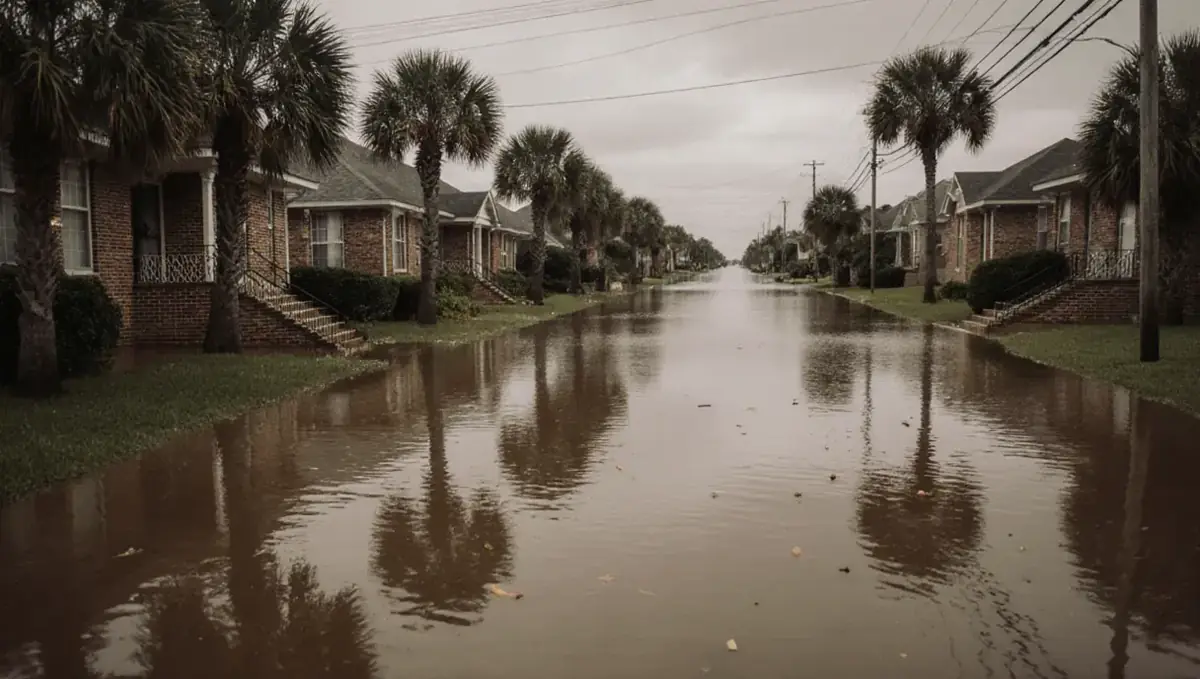
A Parish Seat Built on Low Ground Between River and Lake
Chalmette is not a city in the legal sense. It is an unincorporated community and census-designated place that serves as the parish seat of St. Bernard Parish, which has no incorporated towns at all. That matters after a flood or storm, because emergency notices, permits and preparedness programs come from St. Bernard Parish Government rather than a city hall.
The community stands only about 3 feet above sea level on the east bank of the Mississippi River, east of downtown New Orleans and south of Arabi. Toward the other side lies Lake Borgne and the old Mississippi River Gulf Outlet (MRGO) channel. Roughly 83 percent of the parish's area is water, and homes depend on levees and the IHNC Lake Borgne Surge Barrier, a 1.8-mile Army Corps of Engineers structure finished in 2013, to hold back surge from the Gulf.
Living inside that protection reduces risk but does not remove it. Heavy rain still has to drain off low ground, roofs still take wind, and pipes and water heaters fail here as they do anywhere.
What Betsy, Katrina and Ida Taught St. Bernard Residents
Chalmette has flooded badly more than once. In September 1965, Hurricane Betsy broke MRGO and Industrial Canal levees, and water spread into Arabi and Chalmette as well as New Orleans' Ninth Ward. Forty years later, Katrina drove a surge of about 25 feet into the MRGO on August 29, 2005. The water overtopped and destroyed parish levees and covered most of Chalmette, reaching 14 to 15 feet in some places.
Katrina also showed how dirty floodwater can be. The surge toppled a large tank at the Murphy Oil facility, and oil spread into flooded neighborhoods. Most buildings were judged unsalvageable, and the population fell from about 32,000 in 2000 to under 17,000 in 2010. In 2021, Hurricane Ida brought heavy flooding to St. Bernard Parish again.
The practical lesson for flood cleanup in Chalmette is simple: treat any outside water as contaminated, and do not assume a rebuilt house is immune.
Your First Moves When Water Gets Inside
- Make sure it is safe. Stay out of standing water that could touch outlets or appliances, and never drive through a flooded street.
- Stop the source if you can. For a burst line or failed water heater, close the main valve. For storm water, wait until conditions settle.
- Kill power to wet rooms only if the breaker panel is in a dry spot you can reach safely.
- Record the damage. Photograph the waterline on walls, the source and your damaged belongings before moving anything.
- Protect what you can. Pull rugs, papers and electronics out of wet areas and set furniture legs on blocks.
- Bring in help. Call (888) 817-5061 and we connect you with a local company that can begin emergency water removal.
A clean supply-line leak is Category 1 water, while surge or street water is Category 3 and can carry sewage, fuel or chemicals. Keep kids and pets away from it.
From Extraction to Rebuild: How the Work Unfolds
Every property is different, but water damage restoration in Chalmette usually moves through a familiar sequence.
Removing the water
Pumps and extractors pull out standing water and as much moisture from flooring as possible. Pad and carpet soaked by floodwater are normally discarded rather than dried.
Tracing hidden moisture
Moisture meters and thermal cameras show where water wicked into drywall, framing and cabinets. Wet drywall and insulation are often cut out above the wet line.
Drying the structure
Dehumidifiers and air movers run until readings reach normal levels. In south Louisiana humidity, dehumidification does much of the work. Learn more about structural drying.
Repairs
Once materials test dry, water damage repair replaces drywall, floors, trim and cabinets so the home is livable again.
Hurricane Season Preparation in St. Bernard Parish
Atlantic hurricane season runs June 1 through November 30, with the busiest stretch from mid-August through October. The parish's Office of Homeland Security and Emergency Preparedness posts storm information on the parish preparedness page. Residents who cannot evacuate on their own can pre-register for the Critical Transportation Needs program, which is meant as a last resort.
After the storm passes, storm damage cleanup in Chalmette often means tarping roofs, removing soaked ceilings and insulation, and drying rooms where wind-driven rain came in around windows. Our storm damage cleanup page explains the process. Neighbors in nearby New Orleans and across the lake in Slidell face many of the same threats.
Mold After a Flood and Louisiana's Remediation License
Per EPA guidance, mold can start growing on wet materials within 24 to 48 hours, and St. Bernard Parish summers give it heat and humidity to spare. Fast drying or removal of soaked drywall, insulation and flooring is the best defense. When growth has already started, mold removal in Chalmette should include containment so spores do not spread into dry rooms.
Louisiana regulates this trade. The Louisiana State Licensing Board for Contractors (LSLBC) requires a Mold Remediation license for remediation jobs above its dollar threshold, and applicants must complete board-approved training in mold remediation and basic mold assessment. Home improvement work above a set amount also requires LSLBC registration. Thresholds can change, so confirm the current rules and look up any contractor on lslbc.gov before you sign. See mold removal for what remediation typically involves.
Claims, Flood Policies and Paperwork
- Flood is its own policy. Standard homeowners policies generally exclude flood. Coverage comes from the NFIP or a private flood insurer, and a new NFIP policy typically has a 30-day waiting period.
- Wind and water may be separate. Photos that show whether water came through a damaged roof or rose from outside help sort out which policy applies.
- Check your zone. Look up your address on the FEMA Flood Map Service Center, even if your home was rebuilt or raised after 2005.
- Keep everything. Save receipts for tarping and extraction, the restoration company's moisture logs and notes from every adjuster call.
WaterQ cannot predict how an insurer will decide a claim, but a complete file helps.
Homes, Rentals and Businesses Along Judge Perez and St. Bernard Highway
A flooded slab home, a rental duplex with a leaking roof and a storefront on a busy corridor each need a different plan. Business owners usually want drying scheduled around operating hours, and landlords need clear documentation for tenants and insurers.
For any of these, call (888) 817-5061. The line is answered 24/7, and WaterQ is a free referral service that connects you with a trusted, local restoration company. Before work starts, ask the provider about its licensing, insurance and training, such as IICRC certification.
Chalmette Areas and Nearby St. Bernard Communities
Callers throughout Chalmette and the surrounding east bank communities can be connected with independent local restoration providers.
Neighborhoods
- River side of Chalmette (St. Bernard Highway corridor)
- Paris Road area
- Judge Perez Drive corridor
- Chalmette Battlefield area
Nearby communities
- Arabi
- Meraux
- Violet
- Poydras
- Lower Ninth Ward (New Orleans)
- New Orleans East
- New Orleans
- Belle Chasse
Chalmette Water Damage FAQ
Is Chalmette a city with its own government?
No. Chalmette is an unincorporated community and the parish seat of St. Bernard Parish, which has no incorporated municipalities. Emergency information, alerts and permits come from St. Bernard Parish Government.
Why should I treat floodwater in Chalmette as contaminated?
Surge and street water can carry sewage, fuel and chemicals. During Katrina, a toppled tank at the Murphy Oil facility spilled oil into flooded areas. Floodwater is considered Category 3, so wear gloves and boots and leave cleanup of soaked materials to professionals.
My home was rebuilt after Katrina. Do I still need flood insurance?
It is worth considering. Chalmette sits about 3 feet above sea level inside a levee system, and standard homeowners policies generally exclude flood. Check your zone on the FEMA Flood Map Service Center and remember that new NFIP policies usually have a 30-day waiting period.
Who licenses mold remediation companies in Louisiana?
The Louisiana State Licensing Board for Contractors requires a Mold Remediation license for jobs above its dollar threshold, along with board-approved training. Confirm current requirements and verify the company on lslbc.gov before signing a contract.
Does WaterQ do the restoration work itself?
No. WaterQ is a free referral service available 24/7. It connects you with an independent local restoration company, which handles the inspection, drying and repairs.
Local emergency and flood resources
Official sources for alerts, flood maps and preparedness in and around Chalmette: