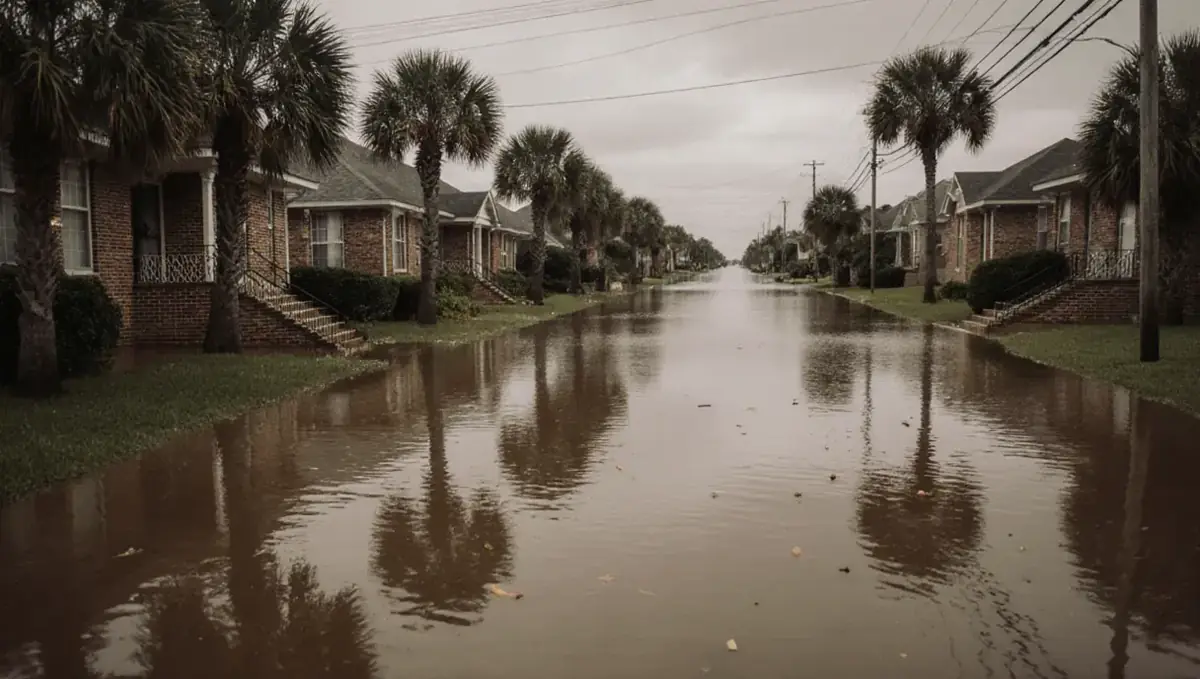
A Suburb Built on Low Ground Between the Lake and the River
Metairie spreads across about 23 square miles of Jefferson Parish, with Lake Pontchartrain on its northern edge and the 17th Street Canal marking the line with New Orleans. Most of the community sits only about 3 feet above sea level. The highest natural ground is the old ridge along Bayou Metairie, a natural levee left by an ancient branch of the Mississippi River, which is why Metairie Road was one of the area's earliest routes.
On flat, low land like this, rain has nowhere to run on its own. Canals, including the one alongside Veterans Boulevard, carry stormwater to pump stations that push it out. When the rain comes faster than those stations can move it, water backs up into streets, driveways and sometimes living rooms.
Metairie is not a city. It is an unincorporated community, so drainage, permits and emergency services are handled by Jefferson Parish government rather than a local city hall. Keep the Jefferson Parish government site handy for drainage and storm updates.
What May 1995 Taught Metairie About Rain Flooding
The flood many longtime residents remember did not come from a hurricane. On May 8, 1995, upwards of 20 inches of rain fell on Metairie in roughly twelve hours. Pumping stations across the New Orleans area, then rated for about 1 inch per hour, could not keep up, and 14,600 homes and apartments flooded in Jefferson Parish alone.
The takeaway is simple: flood cleanup in Metairie can be needed in any season, after any slow-moving thunderstorm. A home that has never flooded during a named storm may still take water when a stalled downpour overwhelms the drainage. That is one reason flood insurance deserves a look even outside the highest-risk zones.
Storm History: From the 1947 Hurricane to Ida
Metairie has a long record of tropical weather. The 1947 Fort Lauderdale hurricane left much of the community under about 6 feet of water, and Hurricane Betsy in 1965 brought extensive wind damage and moderate flooding. During Hurricane Katrina in 2005, the parish's stormwater pumps were shut down and operators evacuated under its emergency plan, which affected flooding on the East Bank. Jefferson's levees and floodwalls did not fail, so water could be pumped out comparatively quickly once operations resumed.
In 2021, Hurricane Ida made landfall near Port Fourchon as a Category 4 storm, and major damage was reported across Jefferson Parish, along with widespread power outages. Long outages matter for water damage because sump pumps, dehumidifiers and air conditioning stop running while wet materials sit.
After a hurricane, storm damage cleanup usually starts with tarping roof openings and removing soaked ceiling drywall and insulation, then moves to drying. Wind-driven rain through a damaged roof is handled differently by insurers than rising floodwater, so photograph where the water entered.
Your First Hour With Water on the Floor
- Put safety first. Stay out of rooms where water may reach outlets, cords or appliances. Never wade through flooded streets or drive into standing water on Veterans or Causeway.
- Stop the source. For a burst pipe, water heater or washing machine hose, close the main shutoff. If the electrical panel sits in a dry hallway or garage, you can switch off the affected circuits; if it does not, leave it alone.
- Identify the water. A clean supply line is Category 1 under IICRC S500 terms. Street floodwater and sewer backups are Category 3 and should be treated as contaminated.
- Record it. Take photos and video of the water level, the source and damaged belongings before moving anything.
- Call for help. Dial (888) 817-5061 and we will connect you with a local company that handles emergency water extraction.
Inside a Professional Drying Job
Water damage restoration in Metairie generally follows the same core steps, adjusted to the house and the type of water involved.
Pull out the bulk water
Pumps and extraction wands remove standing water from floors and carpet. Carpet pad that has been under floodwater is normally discarded.
Map the moisture
Moisture meters and thermal cameras show how far water has wicked into walls, cabinets and subfloors. Those readings set the drying plan and support your claim.
Dry the structure
Dehumidifiers and air movers run until materials reach normal moisture levels. In this climate, with heavy rain most months, controlled structural drying is what keeps hidden cavities from staying damp.
Rebuild
Once readings confirm the home is dry, water damage repair replaces drywall, baseboards, flooring and cabinets that could not be saved.
Mold After a Metairie Leak and the LSLBC License
Mold can begin growing on wet drywall, carpet and wood within 24 to 48 hours, and Metairie's heat and humidity speed things along. The best prevention is getting soaked materials dried or removed quickly.
For mold removal in Metairie on a larger scale, Louisiana sets licensing rules. Under rules from the Louisiana State Licensing Board for Contractors (LSLBC), a remediation job valued at $7,500 or more calls for a Mold Remediation license, and earning that license takes 24 hours of board-approved training covering remediation and basic mold assessment. Rebuild work on a Metairie home in that same $7,500-plus range falls under the board's Home Improvement Registration. These thresholds can change, so confirm the current rules and look up any contractor with the LSLBC license verification tool before signing. Our mold removal page explains containment and cleanup.
Jefferson Parish Homeowners and the Insurance Side
- Flood needs its own policy. Standard homeowners coverage generally excludes flood. NFIP and private flood policies fill that gap, and a new NFIP policy typically has a 30-day waiting period, so buy before storms form in the Gulf.
- Check your zone. Look up your address on the FEMA Flood Map Service Center, but remember the 1995 flood reached many homes regardless of mapped risk.
- Keep every receipt. Save invoices for tarping, extraction and drying equipment, along with the restoration company's moisture logs.
- Log your contacts. Note the date, name and summary of every call with your adjuster.
No referral service can tell you what an adjuster will approve, yet Metairie claims backed by dated photos and drying logs tend to move with fewer questions.
Offices, Shops and Rentals Along Veterans and Causeway
Metairie's business district centers on Causeway Boulevard, and Veterans Boulevard is lined with retail and offices. A flooded storefront or a leak in a multi-tenant building needs a drying plan that limits downtime and keeps records for owners, tenants and insurers. Landlords with rental homes or apartments face the same need for clear documentation.
For commercial or residential properties, call (888) 817-5061 any time, day or night, and we will connect you with a trusted, local restoration professional. It is smart to ask any provider on a Metairie job about its licensing, insurance coverage and training (IICRC certification is one example) before the first air mover is plugged in. Neighbors across the parish line can find help through our New Orleans and Kenner pages.
Metairie Areas and Neighboring Communities
Calls from across unincorporated Metairie and the surrounding East Bank and West Bank communities can be connected with independent local restoration providers.
Neighborhoods
- Old Metairie
- Bucktown
- Fat City
- Metairie Ridge
- Causeway Boulevard business district
- Veterans Boulevard corridor
- Lafreniere Park area
- Metairie Road
Nearby communities
- New Orleans
- Kenner
- River Ridge
- Harahan
- Elmwood
- Jefferson
- Gretna
- Harvey
- Marrero
- Mandeville
Metairie Water Damage FAQ
Who handles drainage and flooding issues in Metairie?
Metairie is an unincorporated community, so Jefferson Parish government provides drainage, permitting and emergency services. Check the Jefferson Parish government website for storm and drainage updates.
Can Metairie homes flood without a hurricane?
Yes. In May 1995, upwards of 20 inches of rain fell on Metairie in about twelve hours, pumping stations were overwhelmed and 14,600 homes and apartments flooded in Jefferson Parish. Heavy, slow-moving thunderstorms remain a flood risk.
Do I need a licensed contractor for mold remediation in Louisiana?
For larger jobs, yes. The LSLBC requires a Mold Remediation license for work valued at $7,500 or more, along with 24 hours of board-approved training. Confirm current thresholds and verify the contractor on lslbc.gov.
Why does a power outage make water damage worse?
Without power, sump pumps, dehumidifiers and air conditioning stop running, so wet materials stay damp longer and mold can begin within 24 to 48 hours. Start drying as soon as it is safe and power returns.
Does WaterQ do the restoration work itself?
No. WaterQ is a free referral service available 24/7. We connect you with an independent local restoration company, which inspects the damage and performs the work.
Local emergency and flood resources
Official sources for alerts, flood maps and preparedness in and around Metairie: