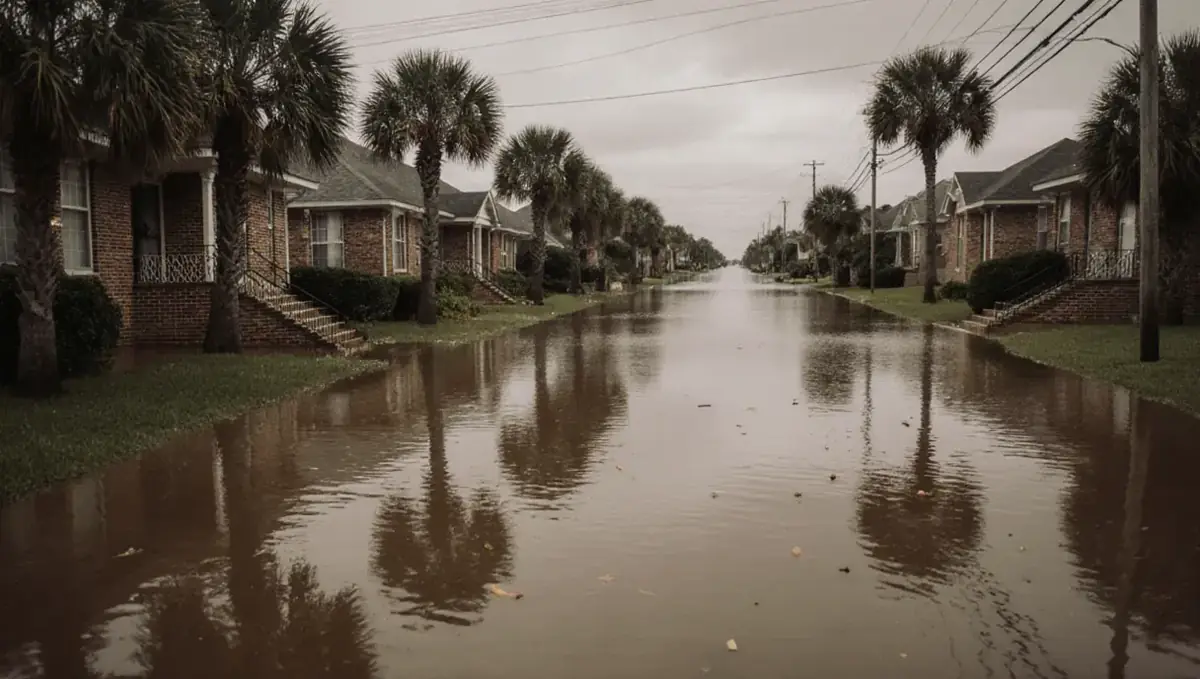
Thirteen Feet Above Sea Level, West of the Calcasieu
Sulphur lies just west of Lake Charles in Calcasieu Parish, a city of nearly 22,000 people spread over about 11 square miles. Its average elevation is roughly 13 feet, so there is little slope to carry rainwater away. The Houston River runs north of town, Moss Lake lies to the south, and bayous wind through the surrounding countryside.
The city's name comes from its beginnings. Sulfur deposits were found here in 1867, and early attempts at shaft mining were deadly because of hydrogen sulfide gas. Herman Frasch's method of pumping superheated water underground to melt the mineral brought the first molten sulfur to the surface on Christmas Eve 1894, and Sulphur incorporated in 1914. Today refineries and petrochemical plants are the major employers.
For property owners, the practical takeaway is that water damage in Sulphur often comes from the sky or the Gulf rather than from a river overtopping its banks.
Laura's 110 mph Gusts and Delta's Rain
When Hurricane Laura came ashore at Cameron on August 27, 2020, a portable weather tower near Sulphur measured sustained winds of 79 mph and a peak gust of 110 mph.
Hurricane Delta followed on October 9, landing near Creole. It dropped up to 17.57 inches of rain in Calcasieu Parish. According to the National Weather Service, Delta tore off temporary tarps installed after Laura and scattered roadside debris piles, which clogged ditches and made flooding worse across southwest Louisiana.
Two storms in six weeks showed how quickly a damaged building can go from a roof leak to a full interior loss. Prompt storm damage cleanup, including secure tarping and fast drying, limits how far that chain reaction goes.
Street Flooding and Blocked Storm Drains
The City of Sulphur reminds residents that storm drains are separate from sewer lines and empty untreated into local bayous, rivers and lakes. It also warns that debris blocking those drains causes localized flooding and street backups.
On flat, low ground, that matters. A heavy thunderstorm over Sulphur, which shares the Lake Charles area's average of about 60 inches of rain a year, can send water across yards and into garages and slab homes when drains are clogged with leaves, grass clippings or storm debris.
- Keep curb inlets and ditches in front of your property clear before storms.
- Do not blow yard waste into the street.
- Treat any water that came in from outside as contaminated during flood cleanup, since runoff can carry oil, fertilizers and other pollutants.
What Sulphur Homeowners Should Do First
- Check for hazards. Watch for downed lines, gas odors, and water near outlets or the electrical panel. Leave if the situation feels unsafe.
- Turn off the water. If a pipe, water heater or appliance line failed, shut the main valve.
- Classify the water. Clean supply water is Category 1; floodwater or sewage backup is Category 3 and calls for gloves, boots and professional handling.
- Make a record. Photograph and video every room, the source, any waterline and damaged property.
- Get belongings up and out. Move rugs, electronics, papers and keepsakes to a dry area.
- Bring in a professional. Call (888) 817-5061 to be connected with a local restoration company that can begin emergency water removal.
Inside a Professional Dry-Out
The restoration company you are connected with will usually begin with an inspection and moisture survey, using meters and thermal imaging to see how far water spread under flooring and up walls.
Next comes extraction of standing water, followed by removal of materials that cannot be saved, such as soaked carpet pad and the lower portion of wet drywall. Commercial-grade dehumidifiers and air movers then run, with readings logged daily until materials are dry. That phase is covered in detail on our structural drying page.
Only after drying is verified should the rebuild begin. Water damage repair can include drywall, insulation, flooring, cabinets and trim. Ask about each company's licensing, insurance and training (for example, IICRC certification) before work starts.
Mold Risk on the Southwest Louisiana Coast
Following EPA guidance, wet building materials can start to grow mold within 24 to 48 hours. In Sulphur's warm, humid climate, especially after a storm knocks out power and air conditioning, that window can close fast.
Once a remediation job is valued at $7,500 or more, the Louisiana State Licensing Board for Contractors (LSLBC) requires the company to hold a Mold Remediation license, which calls for 24 hours of board-approved training. Larger home improvement jobs, at $7,500 and up, require a Home Improvement Registration with the board. Since these thresholds can be revised, verify current rules and look up any contractor on lslbc.gov.
See how professional mold removal isolates the work area and removes damaged materials safely.
Insurance Basics and City Notifications
- Separate flood coverage. Standard homeowners policies generally exclude flood. That gap is filled by NFIP or private flood insurance; expect a new NFIP policy to take about 30 days to kick in.
- Wind versus water. Roof and wind-driven rain damage from a hurricane is usually handled under the homeowners or wind policy, while rising water falls under flood coverage.
- Look up your zone. Use the FEMA Flood Map Service Center to check your property.
- Stay informed. Sign up for City of Sulphur citizen notifications, and watch the city's alert center for water boil advisories.
Keep receipts for tarps, extraction and supplies along with the restoration company's moisture logs. If you need help getting started, the WaterQ line at (888) 817-5061 is open 24/7.
Residential and Industrial-Area Properties
Sulphur's mix of homes, rentals, small businesses and properties serving the refinery and petrochemical economy means losses range from a single bathroom leak to a flooded shop floor. The free line connects homeowners, landlords and business owners alike with local providers who handle both residential and commercial water damage restoration in Sulphur.
Sulphur Neighborhoods and West Calcasieu Communities
WaterQ's free referral line connects callers in Sulphur and the surrounding parts of Calcasieu Parish with independent local restoration companies.
Neighborhoods
- Old Sulphur
- Hollywood
- Maplewood
- Northwest Sulphur (Portie Town)
Nearby communities
- Lake Charles
- Westlake
- Carlyss
- Choupique
- Mossville
- Vinton
- Moss Bluff
- DeQuincy
- Iowa
Sulphur Water Damage FAQ
Why does water pool so quickly on Sulphur streets?
Sulphur sits at about 13 feet of elevation on flat ground, so water drains slowly. The city also notes that debris blocking storm drains causes localized flooding and street backups, so keeping inlets clear helps.
How strong were Hurricane Laura's winds in Sulphur?
A portable tower near Sulphur recorded sustained winds of 79 mph and a peak gust of 110 mph during Laura on August 27, 2020, according to the National Weather Service in Lake Charles.
Is hurricane rain coming through my roof covered differently than flooding?
Usually, yes. Wind and wind-driven rain through storm-damaged roofs generally fall under a homeowners or wind policy, while rising floodwater requires NFIP or private flood coverage. Check your policies for specifics.
What license should a mold remediator have in Louisiana?
For remediation work valued at $7,500 or more, the LSLBC requires a Mold Remediation license. Confirm the current threshold and verify the company on lslbc.gov.
Does WaterQ do the restoration work itself?
No. WaterQ is a free referral service, available 24/7, that connects you with an independent, local restoration company. That company handles the inspection, mitigation and repairs.
Local emergency and flood resources
Official sources for alerts, flood maps and preparedness in and around Sulphur: