A Wiregrass City That Takes Storms Seriously
Enterprise straddles the Coffee and Dale county line in southeast Alabama, about 305 feet above sea level, with Daleville and Fort Rucker to the east and Elba about 16 miles northwest. The city has very little open water inside its limits, so most water damage here starts from the sky or from the plumbing rather than from a river.
That sky can be busy. Enterprise averages nearly 58 inches of precipitation a year, and July is the wettest month at about 7 inches, with August close behind. Long summer thunderstorms test roofs, flashing, gutters and window seals, and any small failure can soak attic insulation and ceilings before it is noticed.
Residents also know how much damage wind can do. Hurricanes Eloise in 1975 and Opal in 1995 both caused extensive damage in the city, and spring severe weather is a regular part of life in the Wiregrass.
Lessons From March 1, 2007
On March 1, 2007, an EF-4 tornado cut a path about 10 miles long through Enterprise. It struck Enterprise High School, where eight students lost their lives, and killed one more person in town while damaging homes on several downtown streets. The National Weather Service office in Tallahassee notes it is the only EF-4 or stronger tornado on record in its warning area. The rebuilt high school is designed to withstand EF5 winds.
Most storms are far smaller, but the pattern after any wind event is similar: roofs and walls are opened, and the rain that follows causes much of the interior damage. Effective storm damage cleanup in Enterprise typically means:
- Covering roof and window openings as soon as it is safe
- Pulling out wet insulation, ceiling panels and drywall
- Drying the framing and decking before new materials go in
- Keeping a photo and moisture record for the insurer
Protect the House and Yourself in the First Hour
- Turn off the water. Use the valve at the fixture or the main shutoff. If you rent, find out where it is now rather than during an emergency.
- Mind the power. Do not wade through water near outlets, extension cords or appliances. Leave a breaker panel that sits in a wet utility room for the professionals.
- Gauge the contamination. Water from a broken supply line is generally clean (Category 1). Water that came in from the yard or from a sewer line is treated as Category 3 and calls for protective gear and professional cleaning.
- Take pictures. Photograph the source, the standing water and the damage before moving or discarding anything.
- Save what you can. Lift furniture off wet floors and move electronics, papers and rugs to a dry room.
- Call for help. Dial (888) 817-5061 to be connected with a local provider for water extraction and drying.
What Enterprise Property Owners Can Expect During Drying
Water damage restoration in Enterprise generally follows a set of steps that a good provider will explain as it goes.
Measure first
The crew maps moisture with meters and thermal imaging, checking under cabinets, behind baseboards and in neighboring rooms where water may have wicked.
Remove water and ruined materials
Extraction equipment pulls standing water from floors and carpet. Soaked pad, swollen trim and drywall below the waterline are often cut away to open the wall cavity.
Dry to a target
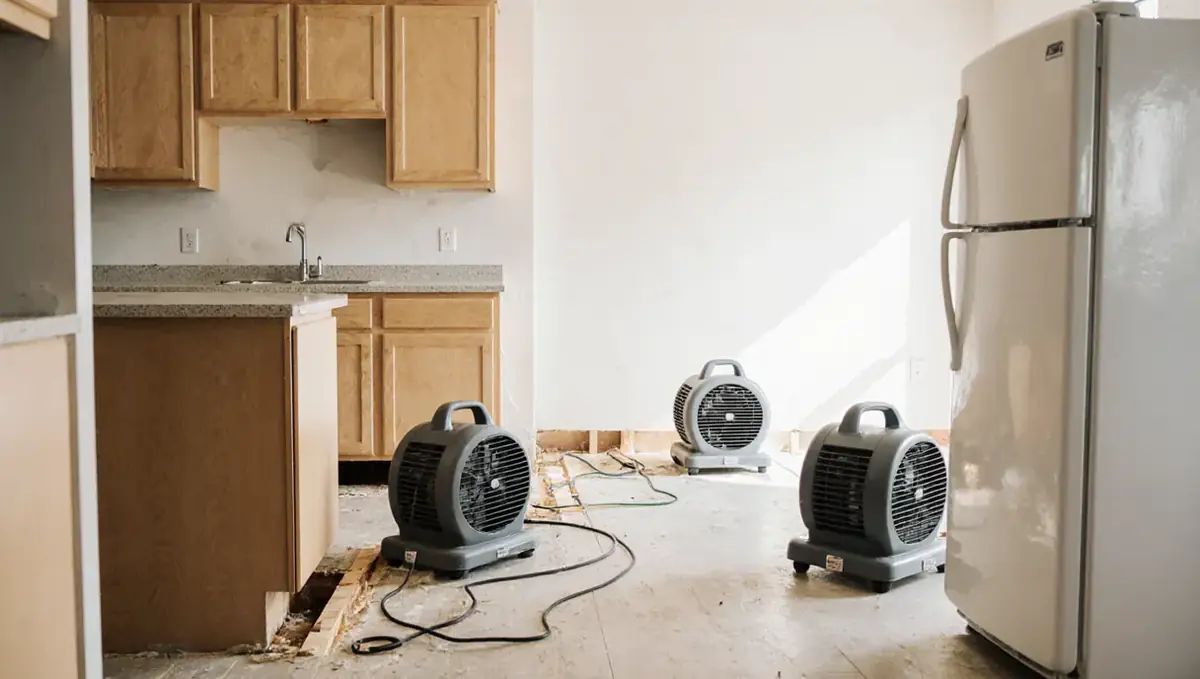
Dehumidifiers and air movers run, usually for several days, until readings reach drying goals. Our page on structural drying explains why the readings, not the calendar, decide when it is finished.
Put it back together
Then comes water damage repair: drywall, paint, flooring, cabinets and trim. For residential repair work over $10,000, Alabama requires a Home Builders Licensure Board license, so confirm it with the board's online lookup.
Rising Water and Flood Cleanup
Even in a city without a big river, heavy rain can push water into garages, low-lying rooms and crawlspaces. Floodwater from outside is considered contaminated, so flood cleanup in Enterprise involves more than drying. Affected flooring, drywall and insulation are usually removed, and surfaces are cleaned and disinfected before drying starts.
See how flood cleanup is handled from start to finish. The City of Enterprise Engineering Department handles floodplain administration and can answer questions about whether a property is in a mapped flood zone.
Keeping Mold Out of Coffee County Homes
Mold can begin to grow within 24 to 48 hours on wet materials, according to EPA guidance. Hot, humid Enterprise summers mean a leak behind a dishwasher or above a ceiling deserves quick attention, even when it looks minor.
Based on an industry roundup of state requirements, Alabama does not have a state license specifically for mold remediation, and we found no official state agency that licenses mold assessors or remediators. When you are comparing companies for mold cleanup in Enterprise, ask what training the technicians have (IICRC certification is a common benchmark), how containment will be set up, and if it will provide written moisture and clearance results.
More on the process is on our mold removal page.
Insurance Tips for Owners, Renters and Businesses
- Flood needs separate coverage. Standard homeowners, renters and commercial policies generally exclude flood. NFIP or private flood insurance covers it, and a new NFIP policy usually carries a 30-day waiting period.
- Renters should loop in the landlord. The building is usually the owner's responsibility, while your belongings depend on your own renters policy.
- Keep every record. Photos, receipts for tarps or emergency fixes, and the restoration company's drying logs all support a claim.
- Think about the roof. Strengthen Alabama Homes offers grants to help eligible homeowners upgrade to a FORTIFIED roof. Review the program's current terms.
WaterQ cannot say how any insurer will respond, but good documentation helps. For help in a home, rental or storefront along Main Street, call (888) 817-5061.
Enterprise and Nearby Wiregrass Communities
WaterQ's free referral line connects callers in Enterprise and the surrounding parts of Coffee and Dale counties with independent local restoration companies.
Neighborhoods
- Downtown Enterprise
Nearby communities
- Daleville
- Fort Rucker
- Elba
- Ozark
- New Brockton
- Kinston
- Samson
- Dothan
Enterprise Water Damage FAQ
What is the rainiest time of year in Enterprise?
Summer. July is the wettest month on average at about 7 inches, followed by August, and the city averages close to 58 inches of precipitation a year.
Who handles floodplain questions in Enterprise?
The City of Enterprise Engineering Department lists floodplain administration among its services. You can also look up your address on FEMA's flood maps.
I rent near Fort Rucker and my unit flooded. What should I do?
Stop the water if you can, stay clear of electrical hazards, take photos and notify your landlord right away. Your renters policy, if you have one, generally covers your belongings, while the owner is usually responsible for the building.
Is a mold license required in Alabama?
According to an industry roundup, Alabama does not have a state license specifically for mold remediation, and we found no official agency that licenses it. Ask about training such as IICRC certification and request written clearance documentation.
Does WaterQ perform the restoration work?
No. WaterQ is a free referral service available 24/7. We connect you with an independent, local restoration company, which inspects the damage and does the work.
Local emergency and flood resources
Official sources for alerts, flood maps and preparedness in and around Enterprise: