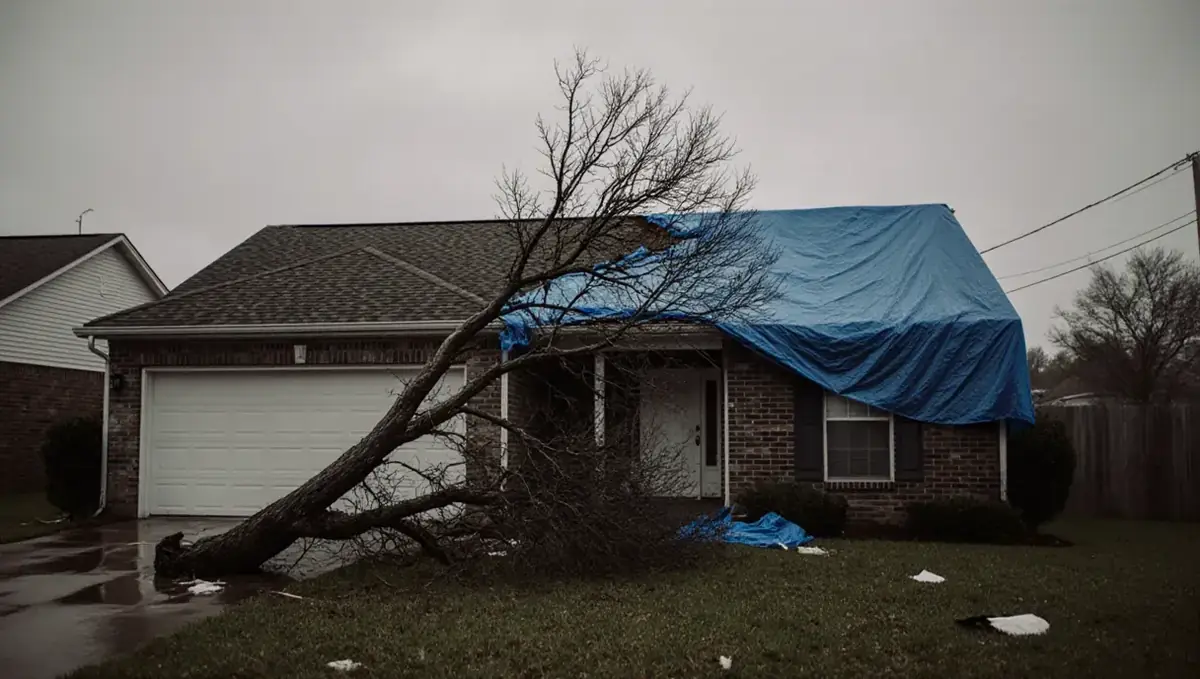
Tornado Country Around the Limestone County Seat
Athens is the county seat of Limestone County, sitting along Interstate 65 between Nashville and Birmingham and sharing a boundary with Huntsville. Limestone County has a long, hard history with violent tornadoes. In 1974, two F5 tornadoes hit the community of Tanner, just south of Athens, within about an hour of each other. In 2011, another long-track tornado caused near-EF5 damage near Tanner before crossing Wheeler Lake.
Storms have reached the heart of town as well. On December 28, 2024, a high-end EF1 tornado struck downtown Athens and caused significant damage around the Limestone County Courthouse square, along with damage to many businesses.
For homeowners, the practical lesson is that wind damage often becomes water damage. Once shingles, windows or siding are gone, every rain afterward can push water into attics, ceilings and walls.
Wet Winters and Year-Round Leaks
Athens averages about 59 inches of precipitation a year, and December is usually the wettest month at a little over 6 inches. That timing surprises some people. Winter rain on an aging roof, clogged gutters or a low spot in the yard can lead to stained ceilings and soggy flooring well after storm season seems over.
Inside the house, the usual suspects are always present: water heaters, toilet supply lines, dishwasher and washing machine hoses, and ice maker lines. A slow leak behind a wall can go unnoticed for weeks.
- Look for ceiling stains, peeling paint and soft spots in flooring.
- Notice musty odors in closets and under sinks.
- Watch your water bill for unexplained jumps.
When you find water damage in Athens, the restoration company you are connected with can measure moisture behind surfaces before deciding what needs to come out.
What to Do Right After a Storm or Leak
- Stay safe. After a tornado or severe storm, watch for downed power lines and do not enter a building that looks structurally damaged.
- Stop more water. Close the main valve for plumbing leaks. For storm damage, cover roof holes and broken windows with tarps or plywood as soon as it is safe.
- Avoid shock hazards. Keep out of standing water near electrical outlets and appliances.
- Document first. Photograph the exterior and every affected room before cleanup starts.
- Protect belongings. Move furniture, photos, papers and electronics to a dry area.
- Call for help. Reach (888) 817-5061 any time, day or night, and we will connect you with a local restoration provider.
Professional storm damage cleanup often pairs emergency tarping or board-up with water extraction, so drying can begin while permanent repairs are scheduled.
Drying Out Historic Athens Homes
Many homes in central Athens date to the antebellum period and sit within historic preservation districts. Old plaster, old wood floors and original trim are worth saving, and saving them depends on how quickly and carefully the building is dried.
A good restoration plan for an older home usually includes:
- Detailed moisture mapping so the crew removes only what is truly damaged.
- Controlled drying with dehumidifiers and air movers, adjusted to avoid cracking or cupping in old wood.
- Daily readings until floors, framing and walls return to normal moisture levels.
If your home is in a historic district, ask the restoration company and your contractor whether any exterior repairs need local review before work begins.
Extraction, Structural Drying and Rebuilding
Water damage restoration in Athens, as elsewhere, moves through a few clear stages.
Water removal
Extractors pull standing water from floors and carpet. The quicker this happens, the less water wicks into drywall, cabinets and subfloors.
Drying
Commercial dehumidifiers and air movers run until materials test dry. Soaked insulation and lower drywall may be cut out to open wall cavities. Read more about structural drying.
Repairs
With the structure dry, the work shifts to water damage repair: drywall or plaster, paint, flooring, trim and cabinets. Before signing, ask any company about its licensing, insurance and training, such as IICRC certification.
Floodwater, Creeks and Cleanup Safety
Limestone County's emergency management agency lists floods alongside tornadoes as primary local hazards. The county is framed by the Tennessee River and Wheeler Lake and crossed by the Elk River and Limestone Creek, and heavy rain anywhere in town can overwhelm yards and drainage.
Treat any water that entered from outside as Category 3, which can contain sewage, fuel and other contaminants. Keep children and pets away, wear gloves and boots, and do not try to save soaked carpet or padding. Flood cleanup typically involves removing affected porous materials, cleaning and disinfecting, then drying.
Look up your property on the FEMA Flood Map Service Center, and check the Limestone County EMA for storm shelter information.
Mold, Insurance and Local Businesses
According to EPA guidance, mold growth can begin within 24 to 48 hours on materials that stay wet, and Athens summers are hot and humid. Alabama, according to an industry roundup of state requirements, does not license mold remediation specifically at the state level, and we found no official Alabama agency licensing mold assessors or remediators. For mold cleanup in Athens, ask about IICRC or similar training and request written clearance results. See our mold removal page.
- Flood insurance. Typical homeowners policies exclude flood, which is covered through the NFIP or private flood insurers. Plan ahead, since NFIP coverage generally begins 30 days after purchase.
- Contractor licensing. For residential repairs over $10,000, or roofing over $2,500, confirm the contractor's Alabama Home Builders Licensure Board license.
- Roof grants. Strengthen Alabama Homes offers FORTIFIED roof grants to eligible homeowners; check current terms.
Shops and offices around the courthouse square and elsewhere in Athens can call (888) 817-5061 too, and the provider you are connected with can plan commercial drying around business hours where possible.
Athens and Limestone County Communities We Connect
WaterQ's free referral line connects callers in Athens and across Limestone County with independent local restoration companies.
Neighborhoods
- Downtown Athens
- Courthouse Square
- Central Athens historic districts
Nearby communities
- Tanner
- Ardmore
- Elkmont
- Lester
- Mooresville
- Belle Mina
- East Limestone
- Decatur
- Madison
- Huntsville
Athens Water Damage FAQ
What is the wettest month in Athens, Alabama?
December, which averages a little over 6 inches of precipitation. Athens gets about 59 inches a year in total, so roof and drainage problems can appear in winter as well as during spring storms.
A tornado damaged my roof. Should I wait for the adjuster before covering it?
Generally no. Take thorough photos first, then cover openings with tarps or plywood to prevent more water damage. Most policies expect reasonable steps to protect the property. Keep receipts for any emergency materials or services.
Where can I find storm shelter information in Limestone County?
The Limestone County Emergency Management Agency publishes storm shelter information on the county website and lists tornadoes and floods among the county's main hazards.
Can the original floors in my historic Athens home be saved after a leak?
Often they can, if drying starts quickly and is carefully controlled. A restoration crew will take moisture readings and adjust drying to limit cupping and cracking. Floors soaked by contaminated floodwater are harder to save.
Is WaterQ a local contractor?
No. WaterQ is a free referral service that is available 24/7. We connect you with an independent restoration company serving the Athens area, and that company handles the inspection, estimate and work.
Local emergency and flood resources
Official sources for alerts, flood maps and preparedness in and around Athens: