Foothill Lots, Lake Subdivisions and Two Waterways
Hoover sits in the Appalachian foothills about 11 miles south of downtown Birmingham, and it stretches across both Jefferson and Shelby counties. Two waterways shape much of its drainage. The Cahaba River passes through the Hoover area on its way south, and Shades Creek, which starts at Sadler Gap in Red Mountain, flows through the city before joining the Cahaba.
A lot of Hoover was built as planned subdivisions after the city incorporated in 1967, and several of them are arranged around lakes: Lake Cyrus, Lake Wilborn, Chace Lake, Lake Crest and Southlake among them. Combine sloping lots, retention lakes and fast-moving creeks, and heavy rain can find its way into a home from more than one direction.
- Downhill runoff pooling against foundations, walkout basements and garage slabs.
- Creek rise along Shades Creek and Cahaba tributaries during intense thunderstorms.
- Roof and window leaks after high winds from severe storms.
- Plumbing failures in upstairs laundry rooms, bathrooms and water heater closets.
Shades Creek: Erosion, Fast Water and What It Means for Yards
Shades Creek drains a watershed of roughly 139 square miles. A 2021 watershed management plan for the creek pointed to poor flood management and stream rerouting that speed up the water and increase erosion, along with heavy sedimentation. In practical terms, water in this system can rise and move quickly when storms stall over the area.
For homeowners along the creek corridor or the Cahaba, that means watching for undercut banks, mud and debris in low yards, and water reaching crawlspaces or finished lower levels. Floodwater from a creek is considered Category 3 because it can carry soil, bacteria and chemicals, so it should never be handled like a clean supply-line leak.
Professional flood cleanup in Hoover usually starts with pumping out water, removing saturated drywall, insulation and carpet that the floodwater touched, and cleaning and sanitizing surfaces before any drying equipment is set up.
Your First Hour With a Leak or Flood
- Shut off the water. The main valve is often near where the supply line enters the house, in a garage or in a basement. Learn its location now.
- Watch for electrical risk. If water is near outlets, cords or a panel, keep out and turn off power only when you can reach the breaker from a dry spot.
- Keep people off wet stairs and floors. Saturated carpet on stairs and tile in foyers can be slick.
- Document before you clean. Photos and video of the water, the source and damaged items help any later claim.
- Move valuables up. Get photos, electronics and important papers out of wet rooms and off the floor.
- Get help lined up. Dial (888) 817-5061 and we connect you with a local restoration professional for water extraction and drying.
Drying Out Multi-Story Homes in Hoover
In a home with more than one level, water rarely stays on the floor where it started. A leak from an upstairs bathroom can soak a ceiling below, run down interior wall cavities and settle into the subfloor of a basement.
Mapping the spread
Crews use moisture meters and infrared cameras to follow the water floor by floor, checking ceilings, walls and cabinets that look dry on the surface.
Targeted drying
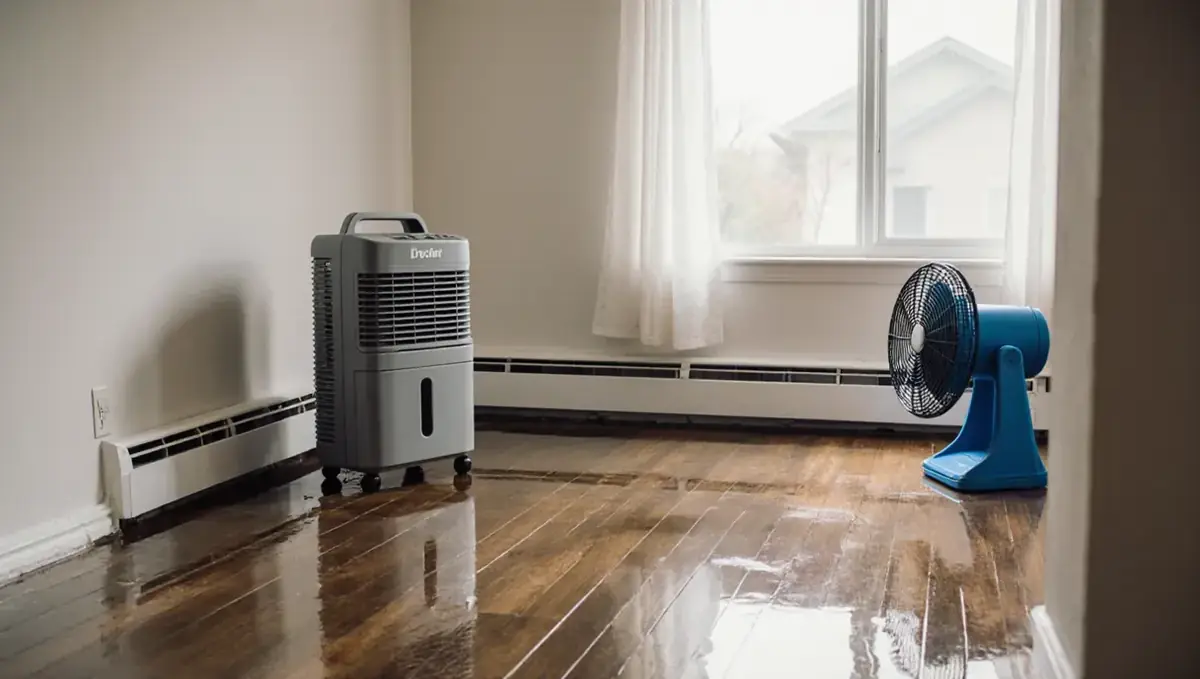
Air movers, dehumidifiers and sometimes specialty systems that push air into wall cavities and under hardwood are set up based on those readings. Learn more about structural drying.
Restoring finishes
Once moisture levels return to normal, water damage repair in Hoover can replace drywall, paint, flooring and trim. For residential remodeling over $10,000, Alabama requires a license from the Home Builders Licensure Board, which offers an online licensee search. Before you sign, ask the restoration company about its insurance and its crew's training, for example IICRC certification.
Storm Season Roof Damage Across the Hoover Area
Alabama averages about 43 tornadoes a year, and severe thunderstorms with damaging straight-line winds are even more common. Falling limbs and trees are a common cause of roof punctures wherever mature trees stand close to houses. Once shingles or decking are gone, every rain shower after the storm adds to the damage inside.
Plan your response in this order: stay safe and avoid downed lines, photograph the damage from the ground, then arrange tarping or board-up. After the building is closed in, storm damage cleanup can remove wet insulation and ceiling drywall and dry the attic and rooms below.
The Alabama Department of Insurance's Strengthen Alabama Homes program offers grants toward FORTIFIED roofs, which are designed to help keep wind-driven rain out. Eligibility and funding windows change, so check current terms.
Insurance, County Lines and Commercial Buildings
Because Hoover crosses a county line, double-check which county your address falls in when you look up flood maps or county services. The FEMA Flood Map Service Center shows the flood zone for any address.
- Flood is separate coverage. Rising water from outside is usually excluded from a standard homeowners policy and needs its own NFIP or private flood policy. A new NFIP policy typically has a 30-day waiting period.
- Sudden leaks such as a burst supply line are often covered by homeowners insurance, while long-term seepage often is not. Read your policy.
- Keep the paper trail. Save photos, invoices, moisture readings and drying logs.
Hoover's commercial growth picked up with the 1986 opening of Riverchase Galleria, a large multi-use complex, and water losses in retail and office space bring their own scheduling and tenant concerns. Property managers can call (888) 817-5061 to reach providers that handle larger commercial water losses. WaterQ cannot predict how an insurer will decide a claim.
Hoover Neighborhoods and Neighboring Cities
Our free referral line connects callers across Hoover, on both the Jefferson and Shelby County sides, with independent local restoration companies.
Neighborhoods
- Bluff Park
- Riverchase
- Greystone
- Ross Bridge
- Trace Crossings
- Lake Cyrus
- Inverness
- Russet Woods
- Patton Chapel
- Green Valley
- Lake Wilborn
- Chace Lake
- Caldwell Mill
- Shoal Creek
- Southlake
- The Preserve
- Rocky Ridge
- Deer Valley
- Altadena
- Everlee
Nearby communities
- Birmingham
- Vestavia Hills
- Homewood
- Pelham
- Helena
- Bessemer
- Mountain Brook
- Alabaster
- Hueytown
- Chelsea
Hoover Water Damage FAQ
Is Hoover in Jefferson County or Shelby County?
Both. Hoover spans parts of Jefferson and Shelby counties, so check which county your address is in when you look up flood maps, permits or county emergency information.
Can a lake in my Hoover subdivision cause water damage?
During very heavy rain, low areas near lakes, creeks and drainage channels can collect water. Check the FEMA flood map for your address, keep gutters and drains clear, and consider flood insurance even outside a mapped high-risk zone.
What should I ask a mold remediation company in Hoover?
Alabama does not have a state license specifically for mold remediation, according to an industry roundup, so ask about training such as IICRC certification, insurance, containment methods and written clearance documentation.
Does my contractor need a license for water damage repairs?
In Alabama, residential builders and remodelers need a Home Builders Licensure Board license when the job costs more than $10,000, and residential roofers when it exceeds $2,500. You can check a license with the board's online search.
Is WaterQ a restoration contractor?
No. WaterQ is a free, 24/7 referral service. We connect you with an independent, local restoration company that inspects the damage and does the work.
Local emergency and flood resources
Official sources for alerts, flood maps and preparedness in and around Hoover: