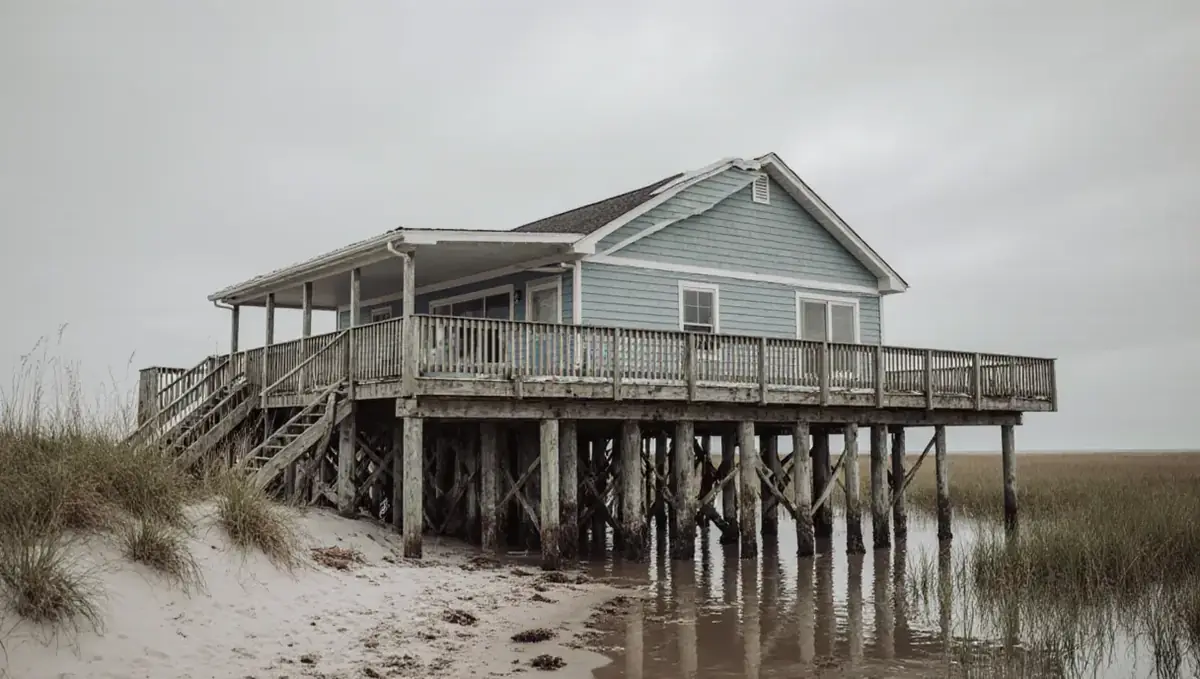
Seven Feet Above the Gulf: Living With Water in Gulf Shores
Gulf Shores is Alabama's southernmost town, and much of it sits only about 7 feet above sea level. Nearly 5 of its 33 square miles are water, from the Gulf of Mexico beachfront to Little Lagoon, and Gulf State Park fills much of the east side. The Intracoastal Waterway runs between the beach and the mainland, where the Waterway District is being redeveloped.
That geography means water can arrive from several directions: surge from the Gulf, rising back-bay and lagoon water, heavy tropical rain, and the plumbing leaks every building eventually has. Annual precipitation averages about 61.6 inches, with August the wettest month, right as hurricane season heats up.
The town also has a long, hard storm history. Hurricane Frederic leveled most of Gulf Shores in 1979, and two later hurricanes, Ivan and Sally, both came ashore here on the same date, September 16, sixteen years apart.
Ivan and Sally: Two Landfalls on the Same Date
Hurricane Ivan (2004). Ivan made landfall just west of Gulf Shores as a Category 3 hurricane. The National Weather Service reports 10 to 15 feet of surge along the hardest-hit coastline and a 115 mph gust measured at the Gulf Shores airport. Damage across Baldwin County exceeded what Frederic had caused.
Hurricane Sally (2020). Sally hit Gulf Shores as a Category 2 with 110 mph winds and then stalled, dropping 15 to 30 inches of rain across Baldwin County, including 29.30 inches east of Fort Morgan. Condos near the landfall point were partly or fully destroyed, and the Gulf Shores pier, rebuilt after Ivan, was damaged again by surge.
Those two storms show the two kinds of damage local property owners plan for. Ivan was largely a surge and wind event on the beach side. Sally added extreme rainfall that flooded homes far from the sand. Each one calls for a different cleanup approach, from flood damage restoration after surge to roof and interior repairs after wind-driven rain.
Vacation Homes, Condos and Leaks Nobody Sees
Half of Gulf Shores' housing units were vacant at the 2020 census, a reflection of how many are second homes and short-term rentals. An empty unit is where a small leak turns into a large one: a failed toilet supply line or water heater can run for days before a guest or cleaner opens the door.
- Close the main valve, or the unit's shutoff, whenever a property will sit empty for long.
- Ask your cleaning or management company to check under sinks, around the water heater and at the air handler during turnovers.
- In condo towers, report leaks to building management right away so units above and below can be checked.
- Keep a contact list of owners and managers so access is not delayed if a problem is found.
Owners who live out of town can call (888) 817-5061 to be connected with a local restoration company that can coordinate with on-site management.
What to Do When Water Is Already Inside
- Make it safe. Avoid standing water near electrical outlets and appliances. After a storm, watch for downed lines and do not enter a building with structural damage.
- Stop the flow. Shut off the water supply if the source is plumbing.
- Identify the water type. Surge and outside floodwater are Category 3 and should be treated as contaminated, especially since salt water and debris come with it.
- Take pictures first. Document every room, the waterline and damaged contents for the insurance claim.
- Get water out fast. Professional water extraction and drying limit how far water spreads into walls and cabinets.
How Coastal Dry-Outs Are Handled
Restoration crews in beach towns follow the same core process as anywhere, with a few coastal twists.
Removal and extraction
Standing water is extracted first. After surge, sand, silt and debris must be shoveled or vacuumed out before cleaning can start.
Cleaning salt and contaminants
Saltwater-soaked drywall, insulation and carpet are typically removed. Remaining surfaces are cleaned and sanitized because surge water is treated as contaminated.
Drying in humid air
With Gulf humidity high most of the year, commercial dehumidifiers and air movers run until meter readings confirm materials are dry. This is the heart of structural drying.
Rebuilding
Repairs follow once everything is verified dry. For residential repair or remodeling over $10,000, Alabama requires a contractor licensed by the Home Builders Licensure Board, and residential roofing over $2,500 needs a license as well.
Salt Air, Closed Units and Mold Cleanup
EPA guidance notes that mold can begin to grow within 24 to 48 hours on wet materials. In a closed-up rental with the air conditioning off, conditions can be ideal for it. Mold cleanup in Gulf Shores often starts with fixing the moisture source, then removing affected porous materials under containment.
An industry roundup of state requirements reports that Alabama has no state license specifically for mold remediation, and we did not find an official Alabama agency that licenses mold assessors or remediators. So ask any provider about training and industry certifications, for example IICRC, and request moisture readings and a written clearance record once work is complete. Learn about mold removal methods.
Insurance, Wind Coverage and Rental Businesses
- Flood coverage is separate. Standard homeowners and condo policies generally exclude flood; coverage comes from NFIP or a private flood policy, and NFIP usually has a 30-day waiting period, so buy well before a storm forms.
- Wind and rain intrusion. Roof and window damage from wind may fall under a different coverage, so describe the cause carefully.
- FORTIFIED roofs. The Strengthen Alabama Homes program offers grants that can help eligible homeowners upgrade to a FORTIFIED roof. Terms change, so check current eligibility.
- Document everything. Keep photos, invoices and drying logs together.
Rental managers, HOAs and restaurant or retail owners can call (888) 817-5061 for storm damage cleanup in Gulf Shores and commercial drying. Neighboring Orange Beach and inland Foley use the same free line.
Gulf Shores Areas and Nearby Coastal Communities
Our free referral service connects callers across Gulf Shores and the surrounding south Baldwin coast with independent local restoration companies.
Neighborhoods
- West Beach
- Little Lagoon area
- Waterway District
- Waterway Village
- Gulf State Park area
- Laguna Cove area
- Downtown Gulf Shores / Gulf Place
- Fort Morgan Road corridor
Nearby communities
- Orange Beach
- Foley
- Fort Morgan
- Bon Secour
- Elberta
- Magnolia Springs
- Perdido Key, FL
- Fairhope
Gulf Shores Water Damage FAQ
What should I do about a leak in my Gulf Shores rental while I'm out of town?
Ask your property manager or a trusted contact to shut off the water and take photos, then call (888) 817-5061 to be connected with a local restoration company. Notify your insurer and, in a condo, building management.
Is surge water dangerous to clean up myself?
Surge and outside floodwater are treated as Category 3, which means they may carry sewage, chemicals and debris. Wear protective gear, avoid electrical hazards and consider professional cleanup for anything beyond a small area.
Did Hurricanes Ivan and Sally both hit Gulf Shores?
Yes. Ivan made landfall just west of Gulf Shores on September 16, 2004, and Sally made landfall in Gulf Shores on September 16, 2020, exactly sixteen years later.
Does Alabama license mold remediation companies?
An industry roundup of state rules reports that Alabama has no state license specifically for mold remediation, and we found no official state agency that licenses mold assessors or remediators. Ask about training, certifications such as IICRC and written clearance.
Does WaterQ have a crew in Gulf Shores?
No. WaterQ is a free referral line, available 24/7, that connects you with an independent local restoration company. That company performs the inspection and the work.
Local emergency and flood resources
Official sources for alerts, flood maps and preparedness in and around Gulf Shores: