Living Along the Upper Cahaba River
Trussville grew up around the Cahaba River. Warren Truss built a grist mill on its banks in 1821, and the river still runs through town on its way southwest past Birmingham, Hoover and Helena. This upper stretch of the Cahaba is also the drinking water source for more than 1 million people, so what washes off local yards and streets matters well beyond city limits.
The city covers about 35 square miles across Jefferson and St. Clair counties, at roughly 709 feet above sea level. Rolling terrain means rain runs downhill toward the river and its side channels, and low-lying yards near the water feel it first.
Trussville's stormwater program covers the city's collection system, construction runoff and spill response. To report unknown liquids entering a storm drain or stream, the city lists 930-1999; for any spill, 655-2101. Details are on the Trussville stormwater program page.
Rainstorms That Tested the Birmingham Metro
Flash flooding in this part of Alabama usually comes from storms that stall or repeat over the same neighborhoods. A few recent examples from the National Weather Service in Birmingham:
- Hurricane Ivan, 2004. Ivan's remnants dropped 9.81 inches on Birmingham, caused extensive tree and power line damage, and brought widespread but temporary flash flooding to the metro.
- May 4, 2021. Thunderstorms repeated over Jefferson and Shelby counties, totaling 5 to 7 inches. A rare Flash Flood Emergency was issued, and some structures flooded.
- June 7-8, 2022. Nearly stationary storms caused flash flooding in Jefferson County and several neighbors. Birmingham's airport logged 6.97 inches on June 8 alone, a daily record.
Events like these are why flood cleanup in Trussville is not only a riverside concern. Water can pour through a garage door, seep through a basement wall or back up through a floor drain anywhere a storm dumps several inches in a few hours. When that happens, see what flood cleanup involves.
Historic Cahaba Project Homes and Newer Subdivisions
Trussville's housing tells two stories. In the 1930s, the federal Resettlement Administration built the Cahaba Project, a planned community of more than 250 homes arranged around a central green known as The Mall. Many of those houses still stand in the historic core near Downtown Trussville.
Then came rapid growth. Between 1980 and 2010 the city grew by more than 500 percent, adding subdivisions, schools and shopping centers such as Pinnacle at Tutwiler Farm and Colonial Promenade. Newer homes bring their own risks: more plumbing fixtures, upstairs laundry rooms and ice makers that can leak into finished ceilings below.
Older homes call for care during water damage repair in Trussville. Original wood floors, plaster and trim may be worth drying in place rather than replacing, so ask the restoration company to explain its plan before any demolition starts. More on repair work.
Your Checklist Before Help Arrives
- Turn off the water. Know where your main shutoff is; in many homes it sits near the meter, in a utility room or in the garage.
- Put safety first. Do not wade near outlets or plugged-in appliances. If water has reached the electrical panel, stay away and call the utility.
- Separate clean from dirty water. A ruptured supply hose is typically Category 1. Storm runoff, river water and sewer backup are Category 3 and should be handled with gloves and boots, or left to professionals.
- Document it. Shoot video room by room, including the source, the water depth and serial numbers on damaged appliances.
- Ventilate if it is clean water. Open interior doors and run fans only for Category 1 water; with contaminated water, keep doors closed so you do not spread it.
- Get connected. Call (888) 817-5061 and you will be put in touch with a local provider that offers water extraction and drying.
How Drying and Rebuilding Typically Unfold
Water damage restoration in Trussville follows the same science as anywhere, adjusted to the house in front of the crew.
- Inspection and moisture mapping. Meters and thermal imaging trace how far water traveled under floors and up walls.
- Extraction. Pumps and extractors remove standing water and as much as possible from carpet and pad.
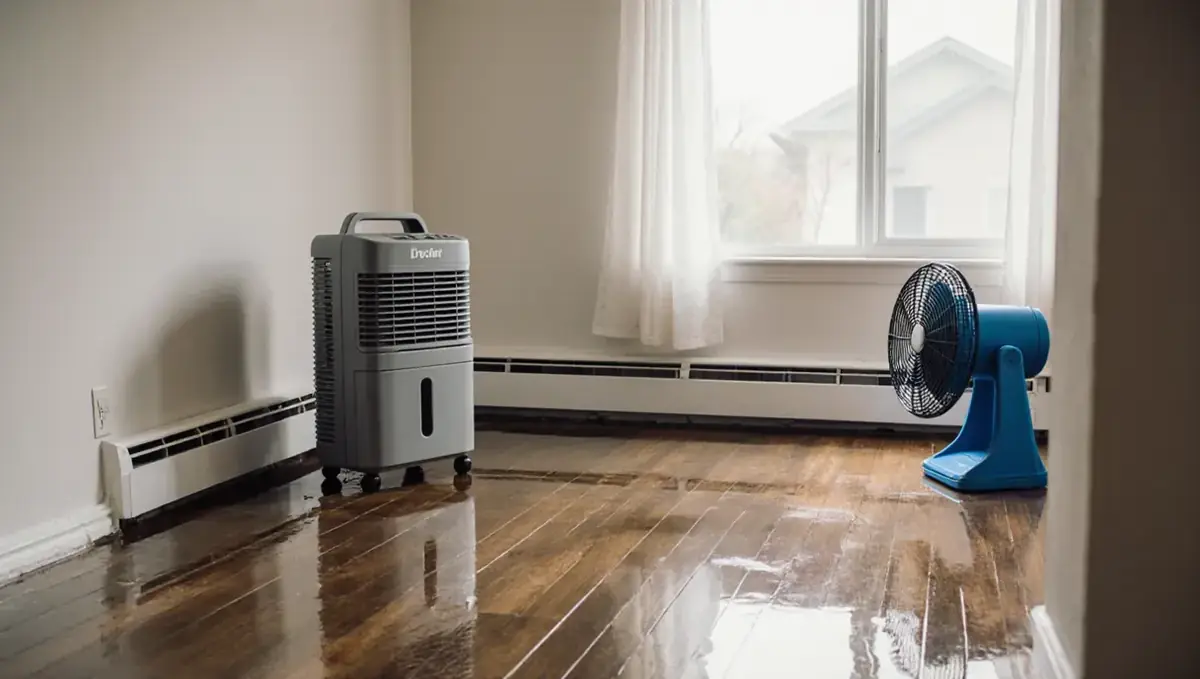
- Controlled drying. Dehumidifiers and air movers are placed and checked daily until readings reach target levels. Baseboards may be pulled or small holes drilled so wall cavities dry.
- Cleaning and sanitizing. Areas touched by Category 3 water get antimicrobial treatment and removal of porous materials that cannot be cleaned.
- Rebuild. Drywall, insulation, flooring and paint go back in once the structure is verified dry.
For remodeling or repair contracts above $10,000, Alabama's Home Builders Licensure Board requires a license, and residential roofers need one when the job exceeds $2,500. The board's licensee search lets you confirm a contractor before you sign.
Mold Cleanup in Trussville Basements and Crawlspaces
Under EPA guidance, mold may begin growing within 24 to 48 hours on drywall, carpet or wood that stays wet. Spaces that are dark and poorly ventilated, like crawlspaces, basements and closets on exterior walls, are often where it shows up first.
Per an industry roundup of state rules, Alabama has no license dedicated specifically to mold remediation, and we did not find an official Alabama agency licensing mold assessors or remediators. That puts the burden on homeowners to vet companies. Ask about IICRC or similar training, how the work area will be contained, and if post-cleanup moisture readings will be provided in writing.
Read about mold removal and cleanup, including why fixing the moisture source has to come first.
Claims, Flood Coverage and Business Interruptions
Standard homeowners policies generally exclude flood from rising water; that coverage comes from the NFIP or a private flood policy, and NFIP policies typically take 30 days to start. Sudden plumbing failures are a different category and are more often covered, though every policy differs.
Report the loss to your insurer promptly and keep every photo, invoice and drying log. If you are unsure of your flood zone, check the FEMA Flood Map Service Center, and sign up for Jefferson County EMA emergency notifications through jeffcoema.org.
Retailers, restaurants and offices around the I-59 and I-459 interchange can call (888) 817-5061 too. WaterQ connects commercial callers with local providers that can work around business hours. Nearby Birmingham is covered the same way.
Trussville Neighborhoods and Surrounding Communities
Callers from every part of Trussville, along with neighboring Jefferson and St. Clair county communities, can use WaterQ's free line to reach independent local restoration companies.
Neighborhoods
- Downtown Trussville
- Cahaba Project
- The Mall
- Roper Hill
- Washington Heights
- Tutwiler Farm
Nearby communities
- Clay
- Pinson
- Center Point
- Argo
- Springville
- Leeds
- Irondale
- Birmingham
Trussville Water Damage FAQ
Can the Cahaba River flood homes in Trussville?
Homes on low ground near the river and its side channels are the most exposed, but heavy storms can flood streets, garages and basements well away from the water. Check your address on the FEMA Flood Map Service Center and consider flood coverage either way.
Should I try to save the original floors in an older Cahaba Project house?
Often it is worth asking. Solid wood floors and plaster can sometimes be dried in place with the right equipment and monitoring. Ask the restoration company to explain what can be saved and why before anything is torn out.
What licenses should a Trussville repair contractor have?
In Alabama, residential repair or remodeling work over $10,000 requires a Home Builders Licensure Board license, and residential roofing over $2,500 does too. Alabama does not have a state license specifically for mold remediation, so ask about training such as IICRC certification.
How do I get help from WaterQ after hours?
Call (888) 817-5061 at any hour. WaterQ is a free referral service that connects you with an independent, local restoration company, which then handles the inspection and work.
Local emergency and flood resources
Official sources for alerts, flood maps and preparedness in and around Trussville: