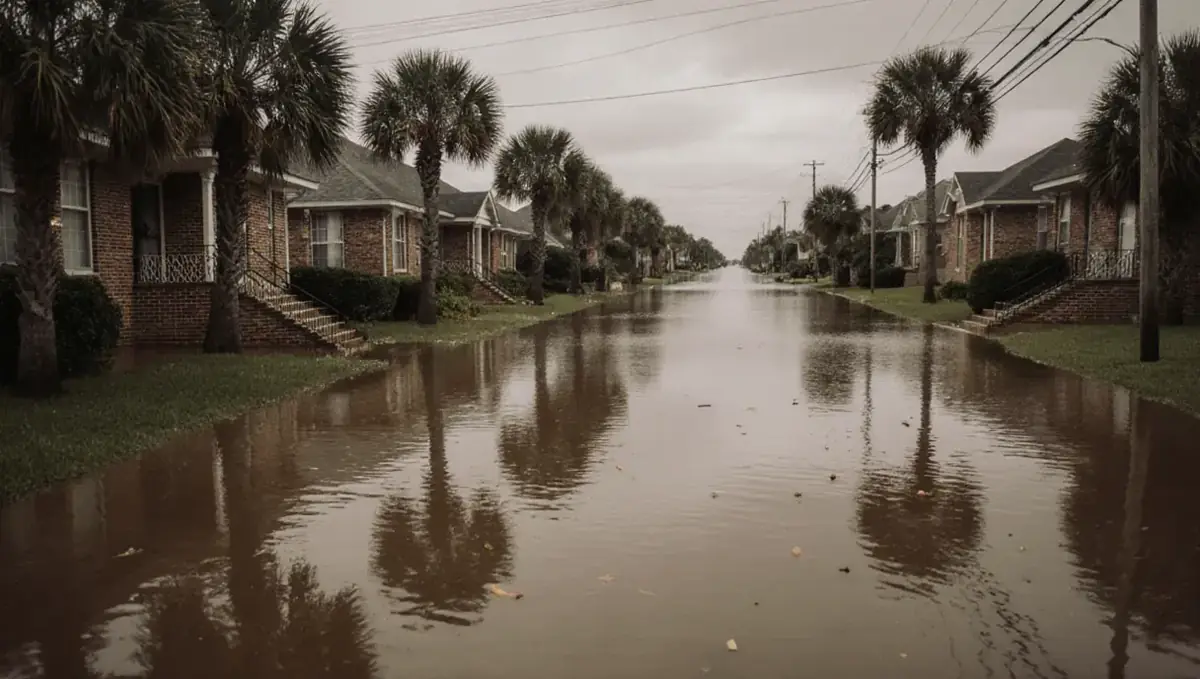
Bay, Bayous and Frequent Downpours: Mobile's Water Risks
Mobile sits at the head of Mobile Bay where the Mobile River meets the Gulf Coast, with the Mobile-Tensaw Delta to the north and east. The ground rises from roughly 10 feet above sea level on Water Street downtown to about 211 feet near Mobile Regional Airport, so different parts of the city face very different kinds of water trouble.
Low-lying downtown and bayfront blocks are exposed to storm surge pushed up the bay during hurricanes. Across the rest of the city, a web of creeks and bayous carries runoff, and the City of Mobile lists Dog River, Three Mile Creek, Eight Mile Creek, Halls Mill Creek, Chickasaw Creek and Bayou Sara among its flood-prone watersheds.
Rain is the everyday threat. Mobile averages about 120 days a year with measurable rain, and July and August bring frequent heavy thunderstorms. That steady rainfall makes roof leaks, gutter overflow and stormwater seeping under doors some of the most common reasons people need water damage restoration in Mobile.
The First Few Hours: Protecting Your Home and Your Claim
What you do before any equipment shows up can limit the damage. Focus on safety first, then on stopping the water and recording what happened.
- Stay clear of electrical hazards. If water is near outlets, cords or the panel, do not wade in. Shut off power at the breaker only if you can reach it from a dry spot.
- Stop the source. For a burst pipe or failed water heater, close the main water valve. For a roof leak, catch drips and move belongings away from the wet area.
- Treat floodwater as contaminated. Water from creeks, bayous, the bay or a backed-up drain can carry sewage and bacteria. Wear boots and gloves and keep children and pets away.
- Photograph everything. Take wide shots and close-ups of standing water, wet walls, damaged flooring and belongings before anything is moved or thrown out.
- Get professional help started. Call (888) 817-5061 any time, day or night, and we will connect you with a local restoration company that handles emergency water removal.
Mold can begin growing within 24 to 48 hours once materials stay wet, and Mobile's heat and humidity do not slow it down. Starting the drying process quickly is the single most useful thing you can do.
Hurricane Surge and Creek Flooding Call for Different Cleanups
Mobile has a long record of serious storms. Hurricane Frederic's center passed over the area in 1979, and Hurricane Katrina in 2005 pushed an 11.45-foot surge at the Mobile State Docks that flooded downtown. Hurricane Sally in 2020 brought an 82 mph gust to Mobile Regional Airport along with widespread tree damage and power outages across Mobile County.
Not every flood needs a hurricane, though. On April 29, 2014, Mobile Regional Airport recorded 11.24 inches of rain in a single day, leading to water rescues, sinkholes and washed-out roads. Homes along Dog River, Three Mile Creek and other urban creeks can take on water quickly in that kind of deluge.
What changes with each type of water
- Surge and rising floodwater is treated as Category 3 (grossly contaminated) water. Saturated drywall, insulation and carpet are usually removed rather than dried, and surfaces are cleaned and disinfected. See our overview of flood cleanup.
- Wind-driven rain and roof damage often starts as cleaner water but spreads through attics and ceilings. Tarping the roof and drying the structure behind ceilings matter as much as the visible puddles. Learn more about storm damage cleanup.
- Plumbing leaks from supply lines, water heaters or older pipes can usually be dried in place if caught early.
Before and during storms, Mobile County EMA alerts are worth having. Residents can text MOBILEALERT to 226787 to sign up, and the county's evacuation zone lookup shows which zone your address falls in.
How a Restoration Crew Dries Out a Mobile Property
Every job is a little different, but most water damage projects follow the same basic path. Knowing it helps you ask good questions of the restoration company you're connected with.
- Inspection and water category. The crew identifies the source and classifies the water as clean, gray or contaminated, which decides what can be saved.
- Extraction. Truck-mounted or portable pumps and extractors pull standing water out of floors, carpet and pads. This is the heart of emergency water extraction.
- Moisture mapping. Meters and thermal cameras find water hiding in subfloors, wall cavities and under cabinets, so nothing is closed up wet.
- Structural drying. Air movers and dehumidifiers run for several days while readings are logged. In a humid climate like Mobile's, controlling indoor humidity is essential; see structural drying.
- Repairs. Once materials test dry, damaged drywall, flooring, trim and cabinets are replaced through water damage repair.
Ask for copies of the daily moisture readings. They show when the structure was truly dry and are helpful if your insurer questions the drying time.
Gulf Humidity and Mold: Why Drying Can't Wait
Hot, humid summers give mold an easy start after any leak or flood. A ceiling stain from a slow roof leak or a damp crawlspace after heavy rain can turn into visible growth faster than many homeowners expect.
If you smell a musty odor, see spotting on drywall or baseboards, or had water sitting for more than a day or two, ask for a mold assessment along with the drying work. Larger areas of growth are usually handled with containment, air filtration and removal of affected materials. Our mold removal page explains the process.
Alabama does not appear to have a state license specific to mold remediation, so it pays to ask questions. Ask any restoration company about its licensing, insurance and training (for example IICRC certification), and request written moisture readings and clearance documentation when the work is finished.
Insurance and Paperwork Tips for Mobile Property Owners
Standard homeowners insurance does not cover flood. The City of Mobile notes that flood coverage is available through the National Flood Insurance Program via local agents, and a new NFIP policy typically has a 30-day waiting period, so it needs to be in place well before a storm heads for the bay.
Wind and wind-driven rain are usually handled under your homeowners or windstorm coverage, while rising water falls under flood coverage. Because one storm can cause both, careful documentation matters:
- Photograph damage room by room before cleanup, including water lines on walls.
- Keep receipts for tarps, fans, hotel stays and emergency services.
- Save removed materials or photos of them until your adjuster says otherwise.
- Check your property on the City of Mobile flood map viewer or FEMA's Flood Map Service Center to understand your flood zone.
For rebuilding, remember that the Alabama Home Builders Licensure Board licenses residential builders and remodelers when work exceeds $10,000 and residential roofers above $2,500. The Strengthen Alabama Homes program has offered grants toward FORTIFIED roofs, which help keep wind-driven rain out; check its current terms before applying.
Historic Homes, Downtown Buildings and Commercial Spaces
Mobile's historic districts, including Oakleigh Garden, De Tonti Square, Church Street East, Old Dauphin Way, Ashland Place, Leinkauf, Midtown and Spring Hill, hold many older homes. Aging plumbing and roofs can fail without much warning, and plaster walls, heart pine floors and original millwork call for a careful drying plan rather than quick demolition.
Downtown offices, restaurants, warehouses and multifamily buildings bring their own challenges: tenants to protect, business interruption to limit and sometimes several floors affected at once. Property managers should make sure the restoration company can document moisture across every unit and coordinate with building owners and insurers.
Whether it is a single bathroom leak or a building-wide flood, help is available 24/7. Call (888) 817-5061 to be connected with a local provider for water damage restoration in Mobile and across Alabama.
Across Mobile and Around the Bay
Calls from across Mobile and the surrounding parts of Mobile and Baldwin counties are connected with local restoration companies serving those areas.
Neighborhoods
- Downtown Mobile
- Midtown
- Oakleigh Garden District
- De Tonti Square
- Church Street East
- Lower Dauphin Street
- Old Dauphin Way
- Ashland Place
- Leinkauf
- Campground
- Spring Hill
- Toulminville
- Africatown
- Crichton
- West Mobile
Nearby communities
- Prichard
- Chickasaw
- Saraland
- Satsuma
- Semmes
- Theodore
- Tillmans Corner
- Bayou La Batre
- Dauphin Island
- Daphne
- Spanish Fort
- Fairhope
Mobile Water Damage FAQ
Does homeowners insurance cover flood damage in Mobile?
Standard homeowners policies generally exclude flood, including storm surge and rising creek water. Flood coverage is available through the National Flood Insurance Program or private flood insurers, and a new NFIP policy typically has a 30-day waiting period. Damage from a burst pipe or wind-driven rain is often handled differently, so check your policy and talk with your agent.
How quickly does mold grow after water damage in Mobile?
Mold can begin growing within 24 to 48 hours when building materials stay wet. Mobile's hot, humid summers make prompt drying especially important. Getting standing water removed and dehumidifiers running early is the best way to limit mold.
Is WaterQ a restoration company?
No. WaterQ is a free referral service. When you call (888) 817-5061, we connect you with an independent, local water damage restoration company that performs the work and provides its own estimate.
Can water-damaged drywall and carpet be saved?
It depends on the water source and how long materials stayed wet. Clean water from a supply line caught early can often be dried in place. Floodwater from creeks, the bay or sewer backups is considered contaminated, so porous materials it touches are usually removed and replaced.
How can I find out if my Mobile property is in a flood zone?
The City of Mobile offers an online flood map viewer, and FEMA's Flood Map Service Center shows official flood maps for any address. Mobile County EMA also provides an evacuation zone lookup for hurricane planning.
Local emergency and flood resources
Official sources for alerts, flood maps and preparedness in and around Mobile: