Eastern Shore Bluffs, a Delta Next Door and Fast Growth
Spanish Fort sits above the east bank of the Blakeley River, right where it empties into Mobile Bay. Most of the city stands on higher ground, around 49 feet above sea level, but roughly 4.7 of its 35.7 square miles are water, and the Mobile-Tensaw River Delta, the second-largest delta in the contiguous United States, spreads out to the north and west.
That mix creates two different pictures of risk. Homes on the bluffs and in the newer neighborhoods off Spanish Fort Boulevard rarely see bay water, yet they still face intense rain, roof leaks and plumbing failures. Property down along Battleship Parkway and the causeway is low and close to the bay, where storm surge pushed up Mobile Bay is a real concern. Hurricane Isaac in 2012, for example, produced 4.63 feet of surge in the bay.
Growth matters too. The city's population jumped about 48 percent between 2010 and 2020. More rooftops, driveways and roads mean more runoff, and the City notes that as a Phase II stormwater (MS4) community it is working on erosion and siltation issues, including a restoration project on Joe's Branch.
Common Ways Water Gets Into a Spanish Fort House
Calls about water damage in Spanish Fort tend to fall into a few familiar groups:
- Plumbing and appliance leaks. Washing machine hoses, ice maker lines, water heaters and slab or wall supply lines can fail in a house of any age, including recent builds.
- Roof and window leaks. Tropical downpours and severe thunderstorms drive water under shingles, around flashing and through window frames.
- Heavy-rain flooding. When several inches fall in a short time, low yards, garages and ground-floor rooms can take on water even far from the bay.
- Bay and causeway exposure. Waterfront and causeway property can see surge during hurricanes, which brings salt water and debris.
Each source calls for a slightly different response, so it helps to tell the restoration company exactly where the water came from when you call (888) 817-5061.
Your First Moves Once You Find the Water
- Shut off the source. Close the main water valve, or the valve at the fixture or appliance that failed. For a roof leak, put a bucket under the drip and move valuables away.
- Keep electricity in mind. Never step into standing water near outlets or cords. Switch off breakers to the wet area only if you can reach the panel while standing somewhere dry.
- Judge how dirty the water is. Clean supply-line water is Category 1. Rising floodwater and surge are treated as Category 3, meaning possibly contaminated, so wear gloves and boots and keep kids and pets out.
- Photograph before you clean. Capture the source, the waterline on walls and every damaged item.
- Lift and move belongings. Pull rugs, electronics and paperwork out of wet rooms and set furniture legs on blocks or foil.
- Bring in professionals. A local provider can start emergency water removal and set up drying before materials soak deeper.
Inside a Typical Spanish Fort Dry-Out
Restoration work generally follows the same backbone, though the details depend on the house and the water source.
Getting standing water out
Portable or truck-mounted extractors remove water from carpet, pad and hard floors. Pulling out bulk water quickly limits how far it wicks into drywall, baseboards and cabinet bases.
Finding hidden moisture
Moisture meters and thermal cameras show where water has spread behind walls and under flooring. Those readings guide the drying plan and become part of your insurance file.
Drying the structure
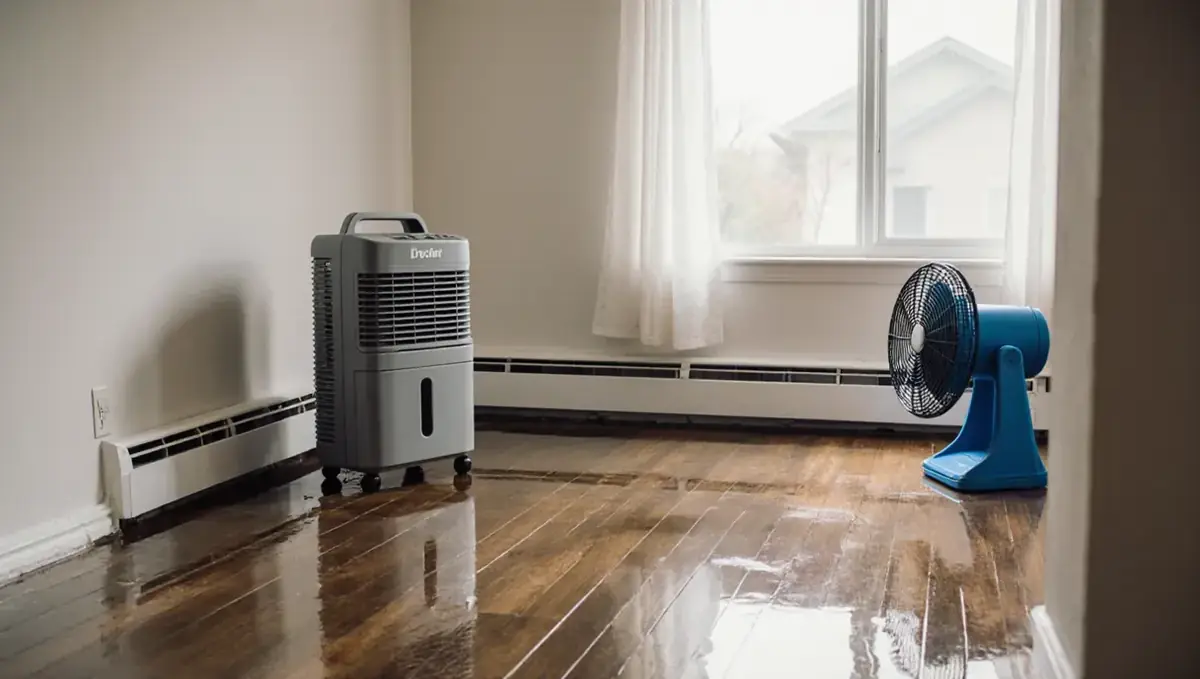
Air movers and dehumidifiers run until readings return to normal levels. Along the humid eastern shore, dehumidification does much of the work. Wet insulation and drywall below a flood line are often removed so wall cavities can dry. See how structural drying works.
Putting things back
Once the structure checks dry, water damage repair replaces flooring, drywall, trim and cabinets. In Alabama, residential repair or remodeling work costing more than $10,000 calls for a contractor licensed by the Alabama Home Builders Licensure Board, which you can verify with the board's online licensee search.
After Hurricanes Sally and Ivan: Storm Lessons for the Eastern Shore
Two storms shaped how many Baldwin County residents think about hurricanes. Ivan came ashore just west of Gulf Shores as a Category 3 storm in September 2004 and caused major damage across the county. Sally made landfall at Gulf Shores as a Category 2 on September 16, 2020, then crawled inland, dropping 15 to 30 inches of rain across Baldwin County. Even 2 miles west-southwest of Fairhope, the total reached 12.44 inches.
Sally's lesson was that rainfall alone can flood homes well away from the beach. More than 71,000 homes and businesses in southern and central Baldwin County lost power, which also meant sump pumps and dehumidifiers stopped running.
For storm damage cleanup in Spanish Fort, the order of work usually looks like this: tarp roof openings, remove contaminated materials, clean and sanitize, then dry the structure. Learn more about storm damage cleanup and flood cleanup. Sign up for Alert Baldwin so county emergency notices reach your phone.
Mold Cleanup and What Alabama Does and Doesn't License
Per EPA guidance, mold can start growing on wet materials within 24 to 48 hours. Humid Gulf air keeps drywall, subfloors and closets damp longer than many people expect, especially if power is out after a storm.
According to an industry roundup of state requirements, Alabama has no state license specifically for mold remediation, and we found no official Alabama agency that licenses mold assessors or remediators either. That puts more of the vetting on you. Ask any company handling mold removal in Spanish Fort about its training and industry certifications (for example IICRC), and ask for written moisture readings and clearance documentation when the job is done.
Professional mold removal typically uses containment and air filtration so spores are not spread to clean rooms.
Insurance Paperwork and Commercial Properties
- Flood needs its own policy. Rising water is generally excluded from a standard homeowners policy; that gap is filled by an NFIP or private flood policy. Plan ahead, since a new NFIP policy typically carries a 30-day wait.
- Know your zone. Look up your address on the FEMA Flood Map Service Center, especially near the river or causeway.
- Keep a file. Hold on to every photo, receipt and moisture log, plus the drying report the provider gives you.
- Check roof grants. The Strengthen Alabama Homes program offers grants to help eligible homeowners upgrade to a FORTIFIED roof; check current terms before applying.
Shops and restaurants around Spanish Fort Town Center and the Eastern Shore Centre can face the same water problems as homes, with the added pressure of getting doors open again. Business owners and property managers can call (888) 817-5061 to be connected with a commercial-capable restoration company. Neighbors across the bay in Mobile and down the shore in Daphne can use the same free line.
Spanish Fort Areas and Neighboring Eastern Shore Towns
WaterQ's free referral line connects callers across Spanish Fort and nearby Baldwin County communities with independent local restoration companies.
Neighborhoods
- Spanish Fort Town Center area
- Eastern Shore Centre area
- Battleship Parkway (Causeway)
- Spanish Fort Boulevard corridor
- Blakeley Way area
- Old Spanish Fort / Village Point area
Nearby communities
Spanish Fort Water Damage FAQ
Is storm surge a risk in Spanish Fort?
It depends on where you are. Much of the city sits on higher ground, around 49 feet above sea level, but low property near the Blakeley River and along Battleship Parkway is close to Mobile Bay and can be exposed to surge during hurricanes. Check your address on FEMA's flood maps.
Does Alabama require mold remediators to be licensed?
Alabama does not have a state license specifically for mold remediation, according to an industry roundup of state requirements, and we found no official state agency that licenses mold assessors or remediators. Ask companies about training, industry certifications such as IICRC, and written clearance documentation.
How do I check a contractor before repairs start?
For residential repair or remodeling over $10,000, Alabama requires a license from the Home Builders Licensure Board. You can look up a builder or remodeler with the board's online licensee search.
Will my homeowners policy pay for rain flooding from a hurricane?
Usually not if water rose from the ground. Standard homeowners policies generally exclude flood, which is covered by NFIP or private flood insurance. Wind or roof damage that lets rain in may be handled differently, so review your policy and document everything.
Who actually does the work when I call WaterQ?
An independent, local restoration company. WaterQ is a free referral service, available 24/7, that connects you with a provider; that company inspects the property and performs the work.
Local emergency and flood resources
Official sources for alerts, flood maps and preparedness in and around Spanish Fort: