Water Risks in a Black Belt College Town
Starkville is the seat of Oktibbeha County and the home of Mississippi State University, founded in 1878 as the state's land-grant institution. The city sits in the Mississippi Black Belt at about 335 feet above sea level, and only about 0.11 of its 25.63 square miles is water. The Big Black River lies southwest of town, while the Noxubee River and Oktibbeha County Lake are elsewhere in the county.
Without a large river running through the city, most local water damage comes from three sources: heavy spring rain, severe thunderstorms that damage roofs and windows, and plumbing failures inside homes and apartment buildings. Any of those can call for water damage restoration in Starkville, often on short notice.
Each source behaves differently. Storm water usually enters from above, through roofs and windows, and soaks insulation and ceilings first. Plumbing leaks start inside walls or under sinks and spread across floors. Surface runoff from a heavy downpour tends to find doorways, garages and crawlspace vents. Knowing which one you are dealing with helps the restoration company choose the right equipment and decide what can be dried in place.
February and April Bring the Heaviest Rain
Starkville averages about 57.98 inches of precipitation a year. February is typically the wettest month at about 6.18 inches, with April close behind at about 6.07 inches. Spring is also when severe storms are most active across north Mississippi, so soaking rain and strong wind often arrive together.
Winters here are usually short and mild, but the record low of -12°F shows that serious cold is possible. A hard freeze can split a pipe in an exterior wall or crawlspace, and the leak may not show until the thaw. Wrapping exposed lines and knowing where your main shutoff is are simple ways to limit damage.
Severe Weather Around Oktibbeha County
Mississippi averaged about 46 tornadoes a year from 1985 to 2019, and the north half of the state regularly sees damaging thunderstorms. On April 28, 2014, an EF4 tornado with estimated winds of 185 mph tracked 34.3 miles across Leake, Attala, Neshoba and Winston counties, heavily damaging Louisville just south of Oktibbeha County. The National Weather Service did not report that tornado crossing into Oktibbeha County, but it is a reminder of how strong storms in this region can be.
For homes and businesses, the water problem usually follows the wind. Missing shingles, a punctured roof or broken glass let rain in, and soaked insulation and drywall add weight to ceilings. Storm damage cleanup generally means drying the structure out while a roofer handles the exterior repair.
Cotton District Apartments and Other Rentals
Starkville had 13,670 housing units in the 2020 census, with a rental vacancy rate of 15.9%. The Cotton District, developed in the 1960s as North America's first New Urbanist community, is a walkable student quarter between downtown and campus with closely spaced buildings.
In tightly packed housing, one failed washer hose or toilet supply line can reach the unit next door or below. A few practical tips:
- Report any leak to your landlord immediately and follow up in writing with photos.
- Before leaving for a semester break, ask whether heat will stay on and whether the water should be shut off.
- Owners with short-term or event rentals should check units after storms or freezes, since guests may not notice slow leaks.
Landlords and property managers can reach a local provider through (888) 817-5061.
Five Things to Do Before Anyone Arrives
- Close the valve. Turn off the fixture or main water supply to stop the flow.
- Keep away from wet electrical. Do not touch switches, cords or appliances while standing in water.
- Record the scene. Use your phone to photograph and video the source, the affected rooms and damaged items.
- Protect belongings. Move electronics, documents and furniture to a dry room, and set wood furniture legs on foil or blocks.
- Ask for help. Call (888) 817-5061 to be connected with a local restoration professional who can start emergency water extraction.
If water came from outdoors or from a sewer line, treat it as Category 3 and keep children and pets away from it.
Inside the Drying and Repair Process
The restoration company you are connected with will usually start by measuring moisture with meters and thermal cameras to find water hiding under flooring and behind baseboards. Those readings guide what can be dried in place and what needs to come out.
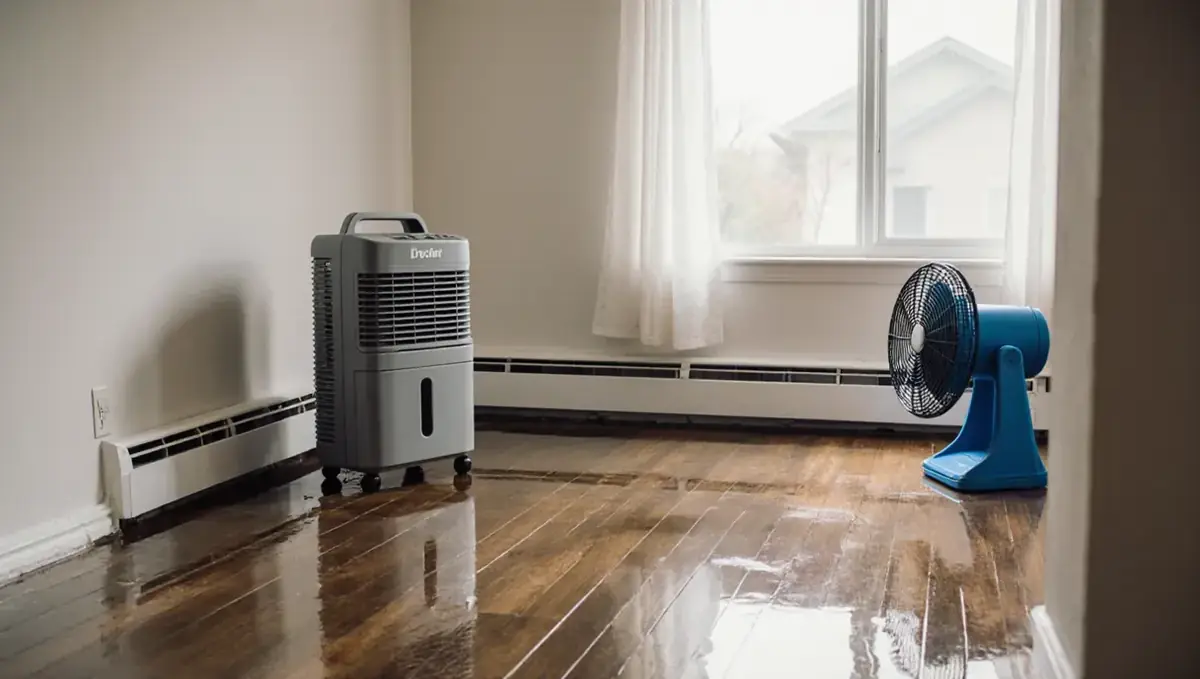
Standing water is removed first, then dehumidifiers and air movers run until materials reach dry standards. Water damage repair in Starkville picks up once readings confirm the structure is dry: drywall, paint, flooring, trim and cabinets. For larger losses or flood cleanup after outside water enters, contaminated materials are cleared and surfaces are sanitized first. Learn more about structural drying and flood damage restoration.
For rebuilding or roofing, check the contractor through the Mississippi State Board of Contractors' license search; the board licenses residential and commercial contractors and roofers.
Mold Removal and Insurance Paperwork in Starkville
Wet building materials can start growing mold in roughly a day or two, consistent with EPA guidance, so quick drying is the best prevention. Regarding regulation, an industry roundup of state requirements found Mississippi has no state license specifically for mold remediation, and the State Board of Contractors' homepage lists none. Ask a company to explain its containment plan, training such as IICRC certification, and how it documents clearance. Our mold removal page explains the basics.
Homeowners and renters policies generally exclude flood, which requires an NFIP or private flood policy; new NFIP policies typically have a 30-day waiting period. Keep every photo, receipt and drying log. WaterQ cannot predict any insurance result, but calling (888) 817-5061 gets you connected with local pros who can document the job. Callers in nearby Columbus can use the same line.
Starkville Areas and Nearby Communities
WaterQ's free referral line connects callers across Starkville and the surrounding area with independent local restoration companies.
Neighborhoods
- Cotton District
- Downtown Starkville
- Mississippi State University area
Nearby communities
- Sturgis
- Maben
- Louisville
- Columbus
Starkville Water Damage FAQ
When is Starkville's rainiest time of year?
February is typically the wettest month at about 6.18 inches, followed closely by April at about 6.07 inches. The city averages about 57.98 inches of precipitation a year.
My Cotton District apartment flooded from the unit next door. What should I do?
Tell your landlord or property manager right away, in writing, and photograph the damage and your belongings. The building owner's policy usually covers the structure, while your renters policy typically covers your own property.
Can pipes really freeze in Starkville?
Yes. Winters are usually mild, but the record low is -12 degrees Fahrenheit. Pipes in exterior walls, attics and crawlspaces are most at risk during hard freezes.
Is a state license required for mold remediation in Mississippi?
An industry roundup of state requirements reports that Mississippi does not have a state license specifically for mold remediation, and the State Board of Contractors does not list one. Ask about training, insurance and clearance documentation.
Who actually does the work when I call WaterQ from Starkville?
WaterQ is a free referral service, available 24/7. It connects you with an independent, local restoration company, and that company inspects the damage and does the work.
Local emergency and flood resources
Official sources for alerts, flood maps and preparedness in and around Starkville: