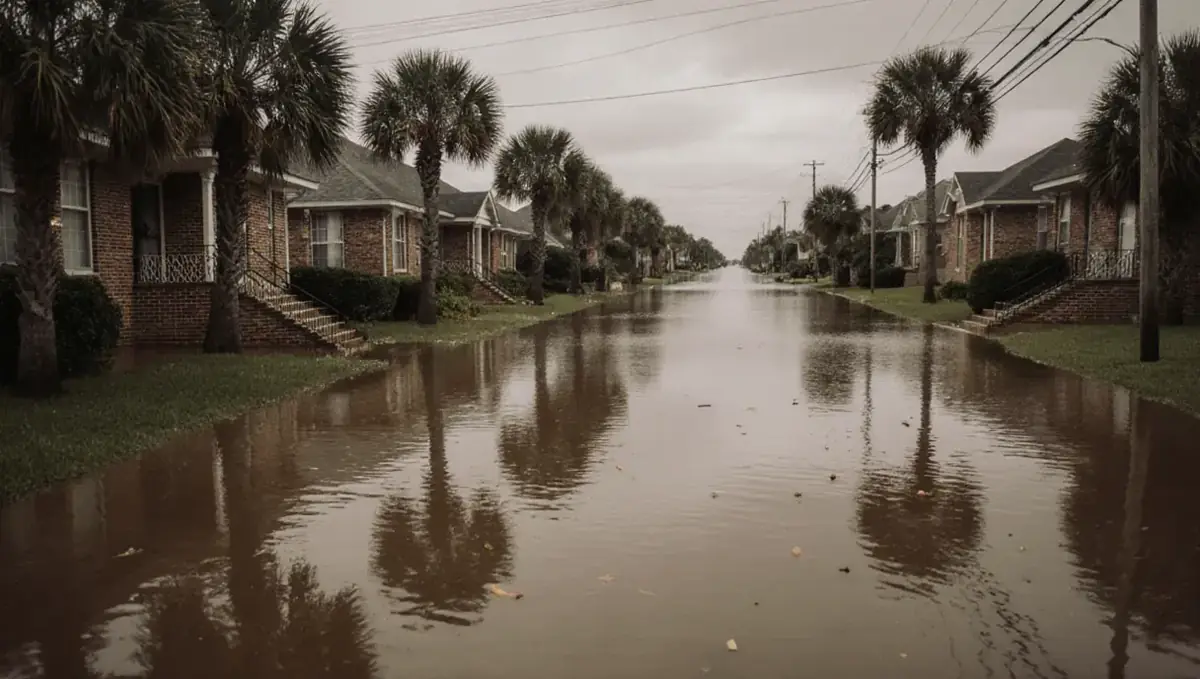
A Peninsula With Water on Both Sides
Biloxi is built on a narrow peninsula. The Mississippi Sound and the Gulf of Mexico lie to the south, while the Back Bay of Biloxi and Biloxi Bay wrap around the north and northeast. Most of the city sits around 20 feet above sea level, and more than a third of its 67.71 square miles is water. The Tchoutacabouffa and Biloxi rivers drain into Back Bay from the north.
That layout means flooding can reach a Biloxi home from more than one direction:
- From the Sound, when hurricane surge pushes over the beachfront along U.S. 90.
- From Back Bay, when surge and river runoff back up into the bay side of the peninsula.
- From the sky, when intense rain falls faster than streets and ditches can drain it.
- From inside, through supply lines, water heaters, AC drain lines and appliance hoses.
Average annual precipitation here is about 66.8 inches, and the Gulf keeps humidity high most of the year, which slows natural drying after any of these events.
Katrina, Camille and the Storms Biloxi Remembers
Scores of hurricanes have hit this coast. The most destructive arrived in 1855, 1906, 1909, 1947, 1969 and 2005. Camille in 1969 struck as a Category 5 storm, and Katrina on August 29, 2005 produced a surge that the National Hurricane Center put at 17 to 22 feet along the eastern Mississippi coast from Gulfport to Pascagoula.
Biloxi was particularly hard hit by Katrina, especially low-lying Point Cadet at the east end of the peninsula. The Biloxi Bay Bridge to Ocean Springs was destroyed, every casino barge on the coast was wrecked, and the public library had to be completely rebuilt.
Not every flood needs a hurricane. On April 28, 2016, as much as 10 inches of rain fell across the area in a few hours, and Biloxi, D'Iberville and Gulfport were among the hardest-hit communities. Short, heavy downpours like that are a reminder that inland and bay-side streets can flood on their own.
Before You Touch Anything: Safety and Photos
- Make sure the building is safe. After surge or wind damage, watch for sagging ceilings, displaced floors and damaged steps before going inside.
- Stay clear of power. Do not wade through water near outlets, panels or appliances, and switch off breakers only if you can reach them from a dry spot.
- Treat floodwater as contaminated. Surge and street flooding are Category 3 water and can carry sewage, fuel and debris. Wear boots and gloves, and keep kids and pets away.
- Stop any plumbing leak. For a burst pipe or water heater, close the main valve right away.
- Document first. Take photos and video of water lines on walls, damaged contents and the outside of the house before cleanup changes the scene.
- Get help lined up. Call (888) 817-5061 to be connected with an independent local restoration company for water extraction and drying.
Watch for B-Alert messages from the City of Biloxi and boil water notices from Public Works after major storms.
How Flood Cleanup Works on the Coast
Saltwater and contaminated water change the job compared with a clean pipe leak. Professional flood cleanup in Biloxi usually moves through these stages:
Pump-out and mud removal
Standing water is pumped or extracted, and silt and debris are shoveled out. Carpet and pad that sat in floodwater are typically discarded.
Flood cut and tear-out
Drywall and insulation are cut above the water line so wall cavities can be cleaned and dried. Swollen cabinets and laminate flooring often have to go.
Cleaning and sanitizing
Studs, slabs and subfloors are cleaned and treated before anything is closed up.
Drying and verification
Dehumidifiers and air movers run while moisture readings are logged, which matters in a climate this humid. Learn about structural drying and the full flood damage restoration process.
Older Homes in the Historic Districts
Biloxi has six districts on the National Register of Historic Places, with Queen Anne, Colonial Revival, Italianate, Art Deco, Late Victorian and bungalow homes. Older houses like these often have plaster walls, wood floors and raised floors that dry differently than modern slab homes.
- Plaster and old-growth wood can hold moisture longer, so readings should be checked before refinishing.
- Raised floors let water collect underneath, and the space below needs drying too.
- Ask the city's Community Development department about permits before rebuilding, especially for homes in a historic district or flood zone.
For any rebuild, the Mississippi State Board of Contractors licenses residential contractors and roofers, and its online search lets you confirm a company before you sign. Our water damage repair page covers what the rebuild stage usually includes.
Mold After a Gulf Coast Water Loss
Following EPA guidance, mold can begin to grow on wet materials within 24 to 48 hours, and Biloxi's warm, damp air makes that window feel short. After a hurricane, widespread power outages can also delay drying, so mold may already be present by the time work starts.
An industry roundup of state requirements reports that Mississippi has no license specifically for mold remediation, and the Mississippi State Board of Contractors' homepage does not list one. That puts the burden on you to ask questions. Ask about training such as IICRC certification, how the company sets up containment, and whether it will provide written moisture readings and clearance documentation. See our mold removal page for more.
Insurance, Rentals and Casino-Corridor Businesses
On the coast, the cause of the water decides which policy responds. Standard homeowners policies generally exclude flood, so surge and rising water fall to an NFIP or private flood policy, while wind-driven rain through a damaged roof is usually handled under wind or homeowners coverage. A new NFIP policy typically has a 30-day waiting period, so it needs to be in place long before a storm forms.
- Keep separate photos of wind damage (roof, windows) and flood damage (water lines, mud).
- Save receipts for tarping, pump-out and other emergency work.
- Renters near Keesler Air Force Base should notify the landlord right away and check their own renters policy for belongings.
Hotels, restaurants and shops along Beach Boulevard and the casino corridor deal with the same issues at larger scale, from storm damage cleanup to sprinkler and roof leaks. Commercial owners can call (888) 817-5061 as well. Neighbors in Gulfport and across the bay in Ocean Springs can reach local providers the same way.
Biloxi Areas and Nearby Coastal Communities
WaterQ's free line connects callers across the Biloxi peninsula, the Back Bay side and neighboring Harrison and Jackson County communities with independent local restoration providers.
Neighborhoods
- East Biloxi
- West Biloxi
- Point Cadet
- Downtown Biloxi
- East Howard Avenue Historic District
- Lameuse Street Historic District
- Keesler Air Force Base area
- Back Bay waterfront
Nearby communities
- Gulfport
- D'Iberville
- Ocean Springs
- St. Martin
- Gautier
- Pascagoula
- Long Beach
- Moss Point
- Pass Christian
- Saucier
Biloxi Water Damage FAQ
Can Back Bay flood my Biloxi home even if I live away from the beach?
Yes. Biloxi sits on a peninsula with the Mississippi Sound to the south and Back Bay and Biloxi Bay to the north, so surge and heavy runoff can affect the bay side as well as the beachfront. Check your address on FEMA's Flood Map Service Center.
Is hurricane surge water dangerous to clean up myself?
Surge and floodwater are treated as Category 3, or contaminated, water because they can carry sewage, fuel and debris. Wear protective gear, keep children and pets away, and consider professional flood cleanup for anything beyond a small area.
How do I get emergency alerts from the City of Biloxi?
The city uses its B-Alert system for emergency notifications and posts boil water notices through Public Works. Harrison County also offers E-Notify and CodeRED alerts.
Does Mississippi license mold remediation companies?
An industry roundup of state requirements reports that Mississippi has no license specifically for mold remediation, and the State Board of Contractors does not list one. Ask about training such as IICRC certification and ask for written clearance records.
Is WaterQ a Biloxi restoration contractor?
No. WaterQ is a free referral service available 24/7. We connect you with an independent, local restoration company, and that company performs the inspection and the work.
Local emergency and flood resources
Official sources for alerts, flood maps and preparedness in and around Biloxi: