A Ridge Between Tallahala and Tallahoma Creeks
Laurel was built on a low ridge with Tallahala Creek to the east and Tallahoma Creek to the west. The two creeks meet south of town, and Tallahala Creek continues on to the Leaf River in the Pascagoula River watershed. The city center sits about 269 feet above sea level, so the ridge drains reasonably well, while land that slopes toward either creek is more likely to collect runoff during long storms.
Inside the house, the causes are usually more ordinary: roofs, aging supply lines, water heaters and clogged gutters. Whatever the source, the goal of water damage restoration in Laurel is the same: get the water out, dry the structure completely and repair it properly. Check your property's flood zone on the FEMA Flood Map Service Center before you need it.
Sixty Inches of Rain and a June Peak
Laurel averages about 59.6 inches of precipitation a year (1991-2020 normals). January and December are the wettest months, and June brings another bump as summer thunderstorms build. That rhythm means water problems show up in two very different seasons:
- Winter rain soaks roofs and crawlspaces when cool air dries things slowly.
- Early summer storms drop heavy rain in short bursts, overwhelming gutters and pushing water under doors.
- Hurricane season, June 1 through November 30, can bring tropical rain and wind well inland to the Pine Belt. Ida in 2021, for example, dropped 13.65 inches of rain near Kiln on the coast and kept hurricane-strength winds into southwest Mississippi.
In any season, wet materials left alone grow mold. EPA guidance says growth can begin within 24 to 48 hours.
The 1954 Tornado and Pine Belt Storm Damage
On December 28, 1954, an F3 tornado tore directly through Laurel and injured 25 people. Tornadoes remain a fact of life in Mississippi, which averaged 46 a year from 1985 to 2019.
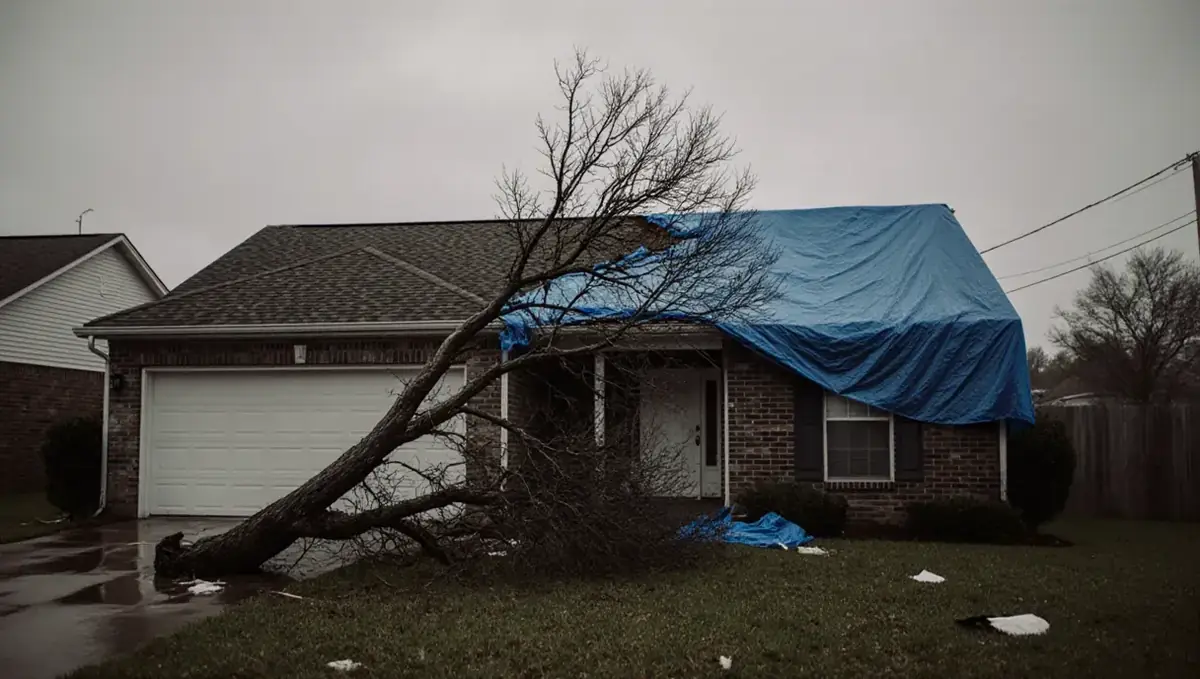
When wind opens a roof or a tree comes through the attic, rain can do more damage than the wind did. Effective storm damage cleanup starts with emergency tarping or board-up, followed by extraction and drying of soaked insulation, ceilings and floors. Photograph everything before temporary repairs, and keep receipts for any work you pay for.
Home Town Houses and Early 1900s Construction
The Laurel Central Historic District, listed on the National Register in 1987, is described as Mississippi's largest, finest and most intact collection of early 20th-century architecture. Many of its homes have been featured on the HGTV series Home Town, and the Southside Neighborhood Historic District was added to the Register in 2020.
Older houses bring a few specific water concerns:
- Original wood floors and trim that can cup or swell if they stay wet.
- Plaster walls that hold moisture longer than drywall.
- Renovations where new plumbing meets old, a common spot for slow leaks behind walls.
- If the house has a raised floor, a crawlspace that needs drying and inspection after a leak.
A careful restoration company will take moisture readings before deciding what to remove. For a freshly renovated home, ask about protecting new finishes during drying.
If Water Is Coming In Right Now
- Stay safe. Avoid standing water near outlets, cords and appliances. Turn off power at the breaker if you can do so without touching water.
- Stop the flow. Shut the main water valve, or the valve at the leaking fixture.
- Contain the spread. Use towels and buckets, and move furniture and rugs out of the wet area.
- Document it. Take photos and video before cleanup begins.
- Get help. Call (888) 817-5061 to be connected with a local company for water extraction and drying.
How Extraction, Drying and Repair Fit Together
Most jobs follow the same order. First comes an inspection to find the source and map moisture, then extraction of standing water. Materials that cannot be dried, such as soaked carpet pad or drywall below a floodwater line, are removed. Air movers and dehumidifiers then run for several days while readings are logged until everything is dry.
Water from a clean supply line (Category 1) is handled differently from creek or flood water (Category 3), which may carry sewage and must be treated as contaminated. For outside water, professional flood cleanup includes cleaning and disinfecting before drying.
Once the structure is dry, water damage repair restores drywall, floors, trim and cabinets. The Mississippi State Board of Contractors licenses residential and commercial contractors, and you can look one up at search.msboc.us before signing.
Mold Checks, Coverage and Laurel Businesses
For mold removal in Laurel, know that Mississippi does not appear to license mold remediation as its own trade: an industry roundup of state requirements found no such license, and none is listed on the State Board of Contractors' homepage. Ask any company about training, such as IICRC certification, and request written moisture readings and a clearance report. See our mold removal overview for what good containment looks like.
On insurance, standard homeowners policies generally exclude flood, which requires an NFIP or private flood policy, usually with a 30-day waiting period. Storm damage to a roof is typically a homeowners claim. Keep photos, receipts and drying logs together.
Downtown shops, offices and rental owners can use the same 24/7 line for commercial losses. Call (888) 817-5061 to reach a local provider. Neighbors in Hattiesburg can call the same number.
Laurel Districts and Jones County Area Communities
Our free referral line connects callers in Laurel and nearby Pine Belt communities with independent local restoration providers.
Neighborhoods
- Downtown Laurel
- Laurel Central Historic District
- Southside Neighborhood Historic District
Nearby communities
- Ellisville
- Moselle
- Lanham
- Hattiesburg
- Waynesboro
- Collins
- Bay Springs
- Richton
Laurel Water Damage FAQ
Which creeks run near Laurel?
Tallahala Creek runs along the east side of the city and Tallahoma Creek along the west. They join south of Laurel, and Tallahala Creek continues to the Leaf River.
When does Laurel get the most rain?
Based on 1991-2020 normals, January and December are the wettest months, with June close behind. The city averages about 59.6 inches of precipitation a year.
My older home in the Laurel Central Historic District has a leak. Can the original floors be saved?
Often they can, if the water is removed quickly and the floors are dried in a controlled way. A restoration company should take moisture readings before recommending removal.
Is there a state mold remediation license in Mississippi?
An industry roundup of state requirements reports that Mississippi has no state license specifically for mold remediation. Ask about training such as IICRC certification and get written clearance documentation.
Will WaterQ do the work on my Laurel home?
No. WaterQ is a free referral service, available 24/7, that connects you with an independent local restoration company. That company inspects the property and performs the work.
Local emergency and flood resources
Official sources for alerts, flood maps and preparedness in and around Laurel: