Bayous on Three Sides and Barely Above Sea Level
Gautier sits on the Mississippi Sound between Ocean Springs to the west and Pascagoula to the east, with the West Pascagoula River, known locally as the Singing River, along its eastern side. The city is surrounded by bayous and wetlands on three sides, and its elevation is only about 6.6 feet. Nearby, the Mississippi Sandhill Crane National Wildlife Refuge protects some 19,000 acres of wet pine savanna and lists Gautier as its nearest city.
All that low, wet ground is a big part of what makes Gautier a pleasant place to live. It also means water damage in Gautier tends to come from a few predictable directions:
- Storm surge from the Sound and up the river estuary during hurricanes.
- Heavy rain that has little elevation to drain away from, leaving water in yards, garages and crawlspaces.
- Roof damage that lets wind-driven rain inside.
- Plumbing and appliance leaks, which can happen in any home on any day.
Katrina's Mark on Gautier and Jackson County
Jackson County was severely damaged by Hurricane Camille in 1969 and by Hurricane Katrina on August 29, 2005. During Katrina, surge flowed up the river estuary and combined with freshwater flooding, effectively cutting the county in half, and Gautier was among the communities affected. The loss of homes and jobs after the storm led to people moving away in 2006.
The National Hurricane Center found Katrina's surge ran 17 to 22 feet along the eastern half of the Mississippi coast, roughly from Gulfport to Pascagoula, and pushed at least six miles inland in many areas. Gautier sits squarely in that stretch of coast. Planning for surge is not optional here; it is part of owning property.
For what comes after a storm, see our guides to storm damage cleanup and flood damage restoration.
Crawlspaces, Slabs and Standing Water
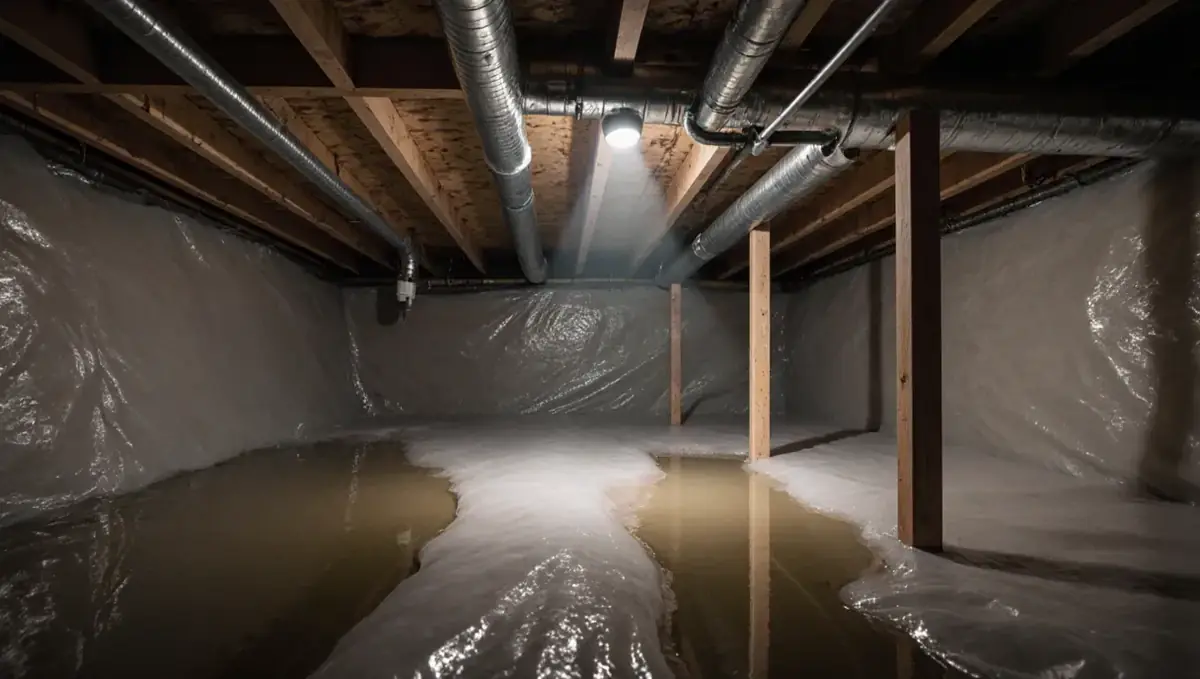
With so little elevation, water that collects under or around a Gautier home can be slow to leave. Homes with crawlspaces can end up with standing water below the floor after heavy rain or a flood, and that moisture rises into joists, subfloors and insulation. Slab homes can wick water up into baseboards and the bottom of drywall.
Neither problem fixes itself in coastal humidity. A restoration crew will usually pump out standing water, remove wet insulation, and set dehumidifiers and air movers to dry the structure, sometimes adding a vapor barrier once the space is dry. Our structural drying page explains the process, and water extraction covers the first step.
A Short List for the First Few Hours
- Protect people first. Do not enter a home with structural damage, and never wade through water near outlets or appliances.
- Close the valve. For a leak, shut off the main water supply. For floodwater, keep power off until the house has been checked.
- Know the category. Clean supply-line water is Category 1. Surge, bayou overflow and sewage are Category 3, so wear gloves and boots and keep pets and children out.
- Make a record. Shoot photos and video of water depth, damaged walls and floors, and belongings before you move or toss anything.
- Rescue valuables. Move documents, electronics and keepsakes to dry, higher ground.
- Bring in help. Call (888) 817-5061 and we will connect you with an independent local restoration company that can begin water removal.
From Tear-Out to Rebuild in a Gautier Home
Inspection and moisture mapping
The company you are connected with will find the water source and check how far moisture traveled, using meters and thermal cameras to look behind walls and under floors.
Removal of damaged materials
Carpet and pad soaked in floodwater are typically discarded, and drywall and insulation are cut out above the water line so the wall cavity can be cleaned.
Cleaning and drying
Surfaces touched by contaminated water are cleaned and sanitized. Drying equipment then runs until readings meet dry standards.
Repairs
Water damage repair in Gautier finishes with new drywall, trim, flooring and cabinets. Before signing, confirm a contractor on the Mississippi State Board of Contractors' online search. More detail is on our water damage repair page.
Mold Risk Around Wetlands and Bayous
Following EPA guidance, wet materials can begin growing mold within 24 to 48 hours. Gautier's damp surroundings, warm summers and humid air make crawlspaces, attics and wall cavities especially vulnerable once they get wet.
Mississippi has no state license specifically for mold remediation, based on an industry roundup of state requirements, and the State Board of Contractors' homepage shows no such license. When hiring for mold cleanup in Gautier, ask about the company's training, such as IICRC certification, how it contains the work area, and whether it provides written moisture readings and clearance documentation. Visit our mold removal page to learn more.
Insurance Steps and Help for Local Businesses
Standard homeowners policies generally exclude flood, so surge and rising water need an NFIP or private flood policy. New NFIP policies typically carry a 30-day waiting period. Wind damage to a roof is usually a separate claim under homeowners or wind coverage.
- Check your address on the FEMA Flood Map Service Center.
- Notify your insurer quickly and keep photos, receipts and drying reports in one place.
- Keep damaged items until they are documented or the adjuster has seen them.
Shops, offices and restaurants along U.S. 90 and near the Interstate 10 exits face the same risks on a larger scale. Business owners can call (888) 817-5061 for flood cleanup in Gautier and commercial drying. Claim decisions rest with your insurer, and a tidy file of photos and reports makes that process easier. Neighbors in Pascagoula and Ocean Springs can use the same free line.
Parts of Gautier and Surrounding Jackson County
Our free referral line connects callers across Gautier and nearby Jackson County communities with independent local restoration providers.
Neighborhoods
- U.S. 90 city center
- Interstate 10 / Gautier-Vancleave Road area
- Highway 57 corridor
- The Old Place (Pascagoula River mouth)
- West Pascagoula River (Singing River) waterfront
- Mississippi Sound shoreline
- Mississippi Gulf Coast Community College Jackson County Campus area
Nearby communities
- Pascagoula
- Ocean Springs
- Vancleave
- Moss Point
- Escatawpa
- St. Martin
- Biloxi
- D'Iberville
Gautier Water Damage FAQ
Why does water linger around homes in Gautier?
The city sits at an elevation of about 6.6 feet and is surrounded by bayous and wetlands on three sides, so rain and floodwater have little room to drain away. That can leave standing water in yards, garages and crawlspaces.
There is water in my crawlspace after heavy rain. What should I do?
Avoid wiring and the electrical panel, document the water with photos, and arrange for it to be pumped out and dried. Wet insulation under the floor usually needs to come out so joists and subfloor can dry before mold starts.
Did Hurricane Katrina affect Gautier?
Yes. Katrina struck on August 29, 2005, and Gautier was among the Jackson County communities affected as surge flowed up the river estuary. The loss of homes and jobs led to outmigration in 2006.
Are mold companies licensed by the State of Mississippi?
An industry roundup of state requirements reports that Mississippi has no mold remediation license, and the State Board of Contractors does not list one. Ask about training such as IICRC certification and request written clearance records.
Does WaterQ have its own crews in Gautier?
No. WaterQ is a free referral service, available 24/7, that connects you with an independent, local restoration company. That company handles the inspection and all of the work.
Local emergency and flood resources
Official sources for alerts, flood maps and preparedness in and around Gautier: